

Why the Cost of Living Keeps Going Up
However, prices keep rising, and in the vast majority of American and European working households, paychecks do not increase enough to match the growing expenses. This is not some subjective observation of doom or gloom. The reality of an economic situation is backed up by statistics released by the Bureau of Labor Statistics, the 2025 Bankrate’s Wage to Inflation Index, and the USAFacts findings reported in April 2026. Over a period from January 2021 to August 2025, in America, wages did not catch up with inflation by 1.2% – a disparity that reached up to 4.8% in 2022. Despite the decline of inflation rates from their four-decade high level, the cumulative harm had not been undone.
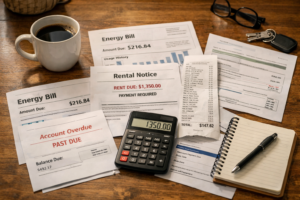
This divide has a clear effect on reality. According to the analysis conducted by Bloomberg in February 2026, Americans pay $126 today for the same goods that used to be priced at $100 pre-pandemic times. Childcare services are now up by 39% compared to 2019. Groceries and utility payments are making all-time records. Only 54% of Americans consider themselves satisfied with their wages – the lowest level of contentment recorded by the Federal Reserve Bank of New York since 2014 when they began keeping track of the indicator. SHRM reported in November 2025 that in 2026 American businesses will be offering employees an average wage hike of 3.5% – slightly less than is needed for overcoming inflation.
The following guide explores the true underlying factors behind the rising costs of living amid wage stagnation in regards to inflation, the factors affecting it, housing prices, pressures on basic necessities, and practical measures that average people can take to shield themselves from economic turmoil.
The Inflation Story — Why Prices Rose So Fast and So Far
In order to analyze the reasons for the ever-rising cost of living today, it is crucial first to examine what transpired from 2020 through 2023 and explain why the repercussions of that period are still affecting American and European families now.
How the Post-Pandemic Supply Chain Collapse Drove Prices Up
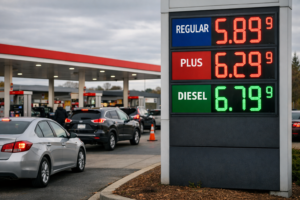
The major factor behind the rapid inflation after the year 2020 was the unprecedented global supply chain crisis. With economies grinding to a halt during the pandemic in 2020 followed by their swift reopening, logistics infrastructure was unable to cope and adjust fast enough to the changes. Prices for shipping skyrocketed. Production in factories fell behind schedule. Chip shortages hampered auto production. According to the analysis conducted by the Fed after the pandemic, it is clear that the supply chain crisis was the key reason behind the 9% jump in CPI inflation during the year ending June 2022, which was the highest since the ’80s.
Energy Prices Amplified Every Other Cost in the Economy
Energy cost forms the backbone of economic expenditure. An increase in energy prices will lead to an increase in production costs, transportation costs, heating costs, and the cost of food production. The Russian invasion of Ukraine in 2022 has caused the European Union a grave energy crisis, with the price of energy hitting record levels throughout Europe. According to projections made by the Joseph Rowntree Foundation in 2025, the disposable income of people in the United Kingdom was expected to fall throughout the rest of the decade in part due to elevated energy costs.
Tariffs and Trade War Costs Are Adding a New Layer of Pressure
As soon as prices following post-pandemic inflation started to stabilize, another level of pricing pressures emerged. In addition to the previously mentioned impact of trade wars on consumer goods prices, the tariffs introduced in the US during 2025-2026 have imposed an additional tax burden for American households of $1,500-2,800 per year, according to Tax Foundation and Yale Budget Lab. As indicated by Bloomberg’s 2026 analysis of cost of living, food and consumer good prices continue to increase and one reason for this is the additional costs incurred due to tariffs. Consequently, there is a new wave of pricing pressures coming from a completely different angle for those who managed to weather the previous one.
Why the Price Level Stays High Even After Inflation FallsThe cost of living keeps going up while wages stand still. Here’s the honest explanation — what’s driving it, who’s hardest hit, and what you can actually do about it today.
The key thing that people need to understand about the cost-of-living crisis is the distinction between price levels and inflation. If inflation decreases from 9% to 3%, then the prices do not go down. In fact, they continue to increase, only at a slower pace than before. The $126 that Bloomberg says that Americans now pay for something which costed them $100 during the time of the pandemic will never become $100 again once the inflation goes back to normal. This gap remains until the wage rates catch up. According to TIME magazine, published in January 2026, this is one of the reasons why people remain dissatisfied despite improvements in inflation indicators.
Why Wages Have Failed to Keep Up With Rising Costs
It is not by mere chance that wages have failed to rise alongside the cost of living. This is the result of certain well-defined structural dynamics at work in the labor market dynamics that had been accumulating strength over many decades before the price shock of 2021-2023 came into focus.

The Wage Gap Is Real and Cumulative — Four Years of Lost Ground
According to Bankrate’s 2025 Wage to Inflation Index, from January 2021 to August 2025, the average wage growth rate underperformed inflation by 1.2% in aggregate terms. While it may not seem very large in absolute terms, when compounded over a span of four years, this gap carries considerable weight, especially given the more recent statistics released by USAFacts in April 2026. From April 2025 to April 2026, nominal wage growth amounted to 3.6% and inflation stood at 3.8%, indicating that during the past year, the effective purchasing power of the average wage decreased once again. In general, since March 2006, the nominal wage growth rate stood at 87.2% and the real rate at 12.3%.
Low-Income and Middle-Income Workers Are Hit Hardest
These reported wages tell only half the story because the disparity is profound when you look beneath the surface. According to a report by CNN from December 2025, despite the fact that the richest people got a salary rise of 4% in November 2025, the middle classes saw their wages rise by a mere 2.3%, while the poorest had their wages rise by just 1.4%, all percentages being lower than the then inflation rate. Another study by CBS News, which cited Bankrate’s Wage Index as its source, showed that teachers have witnessed the biggest disparity between the rise in incomes and the rise in inflation over the last four years.
Employers Are Pulling Back on Pay Rises in 2026
However, the tightened labor market that gave employees bargaining powers between 2021 and 2022 has eased to a large extent. According to a CNN report, the number of people leaving their jobs voluntarily has dropped to its lowest in five years towards the end of 2025 – and if firms are no longer losing employees, then there is no need to offer attractive salaries to retain employees. Indeed, as per SHRM’s November 2025 salary report, US firms are planning to increase salaries by just 3.5% in 2026 – slightly lower than the inflation rate and well below what firms have offered in the past few years.
The Wage-Productivity Disconnect That Has Been Building for Decades
The present-day crisis is not an outcome of the coronavirus outbreak. According to the report provided by the Coalition for a Prosperous America in January 2026, there has been a long-term trend emerging: As the result of deindustrialization and China shock experienced in the beginning of 2000s, with a subsequent decline of American manufacturing, productivity-driven wage gains in the sphere of tradable industries came to a standstill. While decreasing prices of consumer goods were good news for families in the point of purchasing – they lost access to high-wage jobs that once allowed sustaining middle-class living standards.
Housing, Healthcare, and Education — The Big Three Cost Drivers
Inflation impacts all commodities; however, there are three commodities that stand out from the rest by rising quicker and more consistently than any others and that are by far the biggest expenditures for most families, whether in America or Europe.
Rent and Housing Costs Have Risen Faster Than Almost Anything Else
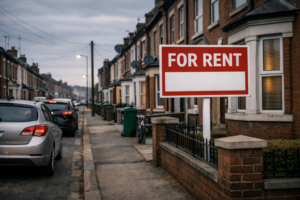
Housing constitutes the biggest budget item for almost any family – and it has been growing much faster than average price rises in most of the key American and European urban areas. According to the findings of the Bloomberg’s cost-of-living study from 2026, housing expenses continue being among the main reasons for high family budgets, especially in the case of renting when people lack a fixed mortgage that could shield them from rent growths each year. This issue stems mainly from an insufficient amount of housing available in many urban areas as a result of planning problems, rising costs of building, and insufficient social housing investments.
Healthcare Costs Continue to Rise Faster Than Wages in the USA
Healthcare expenses are unique among expenses in the United States in the sense that there is nothing like them in Europe, at least from what can be deduced from CBS News. Medical insurance costs, prescription medicine prices, and overall medical bills keep rising consistently beyond the level of inflation each year. Healthcare expenses are some of the cost pressures pointed out by CBS News that contribute significantly to driving a wedge between wages and expenses among American citizens. The roughly 25 million Americans without insurance coverage find themselves in desperate circumstances due to their healthcare costs.
Childcare Costs Have Become Unaffordable for Many Families
As reported by Bloomberg in 2026’s cost of living study, in the USA the cost of childcare has increased by 39% since 2019, and currently seven out of ten Americans believe that they cannot afford to raise a child. The former figure was 58% only a year prior. This stands as one of the most evident cases where costs of living have risen far above wage increases. Two-earner couples find themselves unable to reap the benefits of having two paychecks due to increasing childcare costs, effectively trapping parents into a poverty cycle. Europe deals with this problem in part thanks to government-sponsored childcare programs.
College and University Costs Continue to Outpace Inflation
There is already an ongoing issue regarding the cost of education which serves as a layer on top of the more immediate cost-of-living crisis. According to Bloomberg’s analysis for the year 2026, there have been increases in the cost of tuition fees while delinquent student loan repayments reached record levels in the United States. The increase in tuition cost and the stagnancy of wages in real terms create another challenge for the younger generation since they are paying back the cost of education incurred previously while currently experiencing high living costs based on low wage growth.
What You Can Actually Do When the Cost of Living Keeps Rising
Knowing what causes prices to rise is important, but knowing what to do about them is even more crucial. Here are some of the most proven ways to manage high costs that anyone can use.
Build a Detailed Monthly Budget — Then Find the Leaks
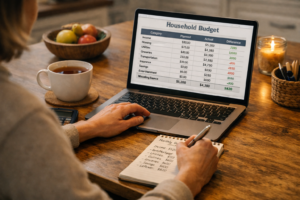
The key step outlined by Yahoo Finance in the cost of living guide for 2026 is simple: create a comprehensive budget plan that takes into account all necessary expenses as well as those that could be cut from your finances. All of your expenses should be recorded, both the ones that do not change monthly and those that do. Most families tend to greatly underestimate their expenditures when they have no budget plan, particularly for dining out, online shopping, and entertainment services subscriptions. By simply cutting back two or three unneeded monthly payments, you will save between $100 and $200.
Switch Providers and Renegotiate What You Can Control
There are many expenses on which families spend their money which can be reduced to a greater extent. Electricity, internet or mobile phone services, car or house insurance, and subscription fees for entertainment streaming sites can all easily compete — providers often give far lower prices to newcomers or to customers willing to switch to another provider. The cost-of-living calculator by Yahoo Finance suggests conducting an analysis every year of the entire range of monthly payments, changing companies that provide such services in case there is a cheaper option, and canceling those payments that are not necessary anymore.
Negotiate Your Salary — Most People Never Ask
One of the simplest and most underutilized methods to tackle increasing costs would be negotiating higher wages. The information collected by SHRM regarding compensation reveals that although an increase of 3.5% is anticipated in the next few years, the average includes a number of variables, and individual results will depend greatly on individual performance, skills, and negotiations. According to Yahoo Finance’s cost of living calculator, employees who have skills, good performance, or are receiving offers from other companies have a great chance of success compared to what they might think.
Build an Emergency Fund — Even a Small One Changes Everything
The most psychologically and financially challenging thing about living in an expensive place is the exposure to emergencies such as car repairs, health bills, or malfunctioning equipment that an emergency fund can pay for without causing any panic. According to Yahoo Finance’s personal finance advice, the ideal situation would be saving up an amount of between three and six months’ worth of necessary expenses in a savings account. Saving at least $500 or £500 will make a difference to your finances. With current high-interest rates for savings accounts that are much higher than their historical averages, you can let your emergency fund build up interest while being accessible whenever needed.
Frequently Asked Questions About the Cost of Living Crisis (FAQ)
Have wages finally caught up with inflation in the USA?
In part, but not completely. The Bankrate index for 2025 indicates that even after this much time, wages have fallen behind cumulative inflation by 1.2%. According to USAFacts, from April 2025 to April 2026, there was wage growth of 3.6%, and at the same time, inflation stood at 3.8%.
Why do prices never seem to come back down after inflation falls?
This is because the inflation rate shows the pace of price changes, but not the price level. If the inflation rate declines from 9 percent to 3 percent, this indicates that prices continue to increase but at a lower pace than previously seen. According to Bloomberg, people in America now have to spend $126 for goods that used to cost $100 pre-pandemic.
Which groups of workers are worst affected by the wage-cost gap?
According to CBS News and Bankrate’s study, the most affected profession has been that of the educator in the last four years. Workers from low to middle income groups have experienced the sharpest squeeze in relative terms. According to CNN Bank of America, low-income earners have only enjoyed 1.4 percent wage growth at the end of 2025 against inflation levels.
Is the cost-of-living crisis as severe in Europe as in the USA?
The pressures are much alike but vary in their composition. European families were hit much harder by rising prices of energy after the Ukraine war broke out. The UK’s Joseph Rowntree Foundation predicts that disposable income will go down for the remainder of the decade. While health care and child care costs are somewhat protected through state services, the cost of living has seen an astronomical rise in Europe.
Conclusion: The Gap Is Real — and You Are Not Imagining It
Prices continue to climb; the figures back up something that countless families experience firsthand in their weekly grocery bills, at the gas pump, and when they balance their books at month-end. Their wages haven’t caught up. The price of necessities like housing, health care, day care, and energy is rising faster than just about anything else. The underlying factors are complex, and no single policy fix will suffice.
However, there is one aspect where people and their families do have some control, despite being constrained by the larger context. Making an extensive budget plan, examining regularly recurring expenses, negotiating one’s salary, and building up an emergency savings fund can certainly make a significant impact on financial stability even in such tough times.
This disparity between the price of things and what people make is not something that happened suddenly. It was a gradual process, taking place each and every year due to factors that people at home were rarely informed of. Learning about such factors is the first step towards learning how to cope with them.

1 thought on “Why the Cost of Living Keeps Going Up 2026”