

How Do Trade Wars Affect Everyday People?
How do trade wars affect everyday people? It is a question millions of families across the USA and Europe are living through right now — not as an abstract economic debate, but as a daily reality felt at the grocery checkout, in job advertisements, and on monthly bank statements. Since early 2025, the United States has imposed the most sweeping tariff increases since the 1930s, triggering retaliatory measures from trading partners including China, Canada, Mexico, and the European Union. The result is a global trade conflict that has touched virtually every corner of the economy.
As indicated by the Tax Foundation, the tariffs being implemented translate into an average increase in taxes by $1,500 per household in the US in 2026, whereas according to the Yale Budget Lab, the actual amount is even greater at $2,800 in the short term after accounting for all tariff layers. As confirmed by PIIE, the US inflation is now up by one percentage point from baseline because of these tariffs, with their impact extending to lowering economic growth and decreasing real wages. In April 2026, it was discovered that the US firms and households are paying close to 90% of tariffs.
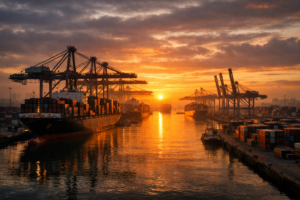
This guide will explain to you in an accurate way the effects of trade wars on common citizens through increased costs and unemployment among other factors, all based on facts obtained from credible economic studies.
Higher Prices: What Trade Wars Cost You at the Checkout
The first and most obvious impact of a trade war is increased prices. As a result of tariffs placed by governments on imports, these added expenses are passed down the chain until they end up with the consumer. This is precisely how it works.
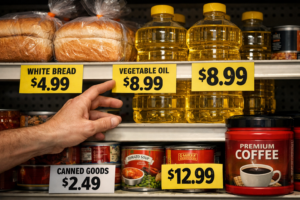
Grocery Prices Are Rising — and the Worst Is Still Ahead
One of the areas where the prices can affect people directly is food costs. The analysts from the market research company Spins noted back in January 2026 that grocery stores managed to protect their customers from tariffs until 2025; however, the consequences would come in the middle and second half of 2026. It is due to a 12 to 18-month delay between the moment when the tariffs were introduced and when the prices changed. The Center for Science in the Public Interest noted that food was not excluded from tariffs. According to ICG, food prices may increase by 4.5%.
Clothing, Electronics, and Appliances Are Getting More Expensive
Apart from food, many other major consumer goods categories have also experienced substantial price hikes. According to ICG’s economic analysis, there is a possibility that apparel prices may increase by up to 33% at the current tariff rates, which will be devastating for those purchasing children’s apparel or replacing items within their homes. The consumer electronics category has also been impacted by the tariffs since the devices depend on parts made in China and Southeast Asia. As reported by Procter & Gamble, it increased prices by 25% of its products because of paying an estimated annual tariff cost of $1 billion.
Cars Are Among the Hardest-Hit Purchases
The automobile industry is among the most affected industries due to the trade war between 2025 and 2026. Cars are made of parts that come from different countries like Canada for steel, electronics from Asia, aluminum from other parts of the world. Tariffs on one single part make costs increase for the whole car production process. Constellation brands have stated that they incurred an additional cost of $20 million in earnings due to tariffs imposed on aluminum. The impact of this on consumers will be seen in higher costs of cars and long wait times for cars to be delivered.
Why Ordinary People Pay — Not Foreign Governments
Among the many factors that must be considered in understanding the impact of trade wars on ordinary individuals, the question of who bears the brunt of tariffs must be answered. In contrast to popular rhetoric surrounding tariffs, according to both the Tax Foundation and PIIE, it must be noted that tariffs are taxes imposed on the importing business, which is an American company, rather than the exporting nation. These costs would then be passed on to consumers in the form of increased prices at the retail level. According to Federal Reserve studies, by 2026, U.S. firms and consumers bore 90 percent of the tariff costs.
Jobs: The Complex and Often Painful Employment Impact
The connection between trade wars and job creation is not as straightforward as media coverage suggests. Although some sectors may see an increase in employment due to higher costs of imports, many others will suffer job losses.

Manufacturing Gains Are Smaller Than Promised
Proponents of tariffs claim that tariffs help preserve jobs within the domestic manufacturing industry by increasing the costs of imported products. Nevertheless, the results of 2025 to 2026 reveal that the issue is much more complex. According to the working paper of the National Bureau of Economic Research on the dynamic effects of the trade war, although tariffs resulted in a temporary increase in US manufacturing employment, this increase was directly coupled with a decrease in employment in the service industry and agriculture. As for manufacturing employment statistics up to 2025 and even 2026, they did not meet the expectations of tariff supporters.
Agriculture Has Suffered Significant and Measurable Losses
One group that has felt the impact of retaliatory tariffs more than any other is American farmers. While tariffs are levied against Chinese products, China retaliates with tariffs against American agricultural products, targeting the very group of Americans who rely on such tariffs. The trade volume between China and the US in agricultural produce fell sharply from $12 billion in 2024 to $5.5 billion during the first half of 2025, according to agricultural financial services company AgAmerica. This decline was backed up by an analysis conducted by Fortune in April 2026 based on research done at Cornell and Ohio State Universities.
Service Sector Jobs Are Being Lost Quietly
Whereas popular discussion has centered around manufacturing, the work at PIIE demonstrates that service industry jobs – which comprise the overwhelming majority of jobs in both the USA and Europe – have been shrinking in a direct result of the conditions of the trade war. With higher costs of imports comes lower disposable income for households. As more money is spent on food and clothes, there is less to be spent on dining out, entertainment, travel, and other services. According to PIIE’s economic analysis, if current tariffs persist for another ten years, jobs in the USA measured by labor hours will suffer the greatest reductions in durable goods manufacturing, mining, and agriculture.
Real Wages Are Falling in Purchasing Power Terms
Real wages become lower not only for the unemployed, but also for those who managed to hold onto their jobs because trade wars lead to the depreciation of real incomes. According to CEPR, using a four-year tariff scenario by economists Rodríguez-Clare, Ulate, and Vasquez, real wages in the US will be reduced by 1.4% by 2028. Inflation-adjusted real income, reflecting the ability to purchase, is expected to decrease by about 1%. PIIE corroborates the inflation rate being one percentage point higher than the baseline level, which means that even employees earning slightly more money will probably face a reduction in real wages.
Supply Chains, Small Businesses, and Everyday Shortages
The impact of trade wars goes beyond merely increasing costs and reducing employment; they affect the intricate supply chains that ensure shelves are stocked and goods are available to consumers. It is often small businesses that are most affected by trade wars.

Global Supply Chains Break Down Faster Than They Rebuild
Today’s global supply chains are highly connected. For instance, a smartphone is made up of parts sourced from several countries across the world: chips that were invented in the US, made in Taiwan, assembled in China, with minerals sourced from Africa and South America. In case tariffs affect just one part of the chain, then the repercussions will quickly follow suit, and this has been aptly explained by FYI in its study on the impacts of trade wars. As the challenges continue, consumers will inevitably feel the pinch in terms of increased prices and limited availability of products.
Small Businesses Have the Least Ability to Absorb Tariff Costs
The major companies such as P&G and Walmart are in a position where they can renegotiate contracts with suppliers, use sourcing from countries with low tariffs, and spread out the losses on a wide range of products. Smaller firms have no such options available to them. Supply chain expert Venky Ramesh of AlixPartners stated that 80-85% of tariff-related costs were borne internally by the firms – but for smaller firms, internalizing the costs means either increasing prices right away or accepting losses that may cause the firm to be unsustainable.
US–China Trade Has Fallen Sharply, Reshaping Global Commerce
The level of disruption to trade relations between the USA and China has been unprecedented. According to the McKinsey Global Trade Update of April 2026, the level of trade between the USA and China has dropped by around 30%, due to tariff hikes. Two-thirds of the deficit has been made up by imports into the USA from other sources, mainly Southeast Asia, but this has been at a higher price and with disruption to the supply chain. China has diverted its exports of consumer goods to other markets, reducing their price by an average of 8%.
Uncertainty Itself Is an Economic Cost Most People Underestimate
In addition to the obvious cost of paying tariffs, there is another type of economic damage that is difficult to quantify but equally devastating – uncertainty. According to FYI’s Trade Report, investment uncertainty is considered to be the most detrimental cost of trade wars that remains hidden. In cases where companies do not know what tariffs they will have to pay in six months’ time, they will put off their investments, avoid hiring workers, and abandon their expansion plans. As per Joseph Brusuelas, the chief economist at RSM, uncertainty raises the yields on treasuries while undermining the confidence of consumers and businesses at the same time.
What Trade Wars Mean for Europe and the Path Forward
The trade war of 2025-2026 is not a story that belongs to America alone. It is also a story for European consumers, laborers, and governments, and the road out of it will not be easy.

Europe Faces a Double Economic Squeeze in 2026
The situation with the trade war is unique and tough for European consumers and firms. According to the economic outlook analysis conducted by the ICG, Europe finds itself in a situation when it has to deal with the increase of Chinese products in their markets since China has started re-routing its exports from the US to Europe, at the same time having to pay increased tariffs imposed by the US on its products sold to America. The UK, which enjoys relative protection from the trade agreement with the US and low tariffs of 10% on most products, suffers from high inflation and budgetary limitations.
European Consumers Are Paying More for American Products
The retaliatory tariffs imposed by the European Union against the US-made products result in a reciprocal situation for the consumers in Europe, whereby certain US products become costlier and rarer in Europe. Products such as spirits, agricultural products, and manufactured products are some of those subject to retaliatory tariffs. The implication for ordinary consumers in Europe is that there will be limited choices of goods in the market, increased costs of particular imported goods, and even other economic implications of reduced economic growth in the export-oriented sectors in Europe.
The Hidden Social Cost — Low-Income Families Bear the Heaviest Burden
One economic truth that remains underreported when talking about the trade war is the issue of distribution: tariffs act like a regressive tax, affecting poor people more than rich people. This is due to the fact that poor people spend a larger percentage of their incomes on goods, such as food and clothing, which are mostly the type of goods that have their prices affected by tariffs. The Daily Economy’s review of research conducted at PIIE shows that poor and middle-class Americans and Europeans are the most affected by the present tariff structure.
What Would It Take for Things to Improve?
There is a consensus among economists that negotiation and multilateral approaches yield better results than the unilateral approach to tariff hikes. According to the PIIE model, continued tariffs for ten years will result in a permanently smaller US economy and permanently higher price levels. DevelopmentAid’s study on the effects of trade wars on developing countries indicates that even the weakest economies in the world are affected by trade wars due to their reliance on exports to big economies. The only practical way out of the problem is through negotiation, both bilateral and multilateral.
Frequently Asked Questions About Trade Wars and Everyday Life (FAQ)
What is a trade war in simple terms?
A trade war is one where nations place tariffs, which are taxes on imports, on each other’s exports. Both nations will attempt to increase the price of the products imported from the other. However, it should be noted that the cost ends up being paid by consumers and businesses rather than the government.
How much is the 2026 trade war costing the average US family?
According to the Tax Foundation, the proposed tariffs would be equivalent to an additional tax on average of $1,500 per household in 2026. In the short run, the Yale Budget Lab suggests that the cost would be $2,800. Poor households would be relatively hardest hit.
Are trade wars ever good for workers?
Tariffs do provide some protection to certain industries at home and can also save jobs in those industries for a while. But according to NBER and PIIE studies, the net effect on jobs is negative because more jobs are lost than created in other industries like agriculture and services.
How long do trade wars typically last?
Trade wars through history have lasted for different periods of time. The trade war between China and the USA, which started in 2018, has been continuing since then until 2026. According to the PIIE modeling, the standard assumption is four years of tariffs applied. There can be no solution but through negotiations, which cannot be predicted in today’s world.
Conclusion: Trade Wars Are Not Abstract — They Are Felt at Home
What is the impact of trade wars on the average person? The answer is quantifiable and verifiable, leaving no room for dismissal. Trade wars inflate food prices, increase clothing costs, lower the purchasing power of wages, threaten the existence of small enterprises, and inject an element of uncertainty into hiring, investments, and growth.
The global tariff war between 2025 and 2026 has led to the imposition of tariffs by the United States at its highest level since 1947, an individual tax liability of up to $1,500 per household, and disruption in supply chains that is just starting to affect retail prices. These are not numbers for ordinary Americans and Europeans struggling with their household budget, but facts of life as reflected in their shopping basket costing more than it did last year.
Grasping these processes is the key to making sense of the economic environment that surrounds you. Trade policies have a direct bearing on the cost of your cup of morning coffee, the price of your kid’s new shoes, and even the job security at your workplace – and that makes it directly your concern.

2 thoughts on “How Do Trade Wars Affect Everyday People?”