
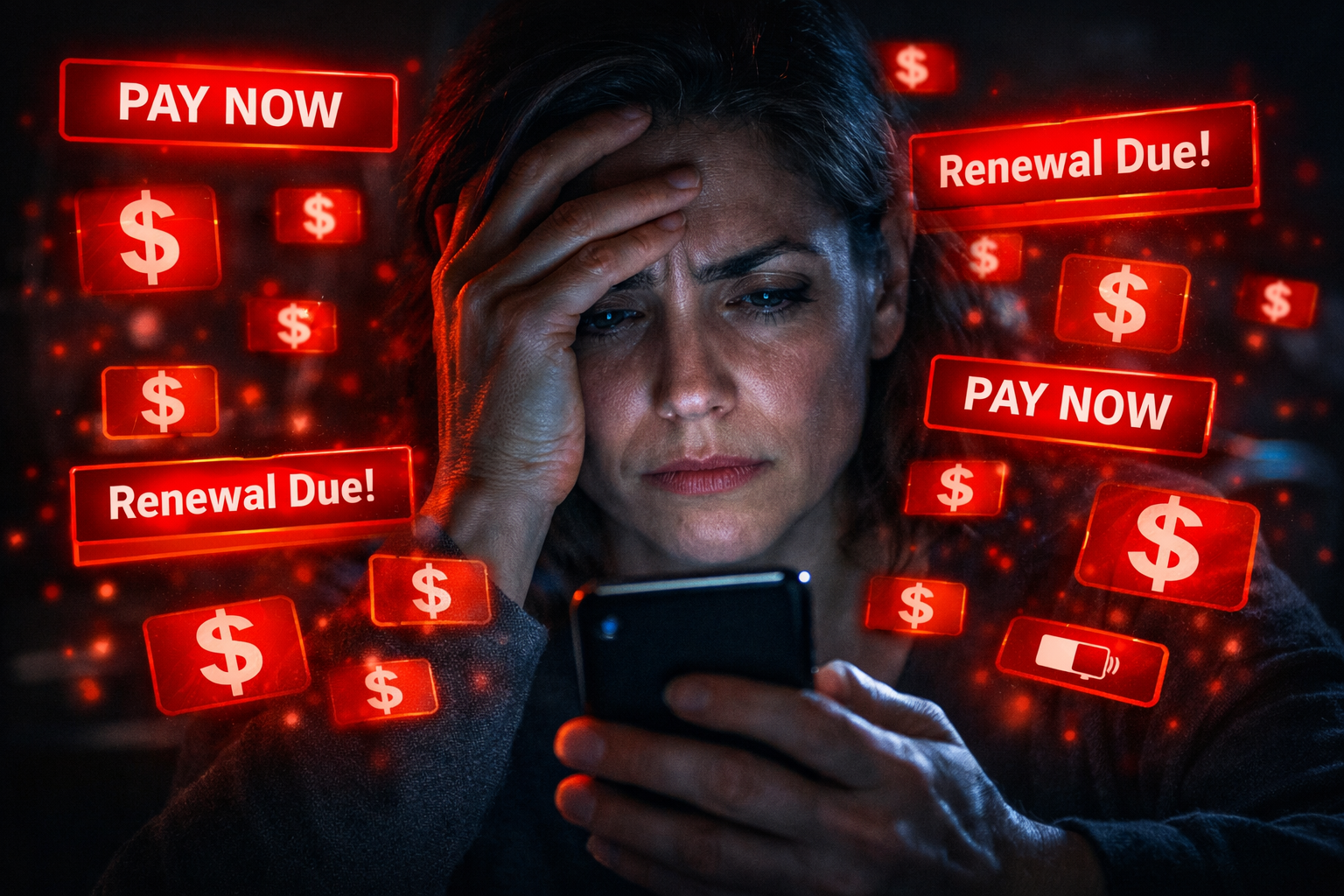
Subscription Fatigue 2026: The Economic Truth and How to Reclaim Your Budget
The “Subscription Economy” was all the rage for almost ten years in the international business sector. It suggested an effortless existence in which anything from the coffee you consume in the morning until the activities you enjoy at night would come to you automatically. Yet, as we make our way into 2026, times have changed. Subscription fatigue has gone from being a nuisance to a revolution. Not only is it overwhelming consumers with its variety of options, but it is also bringing them to their knees.
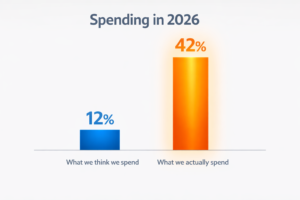
By 2026, the typical consumer will have between 5 to 8 active subscriptions. While this may not appear like a lot on paper, the economic implications are mindboggling. Studies reveal that, on average, the typical consumer underreports his or her monthly subscription costs by more than $130. This is referred to as the “perception gap,” which is the difference between what people believe they are spending versus what is going out of their pockets.

The 2026 “Perception Gap” and the Cost of Inactivity
What makes people fatigued about subscriptions in 2026 is psychology. When we see $10-$15 per month, we think that it’s insignificant. But when we take into account that we spend $10-15 every month on video services, musical streaming, games, storage on cloud servers, and even food deliveries, this becomes a lot of money, comparable to a monthly car bill or rental check.
The Hidden “Ghost” Subscriptions:
According to the statistics, about 64% of customers fail to unsubscribe from their free trials, which then turn into subscriptions. This forms the basis of subscription fatigue. By 2026, these “zombies” will be costing an individual around $127 each year for something they do not even use.
The Rise of Weekly Billing:
In an effort to curb the growing trend of churn due to the phenomenon of subscription fatigue, many mobile applications have shifted towards adopting a “weekly” payment model. Although paying $4.99 weekly may seem less than paying $20 monthly, it puts more strain on your wallet and becomes more difficult to keep track of after one year.
Fragmentation Frustration:
Fragmentation is at an all-time high in 2026 media environment, as watching one sporting season or three shows may require four separate media channels. Fragmentation is not only expensive, but it also causes “decision fatigue” whereby the energy expended to decide what to watch exceeds the enjoyment received from watching it.
The Psychology of the “Subscription Trap“
Why does it become so difficult to just tap on “Cancel”? The reason for that lies within the psychological tactics employed by these corporations, which ensure the longevity of their hold even when users experience subscription fatigue.
Anticipated Regret:
This is the fear of being faced with something new that must be seen right away once you unsubscribe from the service. The marketing department of 2026 capitalizes on this and uses personalized alerts to make you aware of all the things you would miss out on if you unsubscribe.
The “Convenience” Mirage:
Subscriptions, we are led to believe, help us save time. But time spent logging in, renewing expired credit cards, and navigating the different interfaces is time that ends up being a “net loss.” It becomes a burden for the brain, contributing significantly to the phenomenon known as subscription fatigue.
Loss Aversion:
People have a biological tendency to experience the pain of loss greater than the happiness of gain. Regardless of how long you have not used a health app, the loss of your “history” or “data” will be felt as a regression in any sense, even if the progression was digital.
The 2026 Audit: How to Fight Back
To cure subscription fatigue, you must move from a passive consumer to an active auditor. In 2026, the most financially healthy households use a “Zero-Based” subscription strategy.
The “Rotation” Method:
Rather than maintaining all the streaming services at once, users are now “cycling” through these services. You sign up to one streaming service, use it for 30 days, and then stop. It means that you switch from being a loyal subscriber to “content travel.”
Virtual Credit Cards:
One of the most effective technical measures to be adopted in 2026 involves the use of disposable or merchant-locked virtual credit cards. By limiting the amount to $20 for each merchant account, the chances of increasing prices without your approval become impossible. Any attempt by the business to charge beyond what was agreed will fail due to transaction rejections.
The 90-Day Usage Check:
However, if you have not accessed the application or used the service in the past three months, then your data says otherwise; you do not need the service. By 2026, there will be many apps in the banking industry with the in-built function of a “Subscription Manager” to make your life easier.
How Businesses are Adapting to Fatigue
The market is responding to subscription burnout. Businesses that won’t budge are experiencing all-time high churn rates, but those who will adapt are discovering innovative ways to add value.
The Return of Bundling:
Similar to cable television which combined multiple channels, digital bundles are becoming increasingly popular in 2026. The technology industry is offering a combination of music, videos, and games at the same price point. Although fewer payments are made, it may result in “Hidden Fatigue,” where you end up paying for three services just for one of them.
Ad-Supported Tiers (The “Freemium” Pivot):
In order to reduce the “barrier to entry,” several services have started offering a cheaper option with advertisements. But for most people, this has simply resulted in more subscription fatigue because they feel they are “paying for a subpar product.”
Micro-transactions for Premium Content:
“Pay-as-you-go” systems are being considered by some websites once again. Rather than pay an upfront monthly price, a smaller sum is paid to read one particular article or watch one particular video. From the point of view of the modern consumer, this can be the more appealing option.
Frequently Asked Questions (FAQ)
What exactly is subscription fatigue?
Subscription fatigue refers to the exhaustion one feels from the burden of paying for several subscriptions on a monthly basis and the strain that comes with having to juggle multiple online platforms.
How much does the average person spend on subscriptions in 2026?
Surveys reveal that the monthly expenditure of the typical American consumer is around $219, although consumers typically believe that they spend approximately $86 each month. This $133 difference constitutes a significant source of financial anxiety.
Is it better to pay monthly or annually?
However, although annual plans provide discounts, they will be useless in case you do not utilize the service for an entire year. To prevent yourself from subscription fatigue, limit annual plans to “Core Essentials,” which include cloud storage and main work software.
Can AI help me manage my subscriptions?
Indeed. In the year 2026, numerous “Smart Money” applications will have artificial intelligence systems that scan for you all your expenses and detect automatically those that might have become expensive recently, helping you easily terminate them.
Why do companies make it so hard to cancel?
It is called “forced retention,” and the corporations are well aware that by making it difficult for consumers to leave, they will retain some percentage who will stop trying and continue to pay. But in 2026, consumer protection legislation is advancing, and the “dark patterns” have now become illegal in several countries around the world.
Are annual subscriptions better than monthly ones?
Subscriptions per year provide discounts ranging between 10% and 20%, though they may be detrimental to subscription fatigue if you are not able to use the subscription for the entire period. An annual subscription should only be signed for what you deem necessary or essential, for instance, your primary cloud storage facility or a work-related software application.
How can I save money on subscriptions in 2026?
What works best in such a situation is changing the subscriptions. Rather than having five subscription accounts active all year round, it is possible to have one working for only two months, use it to its full capacity, terminate the account and proceed to the next service. This technique is known as the “rotation strategy.”
What is the main cause of subscription fatigue?
The best technique would be subscribing to your service in rotation. Rather than maintaining five streaming subscriptions throughout the year, maintain only one for two months, watch all that you wish to and then cancel it and switch to the next. This is known as “subscription rotation” strategy that is commonly used by people in 2026.
Final Conclusion: Toward a More Intentional Digital Life
The age of the “accidental subscriber” will soon come to a close. Subscription fatigue has been the wake-up call we need as consumers around the world, letting us know that it’s time for our digital universe to be working for us rather than against us. Take charge of what you’re spending on every month and be realistic about what really holds value for you.
Wealth in 2026 is no longer assessed based on what you can afford; rather, it should be about your ability to properly manage whatever you have. To do so, you just have to apply the “Rotation Method” and conduct your periodic audits to take control back from where it has been stolen. Prevent yourself from falling prey to “subscription fatigue” by conducting an audit of your top three subscriptions right now.

1 thought on “Subscription Fatigue 2026: The Economic Truth and How to Reclaim Your Budget”