

How to Reduce Screen Time Before It Quietly Ruins Your Health, Sleep, and Relationships
What can be done to minimize screen usage is something that millions of people are currently pondering because the majority of them are aware that they spend way too much time glued to their screens. The hard reality, unfortunately, is that an average American uses more than seven hours on their screens daily. Yes, you have read it correctly – seven whole hours. This implies that for someone who is sleeping for eight hours a day, about half of their active hours are spent looking at their screen.
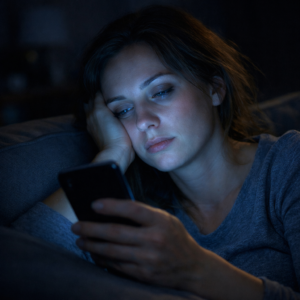
It does not seem like an issue since it occurs gradually. You grab your phone just to read a text. You launch a news app for a couple of minutes. You browse your social networks to find out how things are going. An hour goes by, then another one passes. Only when you realize what you have been doing all day long, a sense of uneasiness starts creeping up inside of you. The above story might ring some bells and you are in the right place. But guess what? It can be done easily without tossing your phone into the lake.
What Excessive Screen Time Is Actually Doing to Your Body and Mind
In order to solve a problem, first, it needs to be understood properly. People are aware of the idea that excess use of screens is “bad” for them – however, the exact nature of the harm caused is far worse than the general public understands.

The Sleep Destruction You Cannot See Happening
Each time you stare at a screen for any number of hours prior to bedtime, you are sending a message to your brain saying that it is still day time. Exposure to blue light from screens decreases your levels of melatonin by as much as 50%. Melatonin is a chemical substance that signals your body that it is now bedtime. The consequence of such a reduction is that you remain awake longer; you don’t get enough rest; and you feel tired despite having slept through the night. Sleep deficiency can cause you to put on weight, impair your immune system, and raise the probability of developing cardiovascular diseases.
The Mental Health Connection That Rarely Gets Discussed Honestly
Not only is the correlation between the two true but there is actually a causality. In 2025, BMC Public Health published a longitudinal study based on tracking the health records of 12,000 adults, which found depression in 42% of individuals who were using their phones for recreation for six or more hours per day. (Search Engine Journal) This is even more concerning because most people do not associate their feelings of unhappiness, restlessness, and anxiety with their phone because they don’t know why they just feel bad.
What Screens Are Doing to Your Eyes Every Single Day
In today’s world, digital eye strain has become one of the most frequent complaints at work in both the USA and Europe, and this issue tends to be getting even more prominent. Digital eye strain occurs among 80 percent of individuals that regularly spend prolonged amounts of time in front of screens (Digital Toppers), resulting in dry eyes, blurry vision, headaches, and neck pain. The cause of digital eye strain is the insufficient blinking rate, which reduces to about one-third of the regular rate due to staring at the screens, combined with constant focusing on the screen, as well as the bright and contrasting lighting from the screens.
How Your Relationships Are Quietly Suffering
There exists a form of loneliness which involves two persons being in the same physical space together as both of them look down at their phones. The phenomenon is known as “phubbing” – phone snubbing – and it has become one of the major reasons for relational dissatisfaction between spouses, within families, and among friends. Screen usage influences productivity and personal interactions in more ways than one might believe (Outlierkit) – not necessarily by means of heated disputes, but rather through many quiet moments that add up after many weeks and months. Meals taken in solitude, conversations cut halfway into them, and children who understand that their phone is far more captivating than them.
The Real Reasons You Cannot Simply Put Your Phone Down
The power of willpower alone just rarely helps when it comes to limiting screen time; knowing how to understand this is much more important than knowing any tricks. The devices you hold were developed deliberately by one of the most advanced companies of engineers for their maximum attraction to people. And it is not accidental; it is just business.

The Dopamine Loop Your Phone Has Been Designed to Exploit
Every message, every ‘like’, every post provides a little burst of dopamine, which is essentially the pleasure chemical of the brain. On average, people check their phones 205 times each day (All Things Insights), and with every single check, the brain releases a tiny amount of dopamine, making people feel like it is essential to check one’s phone again. Gradually, the sensitivity to dopamine becomes lower, and thus, more dopamine is required to feel satisfied. Hence, spending an hour browsing through social media does not provide sufficient satisfaction because the brain has been trained to crave something new.
Why Notifications Are the Starting Point of Every Spiral
A typical user receives about 65 to 80 notifications daily on his or her phone. Every single notification acts as a minor distraction and calls for an action that, in turn, results in more surfing, scrolling, and checking. Disabling all unnecessary notifications may seem like the easiest method to stop obsessive checking behavior (Trending world); however, very few of us ever thought about modifying our notification settings. By installing new applications on your smartphone, you agree that you will receive as many notifications as the developer sees fit; it is your interactions with the notifications that earn money through advertisements.
The Variable Reward Mechanism That Keeps You Hooked
Social media apps employ a psychological trick known as variable reward scheduling, which is the exact reason why slot machines are so addicting. At times, you go on Instagram, and there’s something that actually interests and amuses you. On other occasions, you go on Instagram, and there isn’t anything worth viewing. This inconsistency is the exact reason why it becomes so compelling. The ultimate fix for your phone obsession will not be found by reducing technology or managing your time better; the answer will be gained from figuring out why you continue to engage with your phone despite knowing its negative effects on you. (menafn)
How Boredom Intolerance Keeps You Reaching for Your Phone
One of the biggest reasons why too much screen time occurs is because of an almost zero tolerance for boredom, something that screens have actually made happen. It used to be that just standing there in a queue for the bus was all that needed to happen. Now, a mere two-minute wait seems intolerable without taking out your phone. 60% of American users trying to reduce their use of phones will do so by finding a replacement activity (Glimpse). This indicates how most people actually know that what’s necessary is the filling of a vacuum, not merely the elimination of the phone.
Proven Practical Strategies That Actually Reduce Screen Time
This is where the real work begins. This is not something that comes from will power or feeling bad. This requires making actual, concrete modifications to your surroundings, your settings, and your behaviors. These tactics are scientifically proven and realistic for implementation right now.

Use Your Phone’s Built-In Tools Before Buying Anything Else
Prior to installing any third-party applications, learn about all the screen time management options that come installed in your device by default. The Screen Time function in iOS enables tracking your time spent in certain applications, as well as setting daily time limits on each one. This can be found within Settings > Screen Time. (Semrush) For Android devices, the same functionality can be found in Settings > Digital Wellbeing. This gives you the ability to set strict daily limits on particular applications, create downtime sessions, and receive an honest account of your screen time usage weekly. Most users receive a shocking revelation about their phone usage once they actually check the numbers.
The Phone-Free Zone Strategy That Changes Your Home
The first and foremost technique that can be effectively implemented to avoid phone usage and thereby cut down screen time is by designing phone-free zones within your house. Designing time free from devices and designing phone-free zones, especially the bedroom and dining table, create structural obstacles that don’t involve any personal efforts. (Trending world) Bedroom is the primary focus when it comes to design phone-free zones because the use of the phone during sleeping hours directly affects your sleep cycle. Dining table is the secondary area that requires phone-free zoning since the use of phones while dining out completely destroys the bonding of the family.
The Gradual Reduction Method That Actually Sticks
Methods of cold-turkey withdrawal when cutting down screen usage do not work because they call for too many changes to be made all at once and create the urge to slip back into the old habits. A way to cut down screen usage that works involves reducing the number of hours of usage every week. (Source link Assistant) Such a method takes into account how difficult it is for a person’s brain to make such drastic adjustments. To begin with, a reduction of one hour of usage every week starting from one week of a reduction in the last hour before going to sleep would be beneficial.
Replacing Phone Time With Something That Actually Satisfies
However, the most effective approach for creating lasting change is to replace the habit altogether, rather than remove it. Creating designated slots for other activities such as a walk for fifteen minutes, outdoor reading, and other hobbies on your schedule is an effective way to ensure you have other activities to take up the space the screens were filling. (Search Engine Journal) The idea here is that your replacement activity should be easy to do, and one that you actually enjoy, rather than an activity you might have to force yourself into doing. For example, a book that can be picked up off your coffee table whenever you feel the urge to scroll through your smartphone or a puzzle game on your kitchen table.
How to Reduce Screen Time for Children and Teenagers Without Constant Arguments
Screen time presents parents with an especially challenging issue, considering that the very same smartphone used by the parent to restrict usage among the children serves as the primary means through which they conduct their education, interact socially, and communicate with the rest of the world. Too much regulation results in tension and loopholes, while too little results in dependency.

Understanding the Age-Based Guidelines Paediatricians Actually Recommend
According to the American Academy of Pediatrics, there should be zero exposure to screens by children below the age of 18 months apart from video chatting; educational media can be watched between the ages of 18 to 24 months and not exceed an hour for non-educational content after the age of two but before five. (Search Engine Journal)
For older kids, however, the conversation is less focused on time limits and more on whether screens are substituting for adequate amounts of sleep, exercise, homework or face-to-face interaction. Families that utilize this yardstick as opposed to merely counting hours find it much easier to have constructive dialogues with their kids regarding screen exposure because the dialogue is based on outcomes.
Why Modelling the Behaviour You Want Is More Powerful Than Any Rule
Children do not do what we tell them to do; rather, children copy what they see us doing. When a parent demands that the child puts his phone away at the same time he himself is doing the exact same thing, this shows an extreme level of hypocrisy. This means that screen time influences relationships and behavior modeling, both starting from the early years and continuing into adulthood. (Outlierkit) There is one action which the parent should take to limit his child’s screen time: the parent must limit his/her screen time. For instance, placing the phone in another room while sleeping, putting it away during dinner time, and playing phone-free family games.
Creating a Family Screen Time Agreement That Children Help Design
Rules enforced on children lead to rebellion. Rules created through the involvement of the child result in compliance. Having a sit-down family discussion to come up with rules about screen time regarding what is acceptable, when, where, and for how long, leads to much higher compliance compared to the imposition of rules from above. 57% of Americans hoping to reduce the use of their phones have plans of deleting time-wasting applications (Glimpse) — which makes all the difference between making a choice to remove such an application out of a personal decision and being forced to do it by the parents. Let the children help identify screen activities worth doing versus those not really adding any value.
The Offline Alternatives That Children Will Actually Choose
The final piece of the family screen time puzzle is having genuinely attractive alternatives available — not as punishments, but as natural parts of daily life. Board games, physical activity, cooking together, creative projects, outdoor time, and reading all compete successfully with screens when they are made accessible and are enjoyed alongside parents rather than assigned as chores. Research consistently shows that the better question for families is not how much screen time a child has, but whether screens are replacing sleep, homework, or face-to-face time (Search Engine Journal) — and when offline alternatives are genuinely present and enjoyable, they naturally fill those spaces without requiring enforcement.
❓ FAQ
How much screen time is too much for adults?
According to experts, less than two hours of screen time per day is ideal for health, although recreational use can be done in moderation. Currently, Americans are spending more than seven hours on average every day. For example, when you use screens recreationally and spend more than six hours doing it every day, chances of being depressed and anxious are high.
Does reducing screen time actually improve sleep?
Absolutely — and you can feel the difference within just a few days. The blue light emitted from screens inhibits melatonin production by as much as 50%, thereby preventing sleep from kicking in at a proper time. Discontinuing use of your screens an hour before bedtime may be the most scientifically supported sleep hack around. It has been shown that many individuals fall asleep quicker and sleep deeper within just a week of starting the practice.
What is the fastest way to reduce screen time starting today?
The first three changes that will affect your life quickly include turning off all your unnecessary notifications straight away, switching on the built-in feature on your smartphone that monitors the screen time used on your favorite applications, and placing your phone somewhere else but not your bed while charging it at night. These changes do not require any strength of character because you are structurally changing the environment.
Is all screen time harmful, or are some activities better than others?
Screen usage is also not created equal. Talking with your family via video calls, learning, being creative, and purposeful surfing of the internet are quite different from scrolling through social media or binge watching your favorite shows. The most relevant issue to address here is not the amount of time spent on the screens, but whether that time was purposeful, and did it replace something more important – like sleep or physical activity.
📝 Conclusion
However, learning how to reduce time spent in front of screens is only the first step; it is when you recognize your attention as something valuable that true transformation begins. The moments you spend engaged with your screens are moments stolen from sleep, from socialization, from your body, and ultimately from living your own life. The advice offered in this article is not about striving for perfection but about making incremental decisions that will lead to a more mindful, authentic existence. Take a step today, and the rest will follow naturally.