

Edge Computing and Artificial Intelligence Integration: 2026
Edge computing and artificial intelligence integration represents the defining technological leap driving modern digital infrastructure across the United States and European nations today. By processing massive volumes of complex data directly on local devices rather than routing information to distant cloud data centers, decentralized computing architectures eliminate latency delays and reduce network bandwidth strainu. As smart devices, industrial sensors, and autonomous systems proliferate worldwide, embedding machine learning algorithms directly onto localized hardware microchips enables instant, high-speed decision-making in real-world operational environments.

Deploying intelligent local processing transforms critical global industries ranging from healthcare diagnostics and autonomous transportation to industrial manufacturing and smart grid management. Moving neural network computations closer to where data is actively generated preserves user privacy, enhances cybersecurity protection, and ensures uninterrupted system performance during connectivity outages. Understanding how local computing microchips, machine learning algorithms, and high-speed wireless networks converge empowers technology leaders, developers, and consumers to navigate the next major evolution of our hyper-connected digital world.
Hardware Innovations in Edge Computing and Artificial Intelligence Integration
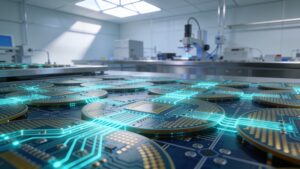
Developing specialized microchip processors and energy-efficient neural hardware forms the foundational hardware pillar within edge computing and artificial intelligence integration for modern digital networks. This section examines low-power neural processing units, neuromorphic computing chips, specialized field-programmable gate arrays, and thermal management architectures.
Low-Power Neural Processing Units and On-Device Inference
Custom neural processing units embedded inside smartphones, wearable health monitors, and smart home appliances execute complex machine learning algorithms locally without draining battery power reserves rapidly. Dedicated microchip architectures optimize mathematical tensor operations, allowing real-time image recognition and natural language processing directly on mobile hardware. On-device inference eliminates round-trip latency to remote cloud servers, delivering instant computational responses while extending handheld device operational lifespans significantly.
Neuromorphic Computing Chips and Event-Driven Processing
Neuromorphic silicon microchips replicate the structural physical neural network architecture of the human brain, processing incoming sensor data using event-driven electronic spikes. Processing information only when sensor inputs change reduces total energy consumption by up to ninety percent compared to traditional computing processors. Neuromorphic hardware excels at continuous environmental monitoring, pattern detection, and adaptive robotics processing in harsh operational environments where electrical power resources remain extremely constrained.
Field-Programmable Gate Arrays and Dynamic Hardware Reconfiguration
Field-programmable gate arrays offer flexible hardware customization, enabling engineers to reconfigure physical silicon logic circuits on demand to accelerate new machine learning model architectures. Updating hardware configurations remotely over software networks prevents microchip obsolescence as artificial intelligence models evolve rapidly over time. Hardware reconfigurability allows industrial factories, telecommunication hubs, and satellite networks to optimize data processing pipelines continuously without replacing physical computer chips.
Passive Thermal Management and Compact Silicon Enclosures
Integrating high-performance artificial intelligence processors into tiny IoT sensors requires innovative passive cooling mechanisms that dissipate heat without bulky mechanical fans. Advanced thermal conductive materials and copper vapor chambers transfer operational heat away from processor cores directly into compact aluminum device enclosures. Superior thermal engineering maintains stable microchip processing speeds during continuous heavy computational workloads, preventing thermal throttling in sealed outdoor sensor installations.
Industrial Automation in Edge Computing and Artificial Intelligence Integration
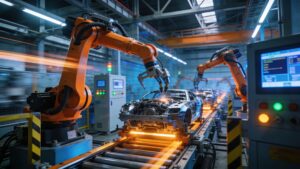
Transforming manufacturing assembly lines and supply chain logistics represents a high-value deployment sector within edge computing and artificial intelligence integration across commercial markets. This segment covers real-time predictive maintenance sensors, autonomous mobile factory robots, computer vision quality control, and decentralized smart power grids.
Predictive Maintenance Sensors and Mechanical Vibration Analysis
Sensors attached directly to heavy industrial machinery analyze physical vibration frequencies, operational temperatures, and acoustic sound patterns continuously in real time. On-device machine learning models detect tiny mechanical anomalies instantly, predicting potential equipment failures weeks before physical component breakdowns occur. Proactive predictive maintenance eliminates costly unexpected factory downtime, lowers machinery repair expenses, and extends the overall operational lifespan of heavy industrial manufacturing infrastructure.
Autonomous Mobile Robots and Real-Time Warehouse Navigation
Autonomous factory robots utilize localized computer vision and LiDAR sensors to navigate complex warehouse floors safely without human supervision. Processing spatial mapping data on-device enables robots to detect moving obstacles, recalculate transit routes, and avoid collisions instantly within milliseconds. Edge processing allows fleet coordination algorithms to function smoothly even when wireless factory networks experience sudden signal degradation or heavy bandwidth traffic congestion.
High-Speed Computer Vision and Manufacturing Quality Control
Ultra-high-definition industrial cameras paired with edge vision processors inspect high-speed assembly line products for microscopic surface defects instantly. On-device neural networks identify structural manufacturing flaws, improper solder joints, and color inconsistencies at speeds exceeding human visual capabilities completely. Automated real-time quality control prevents defective merchandise from reaching consumers, reducing expensive product recall risks and maintaining consistent product manufacturing standards.
Decentralized Smart Power Grids and Renewable Energy Balancing
Smart power grid edge nodes analyze electrical voltage fluctuations, consumer demand patterns, and localized solar generation outputs directly at distribution substations. Localized AI algorithms balance electrical power flows dynamically, preventing regional grid overload conditions and integrating fluctuating renewable energy sources seamlessly. Decentralized power grid management enhances energy infrastructure security, lowers transmission energy losses, and guarantees stable electrical power delivery across urban population centers.
Smart Cities and Mobility in Edge Computing and Artificial Intelligence Integration
Revolutionizing urban infrastructure and autonomous transportation systems showcases the broad societal impact of edge computing and artificial intelligence integration today. This section details smart traffic light optimization networks, autonomous vehicle sensor fusion, public safety camera analytics, and environmental air quality tracking.

Dynamic Traffic Light Optimization and Congestion Reduction
Intelligent traffic intersection controllers analyze live camera feeds and vehicle location data locally to adjust traffic signal timings dynamically. Processing traffic flow patterns on site reduces vehicular idling times, minimizes urban traffic congestion, and lowers toxic carbon emissions across dense metropolitan areas. Prioritizing emergency vehicle transit corridors automatically through smart intersection nodes speeds up first responder arrival times during critical medical and fire emergency calls.
Autonomous Vehicle Sensor Fusion and Ultra-Low Latency Safety
Self-driving vehicles merge multi-modal sensor inputs—including radar, camera video, and LiDAR—using powerful on-board edge computing supercomputers. Processing spatial environment data directly inside the vehicle guarantees split-second emergency braking and steering reactions without relying on external wireless networks. Ultra-low latency decision-making protects pedestrian safety, prevents vehicle collisions, and forms the fundamental technological core required for safe fully autonomous public transportation networks.
Privacy-Preserving Public Safety Analytics and Anonymized Monitoring
Urban safety cameras equipped with edge processing microchips analyze public spaces for structural fire hazards, traffic accidents, or crowd surges locally. Face-blurring algorithms anonymize visual video feeds directly on camera hardware before streaming any imagery to central municipal repositories. On-device video redaction preserves citizen personal privacy rights while equipping local municipal emergency services with actionable real-time situational awareness across public urban spaces.
Micro-Climate Environmental Monitoring and Air Pollution Tracking
Environmental sensor arrays deployed across city streets measure localized particulate pollution, chemical gas concentrations, and noise levels continuously. Edge analytics models identify specific pollution sources locally, alerting municipal environmental agencies to illegal industrial emissions or localized gas leaks immediately. Micro-climate data collection enables urban planners to design healthier green city spaces, optimize public park locations, and improve overall public health living conditions.
Privacy and Security in Edge Computing and Artificial Intelligence Integration
Securing sensitive personal data and hardening local hardware endpoints forms a critical protective layer within edge computing and artificial intelligence integration systems. This section explores zero-trust device authentication, federated machine learning models, encrypted hardware enclaves, and localized cyber threat mitigation.

Federated Learning Networks and Distributed Model Training
Federated machine learning allows thousands of decentralized edge devices to train shared artificial intelligence models collaboratively without sending raw private user data to central cloud databases. Localized mobile devices compute model updates individually, transmitting only encrypted mathematical weight parameters back to central aggregation servers. Federated learning safeguards user personal privacy, complies with strict international data protection laws, and improves global algorithm performance continuously.
Hardware Security Modules and Encrypted Execution Enclaves
Tamper-resistant cryptographic hardware modules integrated into edge chips create secure isolated execution environments for running sensitive machine learning algorithms safely. Hardware enclaves protect encryption keys, biometric verification data, and proprietary AI models from unauthorized physical tampering or software malware attacks. Secure hardware processing guarantees system integrity across unattended remote IoT deployments, preventing malicious actors from hijacking critical remote industrial infrastructure.
Localized Cyber Threat Detection and Real-Time Malware Blocking
On-device security software monitors system memory allocations, network traffic packets, and hardware processor usage patterns continuously for suspicious malware behaviors. Machine learning models running on edge processors identify zero-day security threats and isolate compromised network nodes instantly within milliseconds. Localized cyber defense mechanisms prevent malicious software from spreading across broader corporate networks, maintaining reliable system operational security during targeted cyber attacks.
Regulatory Data Sovereignty and Compliance Standardization
Processing user data locally on edge devices simplifies corporate compliance with strict regional data sovereignty laws like Europe’s General Data Protection Regulation (GDPR). Keeping personal medical records, financial transactions, and private voice recordings within local geographic boundaries eliminates risky cross-border data transfers completely. Meeting international regulatory privacy standards builds consumer trust, reduces corporate legal liability risks, and accelerates safe enterprise artificial intelligence adoption globally.
Frequently Asked Questions (FAQ)
What is the main difference between cloud computing and edge computing?
Cloud computing processes data on centralized servers located in distant data centers, which can cause network latency delays and bandwidth congestion. Edge computing processes data locally directly on or near the device generating the information, enabling split-second decision-making, reduced network usage, and enhanced data privacy.
How does edge AI improve user data privacy?
Edge AI processes personal information—such as biometric data, voice recordings, and security video feeds—locally on your device. Because raw data does not need to be transmitted across the internet to central cloud servers, the risk of data breaches, unauthorized interceptions, and privacy violations is significantly reduced.
Why is low latency so crucial for autonomous vehicles?
Autonomous vehicles traveling at high speeds travel several feet per millisecond. Relying on distant cloud servers for processing introduces latency delays that could cause fatal accidents. Processing sensor data locally on edge hardware ensures instant braking and steering decisions within milliseconds under all driving conditions.
What is federated learning and how does it work?
Federated learning is a machine learning technique where multiple local devices train a shared AI model collaboratively. Instead of sending private raw data to a central server, devices compute model updates locally and share only encrypted mathematical parameters, keeping user data secure and private.
Final Conclusion
Mastering edge computing and artificial intelligence integration is essential for shaping the future of global technology, industrial automation, and personal digital privacy. By bringing powerful machine learning capabilities directly to localized hardware microchips, modern computing networks overcome traditional cloud latency bottlenecks, bandwidth limits, and security vulnerabilities. From self-driving cars and smart city infrastructure to medical diagnostics and factory automation, processing data locally unlocks unprecedented operational efficiency and real-time responsiveness.
As technology leaders across North America and Europe continue investing heavily in next-generation silicon processors, energy-efficient microchips, and high-speed wireless networks, decentralized computing will become an invisible yet essential foundation of daily life. Embracing local AI processing safeguards individual data privacy while powering the intelligent, autonomous systems of tomorrow. Supporting robust cybersecurity standards and open computing architectures today ensures a safe, efficient, and technologically empowered world for generations to come.

1 thought on “Edge Computing and Artificial Intelligence Integration: 2026”