

Carbon Monoxide Alarm Buying Guide: What to Check Before You Buy
You can’t see it, you can’t smell it, and you can’t taste it. That’s the whole reason carbon monoxide (CO) alarms exist, and also the reason that picking the right one is worth ten minutes of your time.
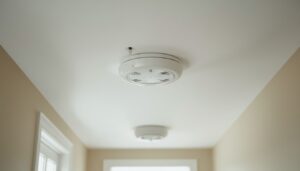
The heating season is the moment most people think about this, so here’s a plain buying guide. It covers what to look for on the box, how the standards differ between the UK/Ireland and the US, where the sources say to put an alarm, and how to look after it once it’s on the wall. It draws on the NHS, two Irish and Northern Irish safety bodies, a UK fire service, and US sources from the Consumer Product Safety Commission (CPSC), the Environmental Protection Agency (EPA) and the Centers for Disease Control and Prevention (CDC). I’m not an engineer or a doctor, and this is general information, not advice for your home. If you have any worry about an appliance, a qualified engineer is the right person to ask.
Why an Alarm Matters, and What It Can’t Do
The NHS says carbon monoxide is “colourless and does not smell, so you cannot tell if it is around you.” It lists headache, dizziness, sickness, weakness, confusion and shortness of breath as symptoms, and says they may ease when you go outdoors and get worse when you come back in.
The usual causes, according to the NHS, are heating and cooking appliances that are “not installed properly, are faulty or are poorly maintained.” It names gas boilers, gas cookers, paraffin heaters and portable generators, and warns against indoor barbecues, camping stoves and running an engine in a closed garage.
An alarm is a backup, not a fix
This point appears again and again. The EPA says an alarm is “a back-up to BUT NOT A REPLACEMENT for proper installation, use, and maintenance” of fuel-burning appliances. An Irish standards body says CO alarms “are a warning device and do not eliminate CO,” and that they shouldn’t create a false sense of security. In practice, that means an alarm doesn’t replace getting your boiler, stove or chimney checked.
What the sources say about servicing
The NHS says to have appliances serviced regularly by a qualified, registered engineer, and to keep rooms ventilated and chimneys and flues clean. The Irish body adds that oil and gas boilers should be serviced every year, and chimneys swept yearly. I can’t tell you how often your own appliances need servicing, because it depends on the appliance and your local rules.

What to Look For on the Box
This is the practical part. Different sources stress different things, so I’ve put them together and marked where they agree.
A recognised standard and an approval mark
In the UK and Ireland, the sources say to look for the European standard EN 50291. The Northern Ireland health and safety body says the alarm should comply with it and carry an approval mark, giving a CE mark or a Kitemark as examples. The Irish standards body says the same.
In the US, the EPA says to “make sure the device is certified to the most current Underwriters Laboratory (UL) standard 2034,” and also mentions another standard known as IAS 6-96. If you’re elsewhere, look for the mark your country uses to show independent testing. That last line is my own suggestion.
Features worth having
The Irish standards body suggests an alarm with:
- A fault signal, so it tells you when something’s wrong.
- An end-of-life indicator, so it tells you when to replace it.
- A record of past detections. Its words are: “Aim to purchase an alarm that records when carbon monoxide was detected.”
I haven’t seen a source that says these are required. They’re a sensible shortlist.
An audible alarm, not a sticker
The Northern Ireland body says an audible alarm “gives an instant warning of dangerous carbon monoxide levels” and advises against “Black Spot labels/cards.” In other words, a patch that changes colour isn’t a substitute for something that makes a noise.
Sealed or replaceable?
The same body notes that some units have replaceable or removable parts, while others are sealed for the unit’s life. Lifespans, it says, can range from one to six years depending on the manufacturer and battery life. I couldn’t find a single official lifespan number, so the label and instructions are what to trust.
Combination alarms
The CPSC says combination smoke and CO alarms are available. I haven’t read advice for or against them, so I’m just passing on that they exist.
Price
The Irish standards body says quality alarms cost roughly €40 to €50. That page has no date, so treat the number as a rough guide, not a current price.

Where to Put It: The Sources Don’t All Agree
This is where I’d tell you to read your alarm’s own instructions first. Here’s what the sources say.
- The NHS says to fit an alarm “for each room of your home containing appliances that burn gas, oil, coal or wood.”
- A UK fire service says an alarm should be fitted in rooms with any fuel-burning appliance, in rooms where people spend the most time such as living rooms and bedrooms, and in any room with a flue running through it.
- The Irish standards body says to install more than one alarm, near bedrooms and rooms with heating appliances.
- The CPSC says alarms should be installed on each level of the home and outside sleeping areas, and not in attics or basements unless they include a sleeping area.
- The EPA says to install one in the hallway near every separate sleeping area, and says the CPSC recommends at least one alarm in every home.
- The Northern Ireland body says to follow the manufacturer’s instructions on location, and says fitting alarms at low level isn’t recommended, because CO is slightly lighter than air.
How I’d read that
This is my own interpretation. The UK and Irish advice is built around where the appliances are. The US advice is built around where people sleep. The safest approach seems to be both: near sleeping areas, and in rooms with fuel-burning appliances, following the instructions that come with your alarm. If you aren’t sure, the manufacturer’s instructions or the fire service in your area can say what’s right for your home.
Don’t cover it up
The Northern Ireland body says: “Never cover or paint over alarms once installed.” That’s easy to forget during decorating.

Testing, Batteries and Replacing It
Buying the alarm is half the job.
Test it
The Northern Ireland body says: “Always test your carbon monoxide alarm to the manufacturer’s instructions.” The CPSC recommends testing alarms monthly and replacing the batteries in smoke and CO alarms annually. Those are the CPSC’s words for battery-powered models, so check what yours needs.
Battery checks
The CDC page I read says to install a battery-operated or battery backup CO detector, and to check or swap the battery when you change the clocks each spring and fall. That page doesn’t give a year, so treat it as a general habit, not a dated rule.
If it fails or expires
The Northern Ireland body says failed alarms should be returned to the installer or supplier, or replaced. The Irish standards body says to replace the alarm when it reaches its expiry date. If yours doesn’t show one, I’d check the label or the instructions, or treat it as old. That last part is my own suggestion.
If you rent
The Northern Ireland body says landlords are always responsible for gas and electrical appliances, and that a tenancy agreement can set repair responsibilities. Rules about alarms in rented homes differ between countries and regions, and the page I read only covers Northern Ireland. Check your local rules or ask your landlord.

If the Alarm Goes Off
The sources agree on the first step: get out.
The CDC says to “leave your home immediately and call 911 if your CO detector ever sounds.” In the UK, the NHS says that if you suspect poisoning you should stop using suspect appliances if you safely can, go outside, and get medical advice, and not re-enter the building until advised.
For the UK, the NHS lists these contacts:
- NHS 111 for urgent advice if you think you might have symptoms.
- 999 or A&E if you or someone else has trouble breathing, sudden confusion, lost consciousness, weakness, or chest or muscle pain. The NHS says not to drive to A&E.
- National Gas Helpline, 0800 111 999, free and open 24 hours, for a suspected gas appliance leak.
Elsewhere, use your own emergency number and your gas or energy supplier’s emergency line.
[YOUR NOTE: if you’ve ever had an alarm go off, even a false alarm, one honest line about what you did. Leave it out if you haven’t.]
A simple shopping checklist
These steps are my own suggestions, built from the sources:
- Look for the right standard for your country (EN 50291 with an approval mark in the UK and Ireland, UL 2034 in the US).
- Choose an audible alarm, not a colour-change sticker.
- Look for a fault signal and an end-of-life indicator.
- Read the instructions before you fit it, and keep them.
- Put one near sleeping areas and in rooms with fuel-burning appliances.
- Test it on a schedule and replace it when it expires.
- Get appliances serviced by a qualified engineer.
What I couldn’t confirm
Several of the pages I read are undated, including the Northern Ireland, Irish and CPSC pages, and the CDC page doesn’t give a year. The NHS page was last reviewed in December 2025, and the EPA page was last modified in September 2026. I haven’t verified current prices or lifespans of any alarm, and I haven’t covered caravans, boats, workplaces or alarms for people with hearing difficulties, because the sources I read don’t go into them.
A short wrap-up
A good alarm is cheap compared with what it protects. Pick one that meets the right standard, put it where the sources suggest, test it, and don’t skip the boiler service. If it ever sounds, leave first and ask questions after.