
Why Do We Waste So Much Food — And How to Stop
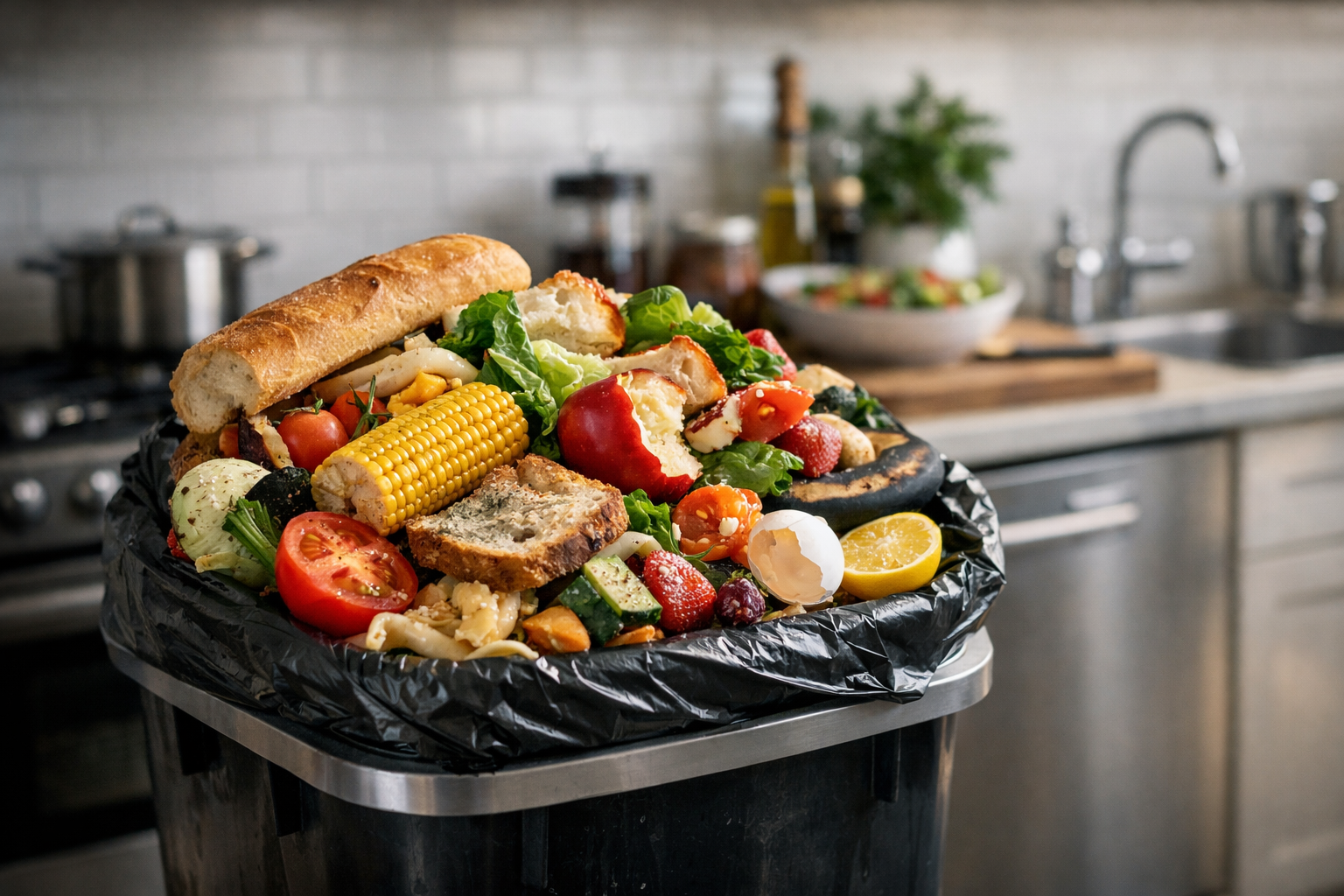
Why do we waste so much food? It is a question that becomes more urgent and more uncomfortable the closer you look at the numbers. The United States alone discards nearly 60 million tons of food every year — approximately 40% of its entire food supply — making it the single largest food-wasting nation on earth, according to Recycle Track Systems’ 2026 analysis. That works out to roughly 325 pounds of wasted food per person, per year. In Europe, the picture is equally sobering: Eurostat’s 2025 data reveals that EU households generated around 130 kilograms of food waste per inhabitant in 2023, with households responsible for 53% of all food wasted across the continent.
The magnitude of the problem goes well beyond mere irritation or lack of efficiency. As reported by UN Environment Program, the food which gets produced yet remains uneaten results in 8-10% of greenhouse gas emissions around the world. ReFED’s influential 2025 U.S. Food Waste Report has estimated that the excess amount of food in America has gone back up to 73.9 million tons in 2023 alone, which amounts to whopping losses of $382 billion dollars, making up 1.4% of the total GDP of the US. This is not just an environmental problem of the future. It is happening right here and now in the US and Europe.
This guide delves into the actual factors behind food waste — including our tendency towards excessive purchasing, supply chain failures, and labeling issues — and reveals what you can do about them, based on the best scientific advice currently available.
The Real Reasons We Waste So Much Food at Home
Households contribute to more than half of the total food wastage in both Europe and America. It is important to understand how this waste occurs before any effective changes can be made.

Overbuying — The Optimism of the Weekly Shop
The majority of food waste at home is generated not from the trash but in the store. This fact is supported by the findings of RTS for 2026, which state that 43% of food that is wasted in America is wasted in the home. Overbuying is a problem that contributes to household waste. People always buy too much food to eat before it goes bad due to bulk buying, grandiose meal planning that rarely comes true, and hopefulness that next week will be an exception. Therefore, the food bought at the beginning of the week is trashed by the end of the same week.
Confusion Over Date Labels — “Best Before” Versus “Use By”
However, much of the food wasted at home is discarded without reason – simply because of misunderstanding date labels on packaging. As the USDA and the Food Law and Policy Clinic at Harvard have emphasized, the key issue here involves two types of labels – the “use by” label and the “best before” label. The “use by” label denotes when the food actually becomes unsafe; the food is still fully edible beyond this point. However, the “best before” label denotes the time when the product would be most optimal in terms of its quality, although the food will remain edible even beyond this date.
Poor Meal Planning Leads Directly to Poor Food Use
The lack of a meal plan is consistently one of the strongest predictors of excessive food waste in the home. Individuals who shop with no thought as to how the ingredients will be prepared and eaten during the week ahead do so with unrealistic aspirations, buying produce, protein, and other foods that will eventually go bad without ever being consumed. ReFED notes that meal planning represents a high-impact action that can reduce food waste, as detailed in its 2025 report. Meal planning just four to five days ahead and then shopping for these meals is shown to reduce food waste.
Improper Storage Accelerates Spoilage Unnecessarily
Most of the food wasted in homes does so due to improper storage rather than due to being past its usable period. There are fruits which emit ethylene gas, which causes vegetables stored near them to ripen quickly. It has been found that bread gets stale more quickly when kept in the fridge than when kept outside of it. Fresh herbs are better preserved when they are stored in standing water, like flowers, than when stored in a bag. Both WRAP’s research on consumers and USDA guidelines about storing food indicate that proper food storage increases the shelf life of household food items by 3 to 7 days.
How Supermarkets, Restaurants, and Supply Chains Waste Food
Individuals bear the most burden of food waste production – but they are by no means the only ones. The combined contribution made by supermarkets, foodservice operations, and agriculture to overall waste totals is significant and inadequately studied.
Cosmetic Standards Reject Vast Quantities of Edible Produce
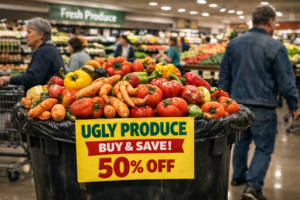
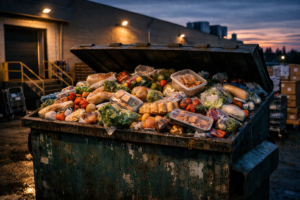
Among the least visible yet one of the most important causes of food wastage is the wastage of food before it even gets to the supermarket shelf. In both America and Europe, cosmetic standards such as shape, size, color, and looks determine the quality of food. For this reason, vast quantities of food get rejected just outside the farm because they don’t have the right shape, color, or size although they can be eaten and are healthy. Misshaped cucumbers, carrots, and small apples are just some of the many vegetables and fruits that are rejected for no other reason than their looks. According to FAO figures, this constitutes a major percentage of the global loss of food amounting to 13.2%.
Supermarket Overstock and “Abundant Shelf” Practices
Purposefully stocking shelves in excess is used by retailers to convey an illusion of plenty as it has been shown repeatedly through studies that shelves stocked fully result in higher sales compared to those that are not. It is, however, obvious that there will be some percentage of this excess that goes to waste since it cannot be sold by the deadline. As stated earlier, RTS highlights the fact that retail grocery outlets and food services account for 40% of food wastage in the US. According to the Market.us 2026 report on food waste, consumers’ desire for ugly produce has risen, and a few retailers have started collaborating with farmers to sell such produce at reduced prices.
Restaurant Portion Sizes and Kitchen Prep Waste
The food service industry consists of several segments, such as restaurants, cafes, caterers, and fast-food chains. Food loss is produced during two main activities in this sector: preparing food and leftover food from consumers’ orders. Portion sizes have increased substantially since the 1980s in both the USA and Europe, and now produce significant amounts of uneaten leftovers that get thrown out after each serving. In addition to food leftovers, losses occur during the preparation phase, such as when preparing sauces, proteins, or vegetables in excess or cutting products incorrectly. The report from Market.us shows that there are increasing cases of cooperation between restaurants and charitable organizations for recovery purposes.
Supply Chain Failures From Farm to Distribution Center
There are losses of food along each step in the supply chain prior to its delivery to a household or dining establishment. These include losses resulting from poor refrigeration in transportation, storage delays, damage during handling, and inefficient logistics due to a mismatch between production and consumption levels. According to figures provided by the FAO for the year 2025, about 13.2% of all food generated is wasted prior to reaching any consumer level in any form whatsoever. It is also important to note that Market.us, in its 2026 report, indicates the use of IoT devices for real-time inventory tracking.
The Environmental and Economic Cost of Wasting Food
It’s not only an ethical and practical issue either – it’s an issue that comes at an exact price that impacts everybody, regardless of whether they are aware of it or not.
Food Waste Is a Significant Driver of Climate Change
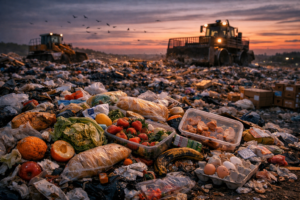
Decomposition of food in a landfill results in the emission of methane, which is about 80 times more harmful to the environment than carbon dioxide when considering the 20-year horizon after emission. According to the UNEP, food produced but not consumed contributes to 8 to 10 percent of overall global emissions of greenhouse gases. RTS states that food waste is the most substantial item found in American landfills, comprising 22 percent of total municipal solid waste. In its 2025 research, the Sustainable Agency reports that on average, 19 percent of food produced is wasted by households, food services, and retail businesses.
The Financial Cost Hits Every Household Directly
Not only is the issue of food wastage a system-wide phenomenon, but it is also very expensive as a personal act. On average, an American family spends $1,500 on food waste annually, according to RTS. For the United States alone, ReFED reports estimate the economic loss from food wastage at $382 billion annually. According to WRAP, the average UK family loses around £1,000 annually as a result of food waste in Europe. Against the backdrop of rising grocery costs owing to inflation and related issues in the food supply chain, one surefire way for families to cut down their expenses is by eliminating food wastage in the home.
Food Waste and Global Hunger Exist Simultaneously
Undoubtedly, the most challenging ethical issue associated with food waste concerns its link to food insecurity across the world. According to the FAO, about 733 million people suffer from hunger at present, despite the fact that about 1.3 billion tons of food are being wasted annually around the world. Both situations occur simultaneously not due to the fact that there is a lack of food in general, but rather due to the fact that the food chain suffers from enormous inefficiencies when it comes to distribution and consumption. In the United States, for example, RTS informs that food banks are becoming increasingly popular.
The Water and Land Cost Nobody Talks About
In addition to the greenhouse effect, food waste holds an unseen cost for the environment. Resources such as water, energy, and land are consumed in vast amounts in order to generate food that ultimately goes to waste. According to the FAO, the amount of water used yearly for producing food that eventually gets wasted equals about three times the capacity of Lake Geneva. One and a half billion hectares of land, the area equal to more than the size of China, are devoted to growing crops which become food waste. Data from The Sustainable Agency from 2025 proves that dealing with food waste is a top way for the government and individuals to contribute to climate protection, after using less fossil fuels.
What You Can Actually Do to Waste Less Food Starting Today
Knowing the reasons behind our wastage of so much food is important, but perhaps even more important is knowing how we can change things, starting from the comfort of our own kitchen. The answer is surprisingly easy and simple to implement.
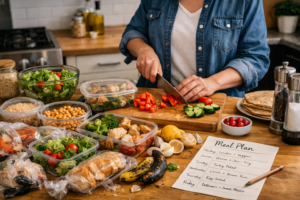
Plan Your Meals and Shop With a List — Every Single Week
Meal planning, according to ReFED and WRAP, remains the most impactful single step that one can undertake to prevent food waste at home. Meal planning need not be complex – simply planning four dinners and some lunches and having a targeted grocery list will ensure that there are no impulse buys, and that every purchase serves a clear purpose. It is clear from WRAP’s research on consumers that homes that engage in meal planning end up generating less food waste than homes that do not plan their meals. The addition of using the meal leftovers to make one meal a week will amplify the benefits.
Learn What Date Labels Actually Mean and Act Accordingly
The distinction between “best before” and “use by” dates is the consumer information that can make the greatest impact right away. The USDA makes it clear that “best before” refers to the date when the product is best, but not to whether it is safe. Products beyond their “best before” date are usually perfectly safe to eat, relying on your senses rather than the date is the most important factor here. “Use by” dates mark a real point of danger from a product. There have been many initiatives in the USA to change food dating to reduce waste caused by consumer misunderstanding, which cost billions of dollars annually.
Use Your Freezer as a Food Waste Prevention Tool
The freezer happens to be among the most potent and yet underutilized ways of minimizing food waste at home. Breads, meats, prepared grains, soups, and most other foods are freezer-friendly; sometimes for weeks or even months on end, thus stopping them from going bad and providing a stockpile of meals to come. The Waste and Resources Action Programme advises consumers to freeze their foods before their use-by dates in order to reduce waste. Many families tend to be unaware of the number of foods that can be frozen successfully. It is one of the easiest and least expensive waste prevention measures and needs nothing more than what is found in most kitchens.
Eat the Ugly Produce and Use Every Part of What You Buy
The desire by consumers for aesthetically pleasing produce is among the key structural reasons behind massive food wastage in agriculture — but each consumer’s purchase choice has the potential to impact this issue. According to the 2026 food waste report published by Market.us, there has been a considerable increase in consumer demand for imperfect produce, which has led to the introduction of retail programs offering cosmetically imperfect produce at a discount. Consuming imperfect produce, where possible, sends a clear commercial message. At home, utilizing produce from root to stem, from stalks and leaves to skins, when preparing broths and stir-fries saves food from being thrown away and stretches the grocery budget.
Frequently Asked Questions About Food Waste (FAQ)
How much food does the average American throw away each year?
Based on estimates by RTS in 2026, an average person throws away about 325 pounds of food in America, which costs about $1,500 each year. About 60 million tons of food go to waste in America every year, thereby making America the largest country when it comes to wasting food.
Is “best before” the same as “use by” on food packaging?
Absolutely not, but the confusion between these labels results in massive food waste. “Best by” means that the food item will be of the highest quality at that point; however, after the expiration date, it may still be safe. “Use by” is the label that represents a true expiration date. This problem is highlighted by both the USDA and Harvard’s Food Law and Policy Clinic.
What is the EU doing to reduce food waste by 2030?
EU members have been obliged to lower food waste in retail shops, restaurants, hospitality establishments, services and households by 30% on a per capita basis until the year 2030 due to a legally binding target set by the European Parliament in 2025. Data from Eurostat shows that the EU household generates about 130kg of food waste per person per year, accounting for 53% of EU food waste.
Does reducing food waste actually make a difference to the environment?
Absolutely – yes, a lot! The United Nations Environment Programme has calculated that food that is produced but not eaten causes about 8 percent to 10 percent of the world’s greenhouse gases. According to Project Drawdown, curbing food waste is one of the three biggest climate action strategies. Cutting down on household food waste is an easy way to combat the climate crisis.
Conclusion: The Bin Is Not the Only Option
How is it possible that we waste such a large amount of food? It is because the environment around us facilitates waste, making careful thinking difficult. Grocery stores assume abundance. Labeling misleads us. Portion sizes exceed our appetite. And in today’s fast-paced world, the moldy lettuce at the back of the refrigerator doesn’t get as much thought as it should before it goes bad.
But they truly are achievable. Planning meals is free. Filling up the bag with food items takes no more than five seconds. Checking expiration dates takes just a second. Buying an imperfect carrot is no more difficult than purchasing a perfectly formed one.
Not all 120 billion pounds of wasted food from America’s trash cans got there with one decisive moment. Every single pound was contributed to the trash bin because of one overlooked leftover, one misunderstood label, or one too optimistic grocery store trip. And all this food waste can be removed the same way – little by little.