
What Factors Should We Verify When Shopping Online? The 2026 Essential Safety Guide
This convenient online shopping process has transformed the entire world. By 2026, consumers will be able to purchase anything, ranging from food items to expensive electronics, through tapping their smartphones once. However, with the increasing online marketplaces, the threats have become greater. Each day sees thousands of customers falling prey to fake websites, ghost sellers, and identity thefts. Therefore, the foremost thing that a consumer needs to think about today is, what aspects should he/she verify while shopping online? Merely looking for a good deal won’t do anymore; rather, one needs to find signs of an authentic company.
It is essential to verify a store before entering your credit card details to ensure that your parcel arrives at its destination and your personal data stays safe and sound. It goes beyond making sure you don’t get a bad deal—it is an essential step toward keeping your financial identity intact. This comprehensive guide will reveal all the signs you need to look for on each of the three levels. By the end, you will be able to pinpoint the factors that you should verify while buying products online in 2026.
Technical Security: The “Digital Handshake”
The very first thing that you need to do is examine the technical basis of the site. In terms of what aspects we need to check when going online to shop, security is definitely the one thing that is always going to come first before anything else. Should the site be unsecured, all of your details will easily be hacked.
HTTPS and the Padlock Icon:
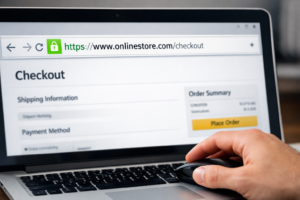
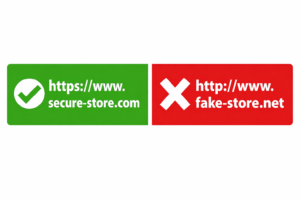
ALWAYS check the URL on your browser bar. The URL should be “https://” and NOT “http://.” This “S” implies the use of a secure connection. Sites that have SSL encryption in 2026 will be basic and expected. If not, then exit from that browser tab immediately!
Domain Name Accuracy:
Another tactic that hackers use is to create “lookalike” websites. For example, instead of Amazon.com, they could use Amaz0n.com. Another one of the crucial things we should check before purchasing anything on the internet is the spelling of the domain name, because any little misspellings can lead to a phishing website.
Trust Seals:
Legal sites are often seen to have security logos provided by security companies such as Norton, McAfee, and TrustArc. Nevertheless, be aware that scammers may simply use pictures of these logos. A legitimate trust seal logo will definitely be clickable and should lead to the security company’s verification site.
Seller Reputation and Real-World Evidence
The site may be aesthetically pleasing and even technically safe, but the individuals running it might be liars. This makes it essential for us to verify the human factor whenever we go online shopping. The trick here is that you must find proof that other actual humans have dealt positively with the particular vendor.
Analyzing Customer Reviews:
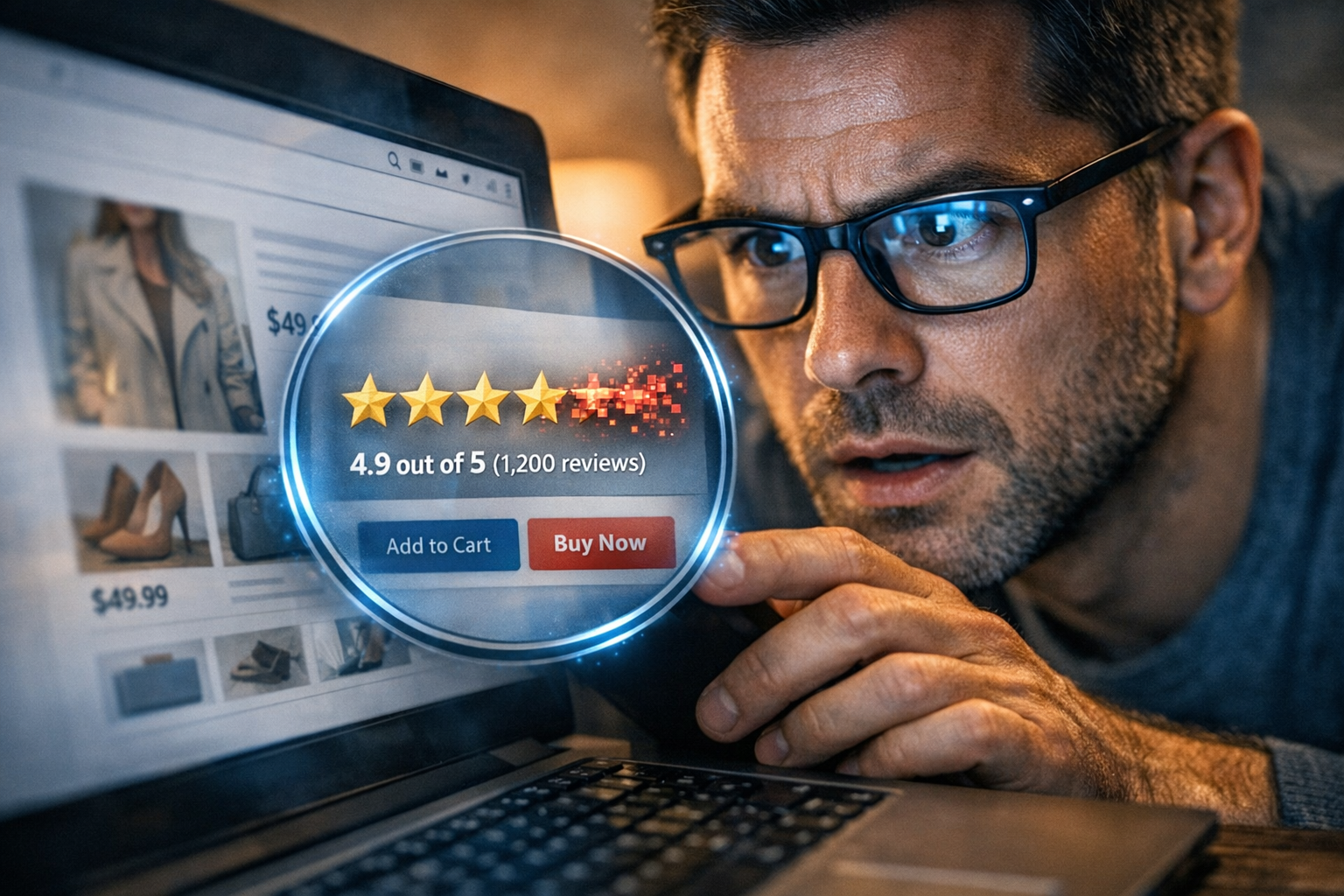
While looking at the number of stars, keep an eye out for “verified purchase” tags. By 2026, AI is commonly employed to create convincing five-star ratings. Check out the reviews that contain pictures of the item and details regarding shipping time. If all the reviews read the same or have the same date of posting, you are definitely facing a huge warning sign.
Third-Party Review Sites:
Do not base your decision on the ratings available only on the vendor’s website. Look at independent websites such as Trustpilot or Better Business Bureau. It is more difficult for fraudulent vendors to manipulate these resources, which makes them an important part of what factors should be verified online.
Social Media Presence:
A real business will most certainly be active in social media channels. See what comments are left and whether the company addresses any criticism. When there are no comments on the page at all or there are broken links pointing to empty profiles, then there is a high probability that the ‘business’ has been set up to defraud its clients.
Transparency in Contact and Location
In case anything happens to the goods, you have to know who to get in touch with. Lack of information is one of the most alarming red flags that people see while discussing what things to check while buying goods over the Internet.
Physical Address and Phone Number:
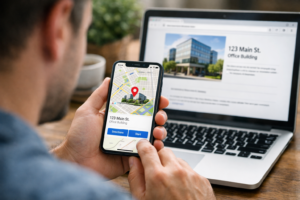
Visit the “Contact Us” section. Does it have a physical location, or is it just some vague online form? Even type in the address on Google Maps to find out whether it’s an actual warehouse or just an arbitrary parking spot. A legitimate company should also have a telephone contact number for its customers.
The “About Us” Story:
The scammer will not take the effort to compose an elaborate “about us” page. They will make do with a generic one. Any legitimate business will give information on its background, team, and vision. The presence of robotically written text or grammatical errors indicates a poorly written scam.
Response Speed:
In case of any doubts about the store, contact them by asking a fast question using the store’s messaging system or sending an email. An honest company always responds to such queries within 24 hours. If the seller does not respond or sends a dubious automatic reply, then one can answer for sure which criteria should be checked while shopping online.
Understanding Terms, Conditions, and Return Policies
Most people just hit “I Agree” without even bothering to read anything, but when you want to know the criteria that should be verified before purchasing goods online, all you have to do is read the small print. It is your agreement with the seller.
The Return and Refund Policy:
If a website uses the phrase “All Sales are Final” or has a very difficult process for returns, you should think twice about buying anything there. A legitimate merchant will clearly outline how to receive a refund in case of any defects in the merchandise purchased. Lack of any reference to a return policy should be viewed as red flag.
Shipping Times and Costs:
What might seem cheap until you actually take it to the register and find that there’s a shipping cost of $50. Or even more disheartening, when you see the shipping period as “6-8 weeks,” meaning that it’s drop-shipped from an unreliable supplier or maybe not shipped at all.
Privacy Policy:
Your information will be worth as much as your cash in 2026. One thing that could be considered when determining what things must be checked while buying products online is their way of handling your information. Do they sell your e-mail to other companies? An easily readable privacy policy proves their respect for their consumers.
Payment Methods and Financial Protection
The way you pay matters as much as where you shop. This is yet another aspect that will be considered as one of the last factors in determining whether or not to make a purchase.
Avoid Direct Bank Transfers:
Do not send payment to a seller using bank wires, Western Union, or cryptocurrencies unless you personally know the seller. It is like handing someone money in an envelope; once the funds leave your account, they cannot be recovered.
Use Credit Cards or Secure Gateways:
Charge-back services exist, which allow the user to have his funds refunded in case he is conned. PayPal also offers good buyer protection services. Such security aspect plays an important role when it comes to determining the factors that need to be verified while online shopping.
Suspiciously Low Prices:
If a laptop worth $1,000 is being sold for $150, it is not a “bargain”—it is an outright fraud. Scammers make use of such “unbelievable” prices to trick your way of thinking. Always check out prices offered by other big merchants to find out whether the offer sounds plausible or not.
The “Gut Feeling” and AI Awareness in 2026
Lastly, there is the issue of intuition. With the advancement of technology by the year 2026, scams will appear more authentic than ever before. With AI being able to create highly authentic images of products as well as high quality marketing texts, intuition becomes an extremely important factor.
Website Design Quality:
Is the website “clunky” feeling? Are there blurry or stretched pictures? Do all the buttons function? An organization with integrity will pay for a website. But a scammer would use an “almost broken” looking template.
Pop-up Overload:
Respected shops aim for a good shopping experience. When an online shopping website keeps popping up with messages like “Limited Time Only!” or “50 people are viewing this page at the moment!”, they are simply trying to fool you into thinking there’s a deadline. This is a ploy used to prevent you from conducting any research.
Social Proof and Influencers:
That an influencer on social media advertised a product does not automatically mean that the website where you can purchase the product is legitimate. Most influencers will advertise products without investigating the legitimacy of the seller.
Frequently Asked Questions (FAQ)
What is the most important factor to check when shopping online?
“The most important thing is the combination of technical security and seller reputation. The former makes sure that your information is secure, while the latter makes sure that the merchant is really trustworthy.”
Can a scam website have the “Https” padlock?
Yes. By 2026, even scammer websites can obtain security certificates. This is the reason why, aside from the padlock, we need to verify what other things when shopping online. We need to verify the domain name, the return policy, and third party reviews.
What should I do if I think I’ve been scammed?
It is imperative that you notify your financial institution about the charge. You should also notify the authorities about the website, like the FTC if you are in America, or a similar organization. Lastly, it will be best for you to change your password if you have one there.
Are “dropshipping” stores safe to use?
Most are secure, but their delivery time is too long, and return policies are challenging. If we need to determine the factors that should be validated when buying from an online dropshipper, take note of the delivery aspect as well as the “Contact Us” page to avoid being ripped off.
Final Conclusion on Safe Online Shopping
The digital world is a source of numerous possibilities; however, it calls for an aware and cautious individual. Asking about which elements should be considered while buying products over the internet means that you have started your way to becoming a wise and safe consumer. If you check the technical security, credibility of the vendor, and openness of his actions, then you can be sure that you will not get cheated on the net.
Just remember that if something seems too good to be true or the site just makes you uncomfortable, you are better off moving on. There are thousands of other stores out there who appreciate your patronage and want you to be safe. In 2026, the best way to protect yourself will be to simply use your common sense.

2 thoughts on “What Factors Should We Verify When Shopping Online? 2026 Security Guide”