
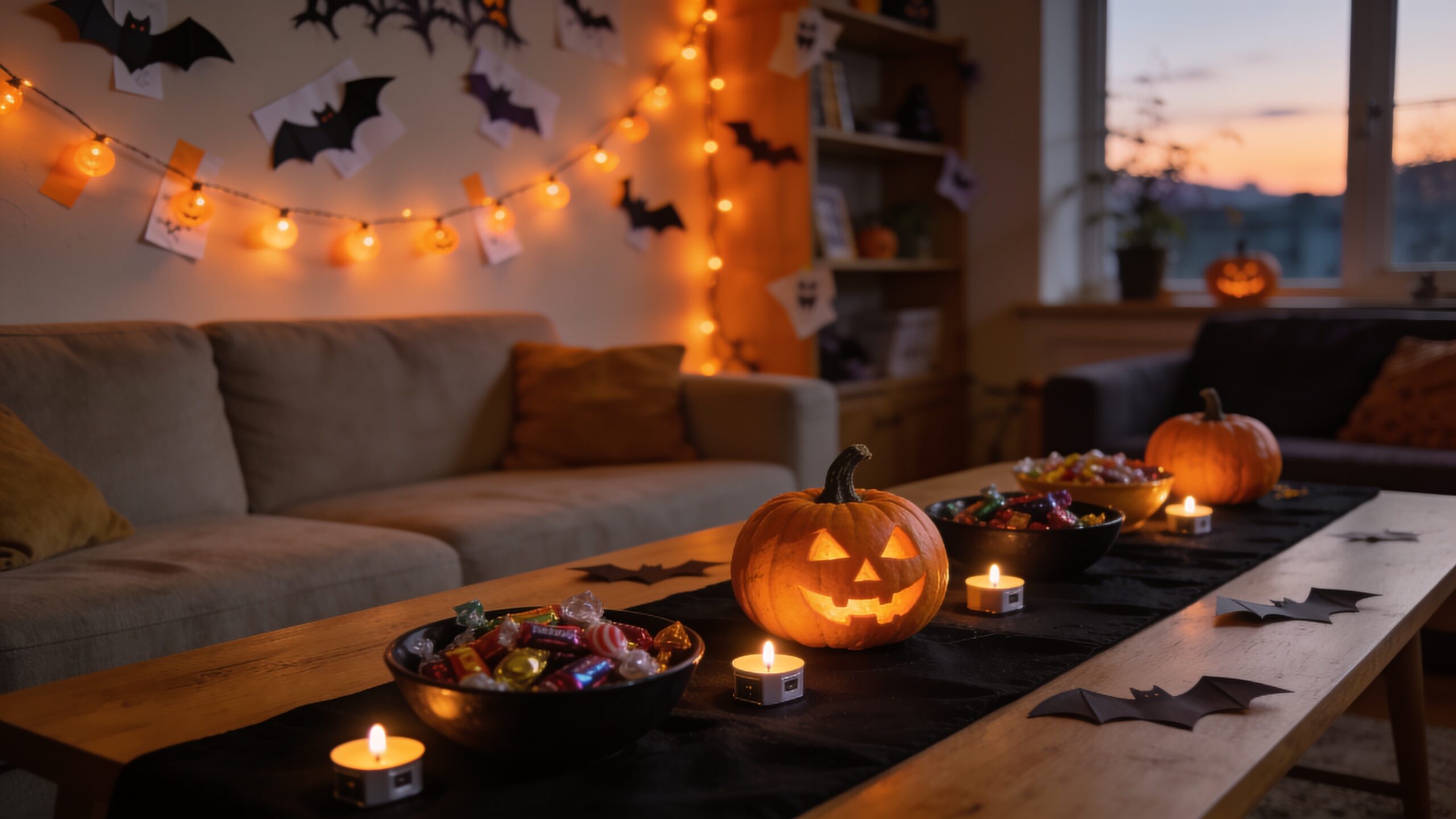
Halloween Party 2026: How to Plan a Fun, Safe Night With 3 Weeks to Go
Halloween 2026 lands on a Saturday, October 31. That is the best case for anyone hosting a Halloween party. Guests don’t have to worry about work the next morning, and neighbors are more likely to be free for the evening. Today is October 9, so you have about three weeks. That is enough time to plan well without rushing, and not enough time to put it off.

This guide is for hosts who want a good party without overspending or overcomplicating it. You’ll get a week-by-week timeline, a simple budget method, food and drink advice for guests with different needs, and a safety checklist built from fire-safety and consumer-safety guidance. Whether you’re hosting ten kids in the backyard or twenty adults in a living room, the same basics apply.
Why a Halloween Party in 2026 Is Worth Planning Early
Halloween falls on a Saturday this year
A weekend date changes your options. Evening parties can run later, and costume contests and games have more room. Everyone else has the same idea, though. Venues, party rentals, and pumpkin patches book up faster when the holiday is on a weekend. If you need anything bigger than your own living room, decide this week.
What the spending numbers say
The National Retail Federation (NRF) expects Halloween spending in the United States to reach about $13.5 billion in 2026, up 3.82% from last year and not adjusted for inflation. It says 74% of people plan to celebrate, and average spending is $115.14 per person. Costumes ($4.4 billion), decorations ($4.3 billion), and candy ($4.1 billion) are the biggest categories.
Three details in the report help with planning. About half of shoppers plan to start in September or earlier. About one-third will compare prices, and 34% plan to buy items they can reuse for other occasions. In other words, many people are already ahead of you, and the smart ones are buying things that last.
Why early planning saves money
Last-minute shopping costs more in two ways. Popular items sell out, and you pay full price for what’s left. Starting now lets you compare prices, borrow from friends, and make a few things yourself. It also gives you time to ask guests about allergies, which is much easier to handle now than on the day.
Your 3-Week Halloween Party Timeline
Here is a simple schedule counting back from Saturday, October 31. Adjust it to the size of your party.
This week (October 9 to 15): decisions
- Pick the format. Kids’ afternoon party, family evening, or adults-only night? This one choice shapes everything else.
- Set the guest list and send invitations. A message or group chat is enough. Include the start and end times, whether costumes are expected, and a line asking about food allergies.
- Choose a simple theme. “Spooky but friendly” or “classic movie monsters” is easy to shop for. A very specific theme makes costumes and decorations harder than they need to be.
- Set your budget (see the budget section below).
Next week (October 16 to 22): shopping and making
- Buy the things that last and the things that sell out: lights, decorations, and any rented items.
- Make what you can. Paper bats, ghost garlands, and painted pumpkins cost little and look good in photos.
- Plan the menu and the activities. Pick two or three games, such as a costume contest, a pumpkin decorating table, or a “guess the mystery treat” game with blindfolds off for younger kids.
- Check the weather forecast for outdoor plans and decide on a backup indoor space.
Final week (October 23 to 30): setup and safety
- Confirm numbers with guests so you can buy the right amount of food.
- Shop for fresh food two or three days before the party.
- Set up decorations and test every light and plug. Walk the whole space and look for anything someone could trip over.
- Prepare what you can ahead: snacks portioned, drinks chilled, playlists made.
Party day (October 31)
Keep the day light. Set up the food table last, put candy bowls and drinks where people can reach them without crowding the entrance, and keep a clear walking path from the front door to the main room. Then enjoy your own party.
Set a Halloween Party Budget That Holds
Where the money usually goes
The NRF figure of $115.14 per person covers everything from costumes to candy for the whole season, so it isn’t a party budget. A party budget is simpler. Decide the total first, then split it. As an example only, not research data, a host spending $150 for about fifteen guests might split it like this:
| Category | Share | Amount |
|---|---|---|
| Food | 40% | $60 |
| Decorations | 25% | $37.50 |
| Drinks | 15% | $22.50 |
| Games and activities | 10% | $15 |
| Buffer for surprises | 10% | $15 |
The buffer matters. Most parties go over because of small last-minute buys, not one big mistake.
Buy things you can reuse
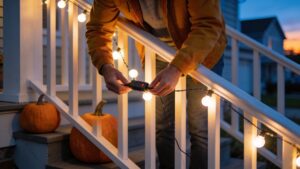
The NRF found that about one-third of shoppers are buying items they can use again. This is the best budget advice for any holiday. Plain string lights work for Halloween, autumn dinners, and winter. A black tablecloth works for almost anything. Cheap, themed items that only work for one night are the ones to keep to a minimum.
Low-cost ideas that still look good
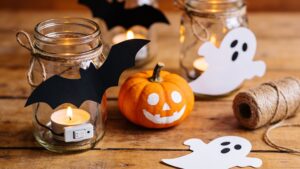
- Cut bats and ghosts from black and white paper, and tape them to a wall in a group.
- Use mason jars, battery lights, and a little fake cobweb for table lighting.
- Let guests decorate small pumpkins instead of buying a prize.
- Ask each guest to bring one snack or drink. This is common, and most people enjoy it.
Food, Drinks and Guests With Different Needs
Keep food safe
Party food often sits out for hours. A standard food-safety guideline from the U.S. Department of Agriculture says perishable food shouldn’t sit at room temperature for more than two hours, or one hour if it’s hotter than 90°F outside. Keep cold dishes on ice or in a cooler, serve hot dishes in smaller portions and refill them, and put out only what you expect to be eaten in the next hour or so.
Plan for allergies and dietary needs
Add one question to your invitation: “Any food allergies or dietary needs I should know about?” It takes ten seconds and prevents real problems. Common food allergens include peanuts, tree nuts, milk, eggs, wheat, soy, fish, and shellfish. If a guest or child has a serious allergy, label every dish and keep ingredient packaging nearby so people can check. For kids, some neighborhoods use teal pumpkins to signal non-food treats such as stickers or small toys. It’s a thoughtful touch if you hand out treats at the door.
Drinks everyone can enjoy
A drinks station is easy and popular. Offer at least two non-alcoholic options so nobody feels left out. Sparkling apple cider, a fruit punch with frozen “ice hands” made from gloves filled with juice, and hot chocolate for a cool evening all work well. If you serve alcohol at an adults-only party, keep it responsible: serve food alongside it, put water within reach, and make sure no one drives after drinking.
A simple menu that works
- Something savory and filling, such as chili or baked pasta
- Finger foods that need no cutlery
- One or two themed snacks for fun, such as fruit “pumpkins” or cheese “mummies”
- A candy bowl, kept at one end of the table

Halloween Party Safety Checklist
Most Halloween problems are ordinary ones: fires, falls, and cuts. The U.S. Consumer Product Safety Commission (CPSC) estimates about 3,200 Halloween-related injuries treated in emergency departments each year over the past three years. About 55% came from pumpkin carving, and 25% from falls such as tripping over costumes or while hanging decorations. About 54% of the people hurt were adults.
Fire safety
- Use battery-powered candles or lights inside jack-o’-lanterns and for decorations. The National Fire Protection Association (NFPA) says flashlights or battery candles are the safest choice.
- Keep decorations away from heat. Dried flowers, cornstalks, and crepe paper burn easily, so keep them away from open flames, light bulbs, and heaters.
- Keep exits clear. Don’t block doors or hallways with props.
- If you do use real candles, never leave them unattended, and keep them away from guests’ costumes and anything that can burn.
Pumpkin carving and falls
- Let adults do the carving. Children can scoop out the inside or draw the design with a marker.
- Clear the walkways. Remove cords, hoses, and decorations from steps, porches, and paths.
- Use a proper ladder for hanging decorations, and follow the CPSC’s ladder safety guidance.
Costumes
- Avoid long, loose costumes that cause trips or can catch fire near flames.
- Check that masks allow clear vision and easy breathing. Face paint can be a safer alternative.
- Add reflective tape or a glow stick to costumes for anyone going outside after dark.
Electrical safety
Use only lights tested by a recognized testing laboratory, and throw out any set with damaged sockets, frayed wires, or loose connections. Don’t overload outlets with extension cords. The CPSC reported that, from 2017 to 2019, candles were linked to an annual average of 5,600 fires and electrical cords and plugs to 1,600 more.
Halloween is supposed to be fun, and a few minutes of planning won’t take that away. Pick a format this week, set a budget, ask about allergies, test your lights, and keep the exits clear. The rest is costumes, snacks, and company.

1 thought on “Halloween Party 2026: Easy Plan, Budget and Safety Tips”