
Why Run Clubs Have Replaced Bars as the New Social Scene
A decade ago, “let’s meet up this weekend” usually meant a bar, a brunch spot, or a bottle of wine at someone’s apartment. In 2026, for a growing number of people — especially those under 35 — it means lacing up running shoes and showing up to a park at 7 a.m. with a group of near-strangers.

This isn’t a small, quirky niche anymore. It’s one of the clearest social shifts happening among young adults right now, and it’s backed by real data, not just vibes. Here’s what’s actually driving people away from barstools and toward run clubs, why the trend keeps showing up in spending data and dating surveys alike, and why this particular shift looks like it has real staying power rather than fading like past fitness fads.
The Numbers Behind the Shift
The scale of this shift is easier to grasp once you see the actual figures behind it.
Running Clubs Are Growing Faster Than Almost Any Other Social Activity
According to Strava’s Year in Sport data, running club participation grew 59% globally, and new club creation rose 3.5 times year-over-year. The platform has now passed one million total clubs across all sports, with running remaining the largest and most consistently active category. Group activities on the platform were also found to be roughly 40% longer on average than solo workouts — a sign that these gatherings are functioning as much as social events as workouts. Women are driving a large share of this growth specifically, with female participation on Strava climbing to more than 40% of new athletes and an 89% jump in women joining run clubs.
Drinking Is Actually Declining Among Young Adults
At the same time running clubs have surged, American drinking habits have shifted noticeably. Between 2011 and 2023, the share of 18-to-24-year-olds who drink alcohol dropped by eight percentage points, according to CDC survey data, with a similar decline among 25-to-34-year-olds. Overall U.S. drinking rates have fallen to their lowest point since Gallup began tracking the figure in 1939.
Where Gen Z Is Putting Its Money Instead
The spending data tells the same story from a different angle. Bank of America Institute data shows Gen Z credit and debit card spending on fitness categories grew 9% recently, compared to less than 4% growth in bar spending. Separately, a Health & Fitness Association survey found Americans plan to spend roughly $60 billion on fitness and exercise this year, with only 23% of respondents saying they’d cut fitness spending if money got tight — compared to 44% who said they’d cut back on dining out first.
Why Running Clubs Are Winning Over Bars
The financial data explains part of the shift, but the appeal runs deeper than just cost-cutting.

A Built-In Reason to Show Up
A bar hangout requires you to make plans, coordinate schedules, and generate your own conversation from scratch. A run club has a built-in structure — a set time, a set route, a shared activity everyone is already doing together — which removes a lot of the social friction that makes meeting new people awkward. Showing up alone to a run club feels far less intimidating than showing up alone to a bar.
The New “Third Place”
Sociologists have long used the term “third place” to describe a space, outside of home and work, where community naturally happens — historically that was often a bar, a café, or a barbershop. As traditional third places have become more expensive or less central to daily life, run clubs are increasingly filling that role instead, particularly for remote workers and young professionals who don’t get built-in social contact through an office anymore. Unlike a bar, a run club also doesn’t require spending money to belong, which matters for a generation that’s more cost-conscious about discretionary spending than the ones before it.
It’s Becoming the New Dating Scene, Too
Run clubs are increasingly functioning as an alternative to dating apps as well. Survey data has found that a meaningful share of young single adults have gone on a date with someone they met at a run club, and dating-app usage has been slipping among the same age group that’s driving run club growth. Meeting someone while already doing something active, rather than through a swipe-based profile, appears to feel lower-pressure and more genuine to a lot of people navigating dating in 2026.
Small Social Validation Keeps People Coming Back
Part of what makes run clubs sticky rather than a one-time novelty comes down to simple social reinforcement. Strava users gave out 14 billion “kudos” — the platform’s lightweight version of a social media like — in a single recent year, and group activities of ten or more people drew up to 95% more kudos per session than solo workouts. That small hit of recognition after a group run functions similarly to the social feedback loop of a night out with friends, minus the cost and the hangover, which helps explain why people keep returning to the same club week after week rather than treating it as a one-off activity.
What Makes This Different From Past Fitness Fads
Fitness trends come and go constantly, so it’s worth asking why this one looks different.

The Motivation Isn’t Really About Fitness
Survey data backs this up directly: a large majority of Gen Z run club members say they joined primarily to meet people, not to hit a fitness goal. That distinction matters, because trends built purely around performance or aesthetics tend to fade once the novelty wears off, while trends built around genuine social connection and belonging tend to be stickier — people don’t get bored of having friends the way they get bored of a workout routine. It also helps explain why the fitness results have followed almost as a side effect: Strava reported that 72% of running goals were still met in a recent year even as the platform’s own messaging shifted away from pure performance toward balance and community.
Sober-Curious Culture Made This Easier
The run club boom didn’t happen in isolation — it’s happening alongside a broader “sober-curious” movement. Alcohol-free social events have surged in recent years, with one event platform reporting a 92% increase in sober-curious events nationwide over a two-year period. That cultural shift removed a lot of the social pressure that used to make skipping the bar scene feel isolating, making an alcohol-free hangout like a run club feel normal rather than like an exception.
It’s a Global Shift, Not a Niche One
This isn’t limited to a handful of trendy U.S. cities. Strava’s data shows meaningful run club growth across markets as varied as Brazil, the U.K., and Japan — with Brazil alone seeing new club creation rise nearly 800% in a single year — and hiking clubs, following a similar community-first model, grew even faster at nearly six times their prior size. The common thread across all of these is the same: people are choosing real-world, movement-based gatherings over both screen time and alcohol-centered socializing. Strava has even framed its own annual data around this idea directly, describing the shift as “doomscrolling is out, movement is in,” pointing to survey results showing more than half of its youngest users plan to spend more time on the app in 2026 while holding steady or cutting back on traditional social media.
What This Means Going Forward
None of the underlying drivers behind this shift look temporary, which makes it worth understanding where things go from here.
Bars Aren’t Disappearing, But They’re Adapting
Rather than fighting the trend, many bars and event spaces are adapting to it — adding high-quality non-alcoholic drink menus, hosting daytime or alcohol-free events, and in some cases rebranding entirely around a “sober-curious” audience. Non-alcoholic beer has grown quickly enough to overtake traditional ale as a global beer category in recent tracking, which shows this shift is being met with real product investment rather than treated as a passing dip. The businesses adjusting fastest tend to treat this as a genuine shift in what socializing looks like, not a passing dip to wait out.
Other “Movement Clubs” Are Following the Same Playbook
Run clubs opened the door, but they’re not the only version of this trend. Hiking clubs, walking groups, and cycling clubs are all growing using the same basic formula — a shared activity, a set meeting time, and low pressure to perform or impress anyone. Expect to see this model applied to even more activities as organizers realize the format itself, not just running specifically, is what people are responding to.
How to Actually Find or Start One
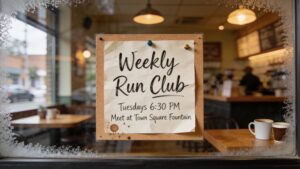
For anyone curious about trying this, the easiest entry point is usually a local running store, a fitness app’s club-finder feature, or a quick search for the sport plus your city name — most cities now have several options at different paces and skill levels, from beginner-friendly walk-run groups to faster training-focused crews. If nothing nearby fits, the barrier to starting one is lower than it looks: a set weekly meeting time, a simple shared route, and a way for people to find it online is often enough to get a small group going, and many of today’s largest clubs started exactly that way, with a handful of friends posting a meeting spot and time.