
Why Sleep Tracking Has Become the Most Popular Health Metric in 2026
Not long ago, sleep was treated as whatever time was left over after work, screens, and everything else in the day. Now it’s the metric people talk about the way they used to talk about step counts — checked first thing in the morning, compared with friends, and treated as a genuine measure of how well a day is likely to go. Sleep has gone from an afterthought to arguably the single most tracked health metric in everyday life, and an entire industry has grown up around measuring, scoring, and optimizing it.
Here’s how big this shift actually is, why sleep specifically became the wearable industry’s biggest obsession, and the real trade-off that comes with turning something as personal as rest into a daily score.
How Big Sleep Tracking Actually Is Now
The scale of this shift is easiest to understand through the market numbers behind it.
A Multi-Billion Dollar Market and Growing Fast
The global sleep tracking devices market was valued at roughly $26.6 billion in 2023 and is estimated to reach $37.9 billion in 2026. Separate market research projects the wearable sleep tracker segment specifically growing from about $14.9 billion in 2024 toward $40.8 billion by 2034, at a sustained double-digit annual growth rate. However the exact figures are measured, every major research firm covering this space agrees on the direction: this is one of the fastest-growing corners of consumer health technology right now.
Sleep Is a Top-Tracked Metric, But Not the Only One
According to a 2026 survey of more than 2,000 U.S. adults, 64% of Americans track at least one health metric daily, and sleep duration ranks among the most commonly tracked, at 60.3%, behind only weight (81.5%), steps or activity (71.9%), and water intake (63.8%). What makes sleep stand out isn’t necessarily that it’s tracked more than everything else — it’s that unlike steps or water intake, sleep used to be almost entirely invisible before wearables made it measurable in the first place.
Rings Are Becoming the Fastest-Growing Format
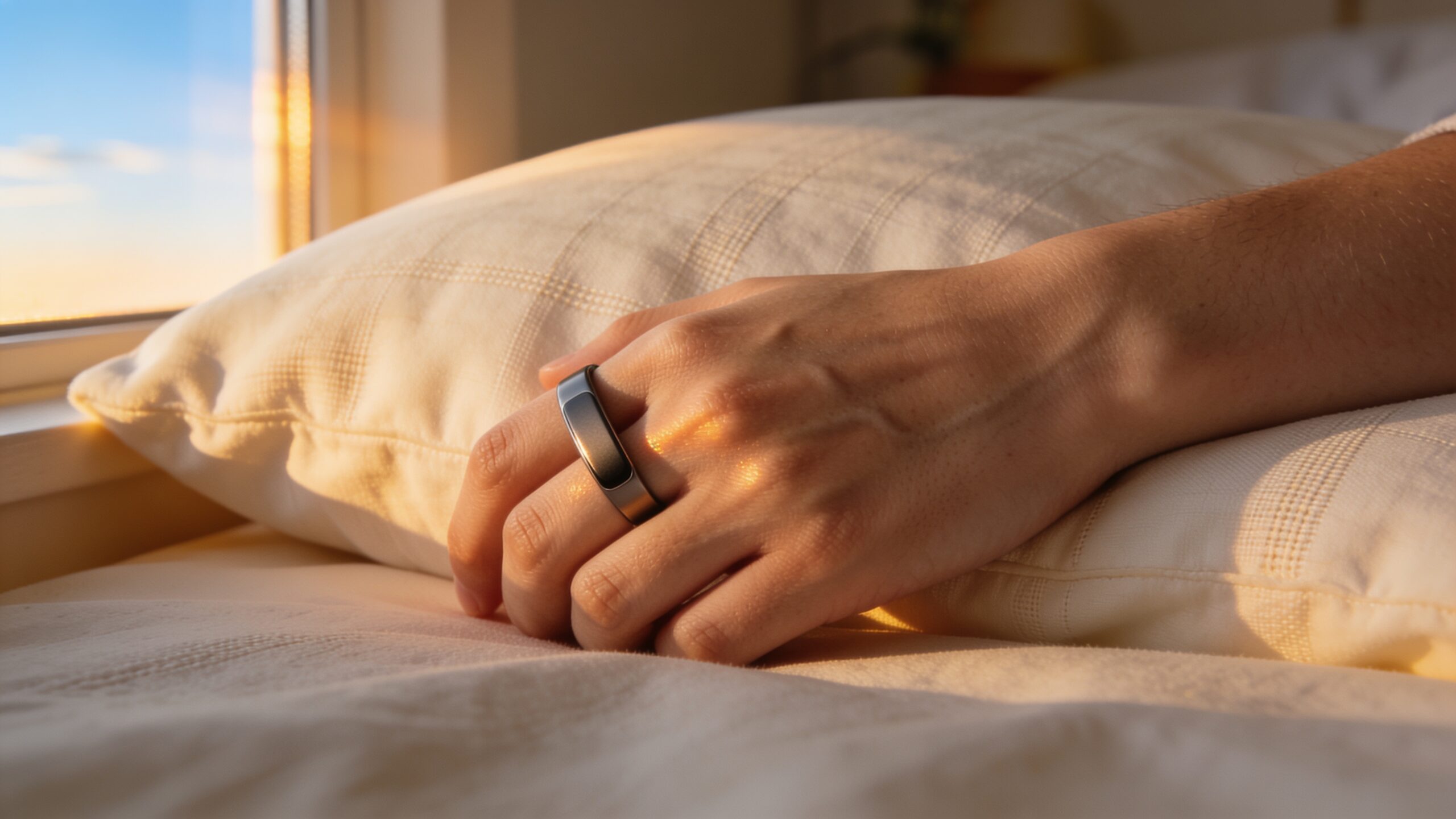
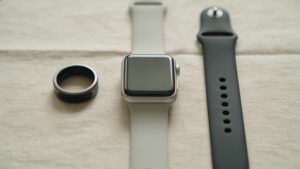
Smartwatches still dominate the wearables market overall, accounting for the majority of device revenue, but smart rings — led by devices like the Oura Ring — are the fastest-growing product category specifically because they’re built around discreet, continuous sensing during sleep, when a bulky wrist display isn’t something people necessarily want. Oura’s Ring 4 combines heart-rate variability, skin-temperature variation, activity, blood oxygen, and respiration measurements into machine-learning-based readiness, sleep, and activity scores, packed into a form factor small enough to forget you’re wearing. Oura has expanded aggressively into this space in 2026 alone, acquiring a metabolic-health startup, an AI health-data platform, and a biometric gesture-recognition company to fold more health context around its sleep-tracking core.
Why Sleep Became “The Main Event”
None of this happened by accident — a few forces converged at once to turn sleep into wearable tech’s biggest growth story.
Wearables Turned an Invisible Problem Into a Visible Number
For most of modern life, sleep quality was something people could only guess at based on how tired they felt the next day. Consumer wearables changed that by combining heart-rate variability, skin temperature, movement, and blood oxygen data into a single readiness or sleep score, turning something that used to be a vague feeling into a specific number people could track over time, compare night to night, and try to improve.
Big Tech Keeps Racing to Add More Sleep Features
Every major device maker has pushed further into sleep in the past year. Apple added a dedicated Sleep Score to the Apple Watch Series 11 in 2025. Samsung expanded its Galaxy Watch line with sleep-apnea analysis and cardiovascular scoring layered on top of sleep insights. Garmin launched CIRQA, a screenless smart band offering round-the-clock health and sleep monitoring with up to 10 days of battery life and no subscription required, directly increasing competitive pressure on WHOOP’s screenless, subscription-based model. Google introduced its own screenless wearable, Fitbit Air, priced from under $100 with a full week of battery life. That level of simultaneous investment from nearly every major consumer tech company at once is a clear signal of where the industry sees sustained demand.
Sleep Data Is Getting Folded Into Bigger Health Platforms
Sleep tracking isn’t staying in its own lane, either. Oura’s recent partnership with ResMed connects wearable-derived sleep insights directly to sleep-health education and care pathways, and its acquisitions of a metabolic-health startup and an AI-powered health-data platform show a clear intent to combine sleep with a much broader picture of a person’s overall health, rather than treating it as an isolated metric. That platform-style approach mirrors what’s happening across the industry more broadly, as device makers compete less on raw sensor accuracy and more on how well they can turn scattered health signals into a single, coherent daily picture.
The Trade-Off Nobody Talks About Enough
For all the growth and genuine benefit sleep tracking offers, there’s a real downside that researchers have been studying closely.
When Tracking Your Sleep Makes It Worse
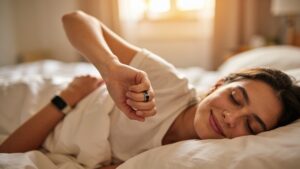
Sleep researchers have coined a specific term for this: orthosomnia, a preoccupation with achieving a “perfect” sleep score that ends up disrupting the very sleep a person is trying to optimize. The term was first introduced in 2017 by clinical psychologist Kelly Baron and colleagues at Rush University Medical Center, who noticed patients insisting their sleep was terrible — not because of how they felt, but because of what their tracker told them, with some refusing to accept reassurance from clinicians over their device’s data. A 2024 study published in the journal Brain Sciences surveyed 523 adults and found that, depending on how strictly the condition was defined, somewhere between 3% and 14% of the general population showed signs of it. In that same study, roughly 36% of participants used a sleep-tracking wearable regularly, and those who did showed measurably higher sleep-related anxiety than people who didn’t track their sleep at all.
Younger Users Are Affected the Most
The anxiety effect isn’t evenly distributed across age groups. Survey data cited in 2025 reporting found that roughly 23% of sleep-app users aged 18 to 35 said the apps made them stressed about their own sleep, compared to just 2.4% among users aged 66 and older. More broadly, more than one in three Americans say they’ve stopped tracking a health metric altogether specifically because it was making them feel worse mentally, not better.
Accuracy Isn’t as Clean as the App Makes It Look
It’s also worth knowing that consumer sleep trackers, however sophisticated, don’t measure sleep the same way a clinical sleep study does. Accuracy varies by device, by which specific metric is being measured, and from person to person, and sleep researchers are clear that a single night’s score shouldn’t be treated as a definitive medical judgment. Dr. Rebecca Robbins, a sleep scientist at Mass General Brigham and Harvard University who has studied this space extensively, has described the technology as overwhelmingly positive overall — pulling back the covers on what used to be a total black box — while still recommending that anyone who finds the data becoming a source of stress simply put the device in a drawer for a few days rather than push through the anxiety. The technology is genuinely useful for spotting patterns over time — it’s the temptation to treat one bad night’s number as a verdict that tends to cause the most trouble.
What This Means Going Forward
None of the market or research trends here suggest sleep tracking is going away — if anything, it’s becoming more deeply embedded in everyday health habits.
The Market Isn’t Slowing Down
Every projection for this category points the same direction over the next several years, with continued double-digit growth expected as more device makers add sleep features, prices come down, and adoption spreads beyond early tech-enthusiast adopters into the broader population. Expect sleep data to keep getting folded into larger health platforms, exactly the way Oura’s recent partnerships and acquisitions suggest.
Look at Trends, Not Single Nights
Sleep researchers who study this space consistently recommend the same practical shift: instead of grading each night individually against a single score, look at the rolling weekly or monthly trend instead. A single bad night barely matters in the context of a broader pattern, and shifting focus away from nightly scores tends to meaningfully reduce the anxiety loop that fuels orthosomnia in the first place.
How to Use a Sleep Tracker Without Letting It Use You
For most people, sleep tracking remains a genuinely useful tool rather than something to avoid — the key is treating it as one data point among several, not a definitive judgment on how well-rested or healthy someone is. If checking a sleep score consistently makes bedtime feel more stressful rather than less, sleep researchers generally recommend simply setting the device aside for a few days rather than abandoning the habit of getting good rest altogether. Sticking to a consistent sleep and wake time, limiting screens before bed, and paying attention to how rested you actually feel in the morning remain more reliable day-to-day signals than any single overnight score. And for anyone experiencing persistent sleep difficulties beyond what a wearable can meaningfully explain, that’s a conversation worth having with a doctor rather than something to try to solve through app data alone.