

Modern Sports Science Protocols and Performance Optimization
Modern sports science protocols and performance optimization have revolutionized professional athletics across North America and European nations. The athletic arena has evolved into a hyper-precise testing ground where elite performance is built upon data-driven biomechanics, non-invasive internal load monitoring, specialized nutritional strategies, and targeted recovery architectures. Elite teams no longer rely on traditional intuition or generalized endurance conditioning; instead, sports scientists, strength coaches, and medical directors utilize micro-sensor tracking and real-time biological data to maximize physical potential while minimizing injury risks.

As elite sport grows increasingly demanding, adopting structured, evidence-based athletic protocols is essential for sustained competitive success. Managing human performance requires balancing intense neuromuscular strain with rapid biological recovery. By mastering the core pillars of load management, movement biomechanics, circadian sleep optimization, and post-exertion recovery protocols, sports organizations can ensure their athletes peak at exact competitive moments while significantly extending their career lifespans.
Biomechanical Analysis in Modern Sports Science Protocols and Performance Optimization
Evaluating movement efficiency forms the foundational cornerstone of modern sports science protocols and performance optimization today. This section details markerless motion capture, force plate asymmetry testing, joint load distribution analysis, and sport-specific kinetic chain alignment.
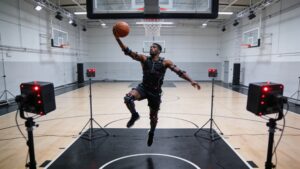
Markerless Optical Motion Capture and Dynamic Movement Tracking
Deploying high-frequency optical camera arrays around training facilities allows biomechanists to record complex human movements without invasive physical skin markers. Advanced computer vision algorithms capture joint angles, angular velocities, and body acceleration vectors continuously during live athletic drills. Analyzing these dynamic movement patterns highlights minute technique flaws instantly, allowing coaches to refine motor patterns, elevate movement efficiency, and eliminate inefficient physical compensations.
Force Plate Asymmetry Screening and Neuromuscular Balance
Utilizing dual-deck force plates during explosive vertical jumps measures ground reaction forces across left and right limbs with extreme precision. Sports scientists evaluate force production, eccentric loading rates, and landing asymmetries to assess an athlete’s neuromuscular readiness. Detecting subtle limb power imbalances early alerts medical staff to lingering fatigue or unhealed soft-tissue injuries, prompting immediate load adjustments before structural damage occurs.
Kinetic Chain Optimization and Energy Transfer Efficiency
Mapping the transfer of mechanical energy from the lower feet through the core to the upper limbs ensures peak power generation in striking, throwing, and sprinting actions. Biomechanists evaluate kinetic chain sequential timing to eliminate energy leaks that reduce athletic output and strain joints unnecessarily. Optimizing energy transfer maximizes throwing velocity, sprinting acceleration, and jumping power while protecting vulnerable tendons and ligaments from excessive mechanical strain.
Overuse Injury Mitigation and Wearable Sensor Integration
Equipping athletes with compact tri-axial accelerometers and gyroscopes measures micro-impact loads experienced during daily practice sessions. These wearable sensors register cumulative mechanical impacts on bone structures, quantifying soft-tissue vibration exposure across long competitive seasons. Monitoring structural load thresholds enables conditioning staff to alter training surfaces or drill intensities proactively, significantly reducing stress fractures and tendonitis instances.
Load Management in Modern Sports Science Protocols and Performance Optimization
Regulating training stress serves as an indispensable pillar within modern sports science protocols and performance optimization strategies. This segment explores acute-to-chronic workload ratios, heart rate variability metrics, localized muscle oxygenation tracking, and central nervous system fatigue monitoring.

Acute-to-Chronic Workload Ratio Calculations and Strain Control
Calculating the acute-to-chronic workload ratio balances short-term weekly training stress against long-term four-week physical conditioning baselines. Maintaining this workload ratio within a sweet spot between 0.8 and 1.3 minimizes injury risk while building physical capacity effectively. Avoiding sudden spikes in training volume prevents acute tissue overload, ensuring athletes build sustainable aerobic and muscular foundations without crossing into dangerous overtraining zones.
Heart Rate Variability Tracking and Autonomic Nervous State
Monitoring daily resting heart rate variability (HRV) immediately upon waking provides a clear window into autonomic nervous system recovery status. Higher root-mean-square HRV values indicate optimal parasympathetic activation and readiness for intense physical stress, whereas suppressed HRV alerts staff to systemic fatigue. Customizing daily workout volumes based on morning HRV scores prevents training on depleted reserves, accelerating adaptation and preserving long-term performance consistency.
Muscle Oxygen Saturation Monitoring via Near-Infrared Tech
Utilizing wearable near-infrared spectroscopy (NIRS) devices on active muscle groups measures localized oxygenated and deoxygenated hemoglobin levels during intense intervals. This real-time muscle oxygenation tracking identifies an athlete’s exact anaerobic thresholds and localized muscular fatigue points during conditioning drills. Sports scientists use this precise metabolic data to customize work-to-rest intervals, ensuring energy systems are trained to maximum biological capacity.
Central Nervous System Fatigue Testing via Tensiomyography
Deploying non-invasive tensiomyography assesses twitch response velocity and mechanical displacement of specific muscle bellies following direct electrical stimulation. Measuring muscle contraction time and radial displacement quantifies localized neuromuscular inhibition and central nervous system fatigue accurately. Identifying hidden central fatigue allows conditioning coaches to substitute high-intensity neuromuscular workouts with active recovery sessions, preserving explosive motor unit recruitment.
Nutritional Biochemistry in Modern Sports Science Protocols and Performance Optimization
Fueling the athletic engine establishes the bio-chemical foundation within modern sports science protocols and performance optimization execution. This section covers periodized carbohydrate intake, intra-workout electrolyte replenishment, targeted amino acid kinetics, and micronutrient blood panel profiling.

Periodized Carbohydrate Loading and Fuel Selection Strategies
Matching daily dietary carbohydrate intake directly to session-specific training intensity optimizes glycogen storage and metabolic flexibility. Athletes consume high-glycemic carbohydrates prior to and during intense high-volume sessions to maximize glycolytic energy availability, while reducing carbohydrate intake on light recovery days. This strategic fuel periodization enhances cellular mitochondrial efficiency, promotes efficient fat oxidation, and ensures full muscle glycogen replenishment prior to major game days.
Rapid Intra-Workout Electrolyte and Hydration Management
Monitoring sweat rate and sweat sodium concentration through wearable skin patches allows dietitians to formulate customized fluid replacement formulas. Replacing precise milligram amounts of lost sodium, potassium, and magnesium during prolonged physical exertion prevents hyponatremia and muscular cramping. Preserving blood plasma volume through hyper-hydration strategies maintains cardiac output efficiency and thermoregulation during intense competitions in challenging thermal environments.
Targeted Protein Kinetics and Muscle Protein Synthesis
Structuring daily protein intake into 0.3-gram-per-kilogram doses consumed every three to four hours optimizes diurnal muscle protein synthesis rates continuously. Integrating leucine-rich whey protein or free-form branched-chain amino acids immediately post-exercise accelerates cellular tissue repair and limits muscle damage. Evening casein protein ingestion provides a sustained amino acid release throughout nocturnal sleep, maximizing overnight muscular repair and minimizing catabolic tissue breakdown.
Biomarker Blood Profiling and Precision Micronutrient Dosing
Analyzing quarterly blood panels for key biomarkers—such as ferritin, vitamin D3, zinc, magnesium, and C-reactive protein—identifies micronutrient deficiencies preemptively. Sports dietitians tailor oral supplementation regimens to eliminate systemic inflammatory markers and optimize oxygen-carrying capacity via red blood cell optimization. Maintaining optimal physiological biomarker levels supports endocrine system function, fortifies immune defenses, and prevents subtle biological performance declines across long seasons.
Recovery Architecture in Modern Sports Science Protocols and Performance Optimization
Mastering biological recovery completes the performance loop within modern sports science protocols and performance optimization applications. This segment covers circadian sleep room engineering, contrast hydrotherapy protocols, active pneumatic compression, and hyperbaric oxygen therapy.

Circadian Rhythm Sleep Environment Architecture and Blue-Light Control
Optimizing nocturnal sleep environments requires keeping athletic recovery suites dark, soundproofed, and cooled to 65 degrees Fahrenheit. Restricting artificial blue-light exposure two hours before bedtime preserves natural pineal melatonin secretion, accelerating deep slow-wave sleep onset. Securing eight to ten hours of quality sleep enhances human growth hormone release, consolidates motor skill learning, and restores central nervous system neurotransmitters completely.
Contrast Hydrotherapy Protocols and Systemic Vascular Flushing
Alternating full-body immersion between cold water baths and warm tubs stimulates rapid vascular vasoconstriction and vasodilation responses. This mechanical pumping action enhances lymphatic drainage, accelerates metabolic waste removal, and reduces delayed onset muscle soreness post-match. Standardized contrast water protocols reduce perceived physical fatigue rapidly, allowing multi-day event competitors to maintain peak power output across consecutive tournament days.
Sequential Pneumatic Compression and Venous Return Enhancement
Utilizing dynamic peristaltic pulse compression boots on lower extremities accelerates venous return and mobilizes accumulated extracellular edema. Intermittent pneumatic pressure drives metabolic byproducts like lactate out of limb tissues, reducing muscular tightness and joint stiffness effectively. Incorporating thirty-minute pneumatic compression sessions immediately following games provides passive, comfortable recovery that accelerates readiness for subsequent training days.
Hyperbaric Oxygen Therapy and Accelerated Tissue Repair
Exposing athletes to 100% pure oxygen within pressurized hyperbaric chambers elevates dissolved plasma oxygen levels by up to twenty times baseline levels. Hyper-oxygenated blood saturates damaged micro-vessels, stimulating localized angiogenesis, collagen synthesis, and stem cell mobilization within injured tendons and muscles. Utilizing hyperbaric therapy post-competition reduces localized swelling, mitigates hypoxia-induced tissue damage, and shortens injury rehabilitation timelines dramatically.
Frequently Asked Questions (FAQ)
What defines modern sports science protocols and performance optimization?
Modern sports science protocols and performance optimization involve using data-driven biomechanics, workload tracking, targeted nutrition, and advanced recovery techniques to maximize athletic output while preventing injury.
How does the acute-to-chronic workload ratio reduce injury risk?
The acute-to-chronic workload ratio compares short-term weekly exercise volume to long-term four-week training baselines. Keeping this ratio balanced between 0.8 and 1.3 prevents sudden spikes in training stress that cause soft-tissue injuries.
Why is heart rate variability (HRV) vital for monitoring athletic readiness?
Heart rate variability measures variations between heartbeats to assess parasympathetic nervous system activity. Higher HRV indicates full biological recovery, while low HRV alerts coaches that an athlete needs reduced training intensity.
How does hyperbaric oxygen therapy accelerate muscle recovery?
Hyperbaric oxygen therapy increases plasma oxygen concentrations under atmospheric pressure. This delivers elevated oxygen to damaged tissues, stimulating cellular repair, collagen synthesis, and faster recovery from intense physical strain.
Final Conclusion
Embracing modern sports science protocols and performance optimization is the ultimate requirement for achieving sustainable competitive success in elite modern athletics. By combining optical motion capture, precise load management metrics, tailored nutritional biochemistry, and state-of-the-art recovery technologies, sports organizations build resilient human systems capable of extraordinary performance. Moving away from subjective coaching methods toward objective data analytics ensures athletes reach their full physical potential safely.
As athletic standards continue to advance across North America and European nations, integrating multidisciplinary sports science remains essential. Prioritizing neuromuscular balance, sleep architecture, and individualized biomarker management empowers teams to reduce soft-tissue injury occurrences dramatically. Implementing these scientific protocols today establishes an unshakeable foundation for elevated athletic longevity, career success, and peak competitive performance for years to come.

2 thoughts on “Modern Sports Science Protocols and Performance Optimization”