
Why Does Everything Feel Boring? The Real Answer
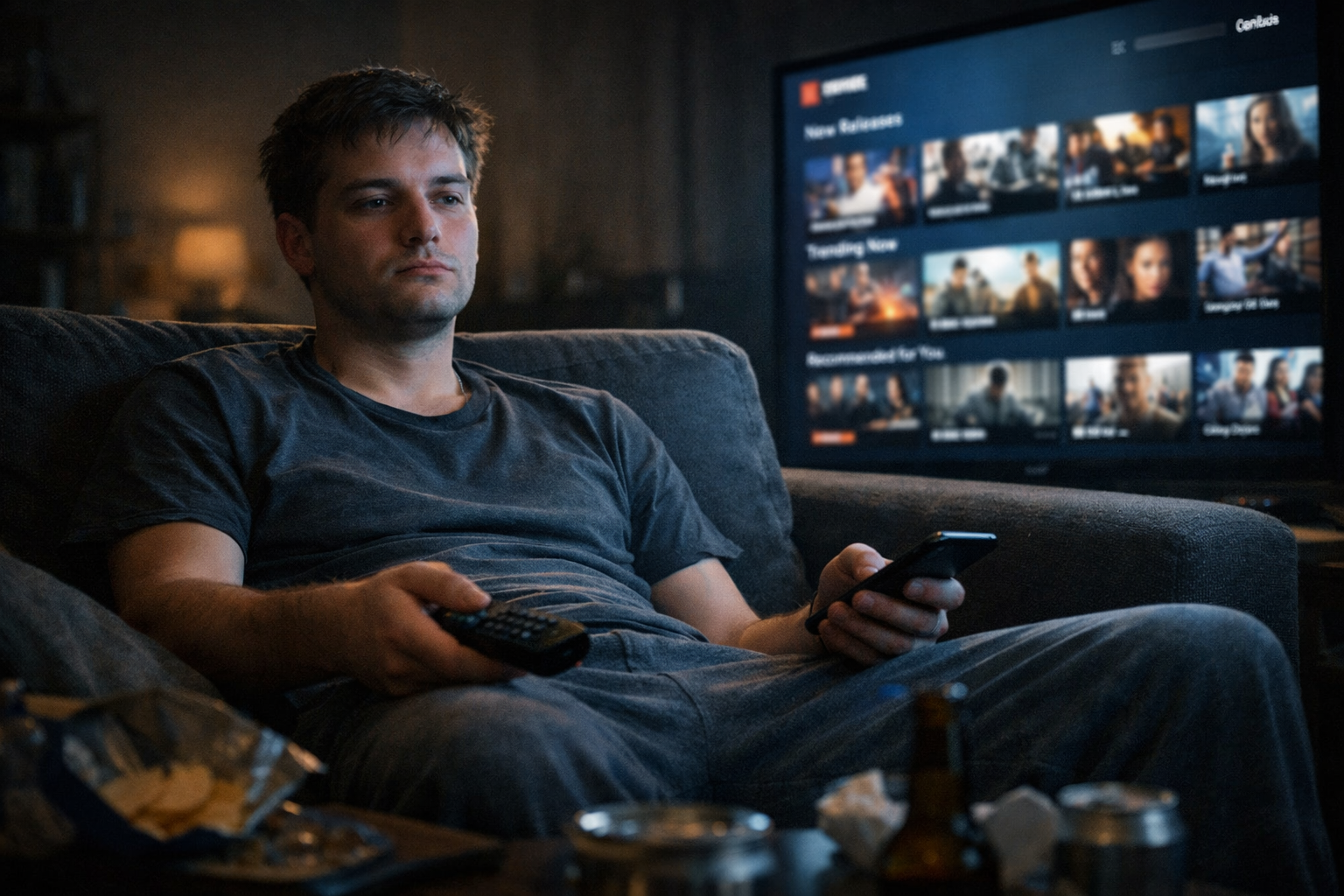
Why does everything seem unexciting, no matter how many options you have on your phone, how filled up your streaming queues may be, or how many activities are supposedly scheduled for your day? There is nothing really terrible about anything going on in your life. However, there isn’t anything really exhilarating, either. The shows you love don’t move you anymore; activities you used to spend hours at now only capture your interest for twenty minutes. Rest itself isn’t as fulfilling as it once was, and the more time you spend browsing online, the worse it gets.
And there is a term for this experience: the understanding of which is more advanced through neuroscience than people may know. According to Psychology Today, the term “anhedonia” refers to the lack of ability to experience true happiness or joy — more than simply being bored; it is the complete blunting of the brain’s reward system. As reported by BBC Science Focus Magazine in their 2026 review of anhedonia, including the neuroscientific work conducted by UC Irvine professor Diego Pizzagalli, anhedonia is not about laziness or indifference. Rather, anhedonia is a demonstrable state of the brain associated with its reaction to being over-stimulated, the imbalance of the neurotransmitter dopamine, and the engineering of digital life to stimulate without satisfaction.
The book will analyze the actual causes behind your boredom at all times and suggest practical ways of overcoming your lack of enthusiasm and bringing excitement back into your life.
What Is Actually Happening in Your Brain When Everything Feels Boring
Boredom with all aspects of life does not occur because of a particular mood; rather, it occurs due to a certain neurological condition, which has specific causes. It is very important for you to know what goes on inside your head.
The Dopamine System and Why It Gets Disrupted
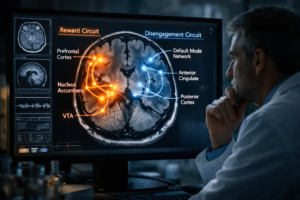
Dopamine is the motivational hormone in the brain — it makes one “want” something and look forward to experiencing it, rather than the feeling alone. If the dopamine pathways in the brain work efficiently, one will experience a true longing for achieving something and true joy when doing whatever he or she is interested in. According to All About Psychology’s research on boredom, overstimulation through the use of technology such as continuous notifications, quick shifting of topics, and algorithmic feeds overloads the dopamine pathways, leading to desensitization. Thus, one’s dopamine pathways set new levels for stimulation, making ordinary activities less exciting.
Anhedonia — When the Brain Loses Its Ability to Feel Rewarded
Anhedonia is the medical name for the absence of enjoyment and motivation that contributes to the sense that everything seems boring. According to Psychology Today, it is defined as the reduction of “wanting and liking,” which refer to the excitement felt prior to engaging in something and the pleasure experienced while performing that particular task. Anhedonia, as noted by the ADAA in its medical description, is known to be one of the symptoms of depression and burnout among other illnesses, although subclinically, anhedonia can be experienced by those who are mentally healthy. This was reported in a PubMed study from 2025.
The Mismatch Between Mental Resources and Engagement Demands
One of the best-known psychologists investigating boredom is Dr. John Eastwood, who defines it as an “unengaged mind” — a condition wherein you desire stimulation but are unable to make a meaningful connection with what you are faced with. According to his work cited by All About Psychology in its 2026 study on boredom, three fundamental elements create boredom, namely: when the activity you are engaged with is too hard, too simple, or devoid of any purpose. If the entirety of your entertainment comes from passive entertainment which requires no true engagement or effort, your mind gets overloaded while remaining unengaged, thus creating that lackluster experience we associate with laziness.
Why Infinite Choice Makes Everything Feel Less Rewarding
The paradox of infinite entertainment is well-documented in behavioral psychology. When choices are limitless, the act of choosing becomes cognitively exhausting, and each individual choice carries the implicit weight of all the alternatives not chosen. ResearchGate’s peer-reviewed research on boredom confirms that passive consumption — scrolling, watching, swiping — does not produce the neurological engagement that active participation does. The brain is not designed to be a recipient of endless content; it is designed to engage, create, solve, and connect. When its primary diet becomes passive consumption, even genuinely good content eventually stops producing pleasure.
The Role of Overstimulation — How Digital Life Dulls Real Pleasure
Today’s digital world is not a neutral one; instead, it is designed to be distracting and retain people’s attention. However, the consequence of such a lifestyle is the decreased ability of a human brain to derive any pleasure from the experience which is not optimized and tailored specifically to its needs.
The Dopamine Trap — Constant Spikes Without Genuine Satisfaction
As noted by Mindful Wellness’s analysis of neuroscience research conducted in January 2026, the term dopamine trap has been used to refer to the fact that algorithmic social media, short-form videos, and apps driven by notifications create quick and frequent bursts of dopamine in such quantities as to make us engage with them without satisfying us at all. This is because each burst of dopamine causes a little drop which makes our brain crave for more of these bursts without allowing sufficient time to extract some benefits from any one experience.
Attention Span Erosion Makes Engagement Progressively Harder
One of the most harmful effects of constant digital stimulation is the loss of ability to pay attention for a longer period of time. As stated by All About Psychology in regard to boredom research, conditions such as ADHD, as well as fragmented attention due to intensive use of technology in normal people, lead to the inability to maintain concentration. When the ability to concentrate is lost, tasks requiring concentration become harder instead of being a natural source of reward. In other words, there is a discrepancy between what can be done easily by the brain and what it actually needs to develop and grow, which causes boredom.
Passive Consumption vs. Active Engagement — Why One Satisfies and One Doesn’t
There are many ways in which watching TV, films, YouTube videos, and so forth, differs neurologically from being actively engaged in some form of activity. Watching something requires absolutely nothing from the watcher, mentally speaking. There are no decisions made, no problems solved, no creativity utilized, no emotional involvement except enough to make sense of whatever narrative might be occurring on the screen. Being actively involved — whether by cooking a meal, learning an instrument, engaging in creative writing, participating in physical exercise, or conducting oneself in an impromptu discussion — utilizes several areas of the brain at once and leads to different satisfactions.
Social Comparison and the “Nothing Is Good Enough” Effect
The constant stream of carefully optimized and curated information on social media leads to a subconscious benchmarking of what makes people feel good that regular life simply cannot match. According to BBC Science Focus’ report on the psychology of anhedonia, one feels that the value of the reward decreases in comparison to the value of effort required if their brain is conditioned by extraordinary experiences. As soon as each dinner, holiday, or vacation that we take becomes measured against the best possible version that we have seen on the Internet, then it fails to bring us any joy before it even starts.
Practical Ways to Restore Genuine Engagement and Pleasure
The knowledge of what causes everything to become mundane is useless unless it is acted upon in a practical way. Such solutions needn’t be complex but rather have an inherent element of resistance to the very thing that caused the issue.

Introduce Deliberate Friction Into Your Entertainment Choices
Perhaps the best approach to regaining true pleasure lies in bringing effort and decision-making back into your consumption habits. In its guide to treating anhedonia, Psychology Today suggests opting for activities which involve some kind of work on your part – reading a book instead of watching something, preparing a dish by yourself rather than getting it delivered, learning a skill instead of observing someone else doing it. This is because activities that involve effort stimulate more parts of the brain and bring more satisfaction, training one’s reward system to appreciate real-life experiences again.
Schedule Phone-Free Time Every Day — Protect It as Non-Negotiable
As per the studies conducted by Mindful Wellness on dopamine, the single best approach that can be consistently applied is scheduling at least one hour each day when no phone will be used. In this hour of time, it does not matter whether one goes for a walk, reads something, cooks food, exercises, or just sits there peacefully because this time will eventually work on setting a new threshold for stimulation within the brain. This initial period is going to be disturbing and uncomfortable but it will be so because the brain has started adapting its threshold level of dopamine.
Pursue Activities That Produce Mastery, Not Just Distraction
The findings of BBC Science Focus’s research into anhedonia indicate that the type of activity best suited to restoring pleasure and motivation is one which requires mastery of a skill. Psychologists refer to these activities as “mastery experiences.” These include learning how to play a musical instrument, mastering a hobby, preparing for a physical challenge or constructing something. All these activities involve engaging the reward system of the brain in a more profound way than passive recreation. The reason for this is that the brain releases genuine bursts of dopamine in response to achievement, not just algorithms.
Reconnect With People in Real, Unmediated Ways
In terms of anhedonia treatment recommendations issued by ADAA, the social connection is highlighted among the best solutions to the problem. However, the kind of social contact that helps in fighting the loss of pleasure is a face-to-face interaction rather than texting or using social networks. Real-life communication, sports activities, and being with someone engages certain brain mechanisms, which remain untouched if you just watch TV or read the news online. Planning such social contacts as walking with a friend or having dinner together on a regular basis helps significantly in enhancing people’s mood, motivation, and ability to enjoy life.
When Persistent Boredom May Signal Something Deeper
While for most of us, being bored about everything around us may be more of a problem related to one’s lifestyle or neurology and hence fixable, anhedonia that is either constant or progressively gets worse requires medical help.

The Difference Between Boredom and Clinical Anhedonia
The peer-reviewed study conducted by ResearchGate in 2011, which is considered to be a basis for today’s studies on this issue, confirmed that there are differences between anhedonia and boredom, despite their overlap. Boredom is a temporary experience that stops when one becomes engaged or finds something interesting to do. On the other hand, anhedonia is an ongoing and generalized process in a person’s life that spreads across several life aspects at once – food, socializing, exercise, and creativity become equally unappealing. Anhedonia of this type is recognized as one of the symptoms of such mental disorders as depression, PTSD, and bipolar disorder.
When to Seek Professional Support
In terms of clinical guidelines provided by ADAA regarding anhedonia, there is no doubt what should be done: if the sense that nothing seems pleasurable or interesting stays for more than two weeks, interferes with your functioning and productivity at work or personal life or if it comes together with such symptoms as a persistent negative mood, trouble sleeping, lack of interest in activities, problems with appetite, etc., talking to a doctor about it will not be inappropriate. That doesn’t mean being weak – it simply shows that a person needs help with the neurological condition affecting them.
How Cognitive Behavioral Therapy Addresses Anhedonia Specifically
CBT is the therapy treatment option most proven to combat anhedonia and chronic boredom. CBT achieves this through the identification and deconstruction of negative thought processes that perpetuate disengagement – “there’s nothing that will be any fun,” “it’s not even worth the effort” – and the introduction of behavioral activation through the gradual reengagement in activities proven to bring back enjoyment. The BBC Science Focus article about the study of anhedonia revealed that behavioral activation, through the method of CBT, leads to improved responses in the reward areas of the brain within 6 to 12 weeks of consistent application.
Medication and Neuroscience — What Treatment Options Exist
In terms of anhedonia linked to depression, there has been a need for medications as a form of treatment. According to the Clinical Overview provided on ADAA’s website, while the most common type of drug used in treating depression is typically SSRI drugs, some studies indicate that such drugs may not be effective when it comes to treating anhedonia, which has to do more with the dopaminergic system rather than the serotonergic system. Other treatments being considered in clinical practice include drugs targeting the dopaminergic system, as well as ketamine drugs for cases where patients have failed to respond to other forms of treatment.
Frequently Asked Questions About Feeling Bored With Everything (FAQ)
Is it normal to feel bored even when I have plenty to do?
Yes – very common. The irony of modern-day boredom is that it becomes all the more potent amid excess. Overindulgence makes the mind numb to rewards. More content won’t help but only a shift in focus from passivity to activity and paying attention to what one is doing.
How long does it take to feel better once I change my habits?
Within one to two weeks of regular phone-free periods and involvement in activities, most individuals experience an important change. The adjustment of dopamine levels is something that does not happen overnight, although it certainly takes place. The initial period of feeling uncomfortable will pass, and the ability to experience happiness will be regained permanently.
Could my diet or sleep be contributing to why everything feels boring?
Yes – quite certainly. The 2025 study conducted by PubMed about anhedonia has determined that increased levels of anhedonia occur among people who have difficulty getting good sleep due to chronic stress. Lack of adequate sleep adversely affects the prefrontal cortex and affects the production of dopamine. Good sleep will make the fastest changes when considered before all other treatments.
Is social media actually making the boredom worse?
There is no doubt about this according to research. The algorithmic platforms for consuming content are designed in such a way that they provide you with constant but low-grade bursts of dopamine that do not really satisfy you but rather condition your brain to feel stimulated while being unable to find actual satisfaction from outside the platform.
Conclusion
Why do things always seem so boring? Not because the brain is damaged, but because it is overloaded, underutilized, and geared up for an amount of simulated stimulation that regular life could never possibly stand up against. The solution lies not in having more content, or better streaming services, or a more exciting existence. It’s about consciously rebalancing: less of passively receiving information, more of actively engaging with it; less of being connected all the time, more of doing meaningful things; and protecting downtime where the brain gets a chance to relax in its own way.