

The 2026 World Cup Base Camp Strategy: Why Suburban Hubs are the Real Winners
With all the rest of the world descending on cities such as Seattle, Dallas, and New York in 2026, the hotel market within their urban centers will be detached from reality. We already witnessed price gouging and “event premiums,” which could make a three-star hotel room cost as much as $1000 per night. The idea behind the Base Camp Strategy for the 2026 World Cup is a logical shift in approach that simply asks one question: why would anyone want to pay for all the hassle when commuting can do just fine?
This is not simply an essay on how to save money but one about making the most of your trip. Instead of having to stay in an expensive and small Manhattan hotel room, the person utilizing this strategy would instead choose a roomy apartment located in a New Jersey transit hub. In lieu of staying amid the traffic-filled streets of Dallas, he or she would choose the charming streets of Fort Worth where fan culture would thrive.
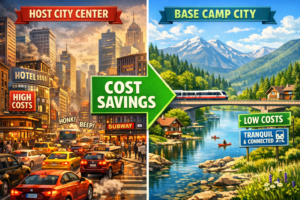
The Economics of the Satellite City: Beating the “Host Premium”
The first benefit that comes with the 2026 World Cup Base Camp Strategy is the huge disparity between your final travel bill. Hotels employ algorithms that increase prices depending on the distance to the stadium. However, such hikes come with a radius limitation.
Arbitrage in the Hospitality Market
The key objective of the strategy of using base camps for the 2026 World Cup is leveraging the concept of “radius drop-off.” Hotels located near Lumen Field in Seattle, for instance, could triple their room rates due to increased demand. Nevertheless, the rate of accommodation in Renton, WA, which is only 11 miles from Seattle, is still pegged on seasonal norms. In such cases, one may be able to afford a good hotel at Renton for the same cost as a cheap motel in Seattle.
The Hidden Costs of Proximity
Many believe they should remain in the host cities in order to “save on transport,” however, the base camp strategy for the 2026 World Cup proves that this idea is a misconception. When attending the World Cup, ridesharing prices in host cities might go up to $200 for a three-mile ride. In contrast, by spending time in the base camp city, one will have an opportunity to take commuter trains or buses at a flat rate.
Leveraging Short-Term Rental Stability
Though host city Airbnbs may be canceled because their hosts wish to relist them for higher prices, suburban Airbnb listings remain relatively stable. The 2026 World Cup Base Camp Strategy recommends focusing on “commuter-belt” neighborhoods, as host speculators would be less common there. Not only do you have your own kitchen and a backyard for your children to play in, but you can actually relax amidst the surroundings and enjoy a quiet place away from the match day hustle and bustle.
Food and Service Inflation Protection
In a host city, you are always a “captive consumer.” You pay a “tourist tax” on everything from sandwiches to coffee. Using the World Cup Base Camp Strategy for 2026, you conduct your business transactions in local economies. It could be a family restaurant in Fort Worth, Texas, or even a supermarket in New Jersey, but your daily “burn rate” for food and sundries is kept local and not influenced by the FIFA system.
Transit Corridors: The Lifeblood of the Base Camp
A base camp is only as good as its connection to the pitch. The 2026 World Cup Base Camp Strategy relies heavily on North America’s existing—and expanding—commuter rail networks.
The Sounder Train Advantage (Seattle/Renton)
Those who plan to attend the World Cup matches in the Pacific Northwest should take note of what the 2026 World Cup Base Camp Strategy recommends for transportation – the Sounder Train. By choosing either Renton or Kent as their home base, fans will have access to a rail line which will get them to the stadium in minutes, saving them from being stuck in infamous Seattle traffic.
The Trinity Railway Express (Dallas/Fort Worth)
Dallas may be a sprawling behemoth, but the World Cup Base Camp Strategy for 2026 makes things manageable. If you stay in Fort Worth, you can take advantage of the TRE. While Fort Worth will provide you with a much more relaxed environment, not to mention a better deal on hotel rooms, the TRE will get you right into the thick of things within an hour.
New Jersey Transit and the New York Hub
Given that the final game will be held at MetLife Stadium, the 2026 World Cup Base Camp Strategy becomes a necessity for the New York City area. Being located in cities such as Secaucus or Newark and even beyond on NJ Transit makes far more sense than crossing the Hudson into Manhattan for the game. In this case, the “Base Camp” strategy is not so much a matter of economics, but rather one of survival.
Regional “Mini Fan Hubs” and Shuttle Syncing
A lot of base camp cities are developing plans for their own “Mini Fan Hubs,” which could be official or informal fan hubs designed to serve fans residing in the area. Researching the local shuttles is part of the 2026 World Cup Base Camp Strategy. Several suburban towns are expected to provide their own “Match Day Express” buses, which are less expensive and faster than other transportation options. Local shuttles could be the “secret weapon” for experienced fans.
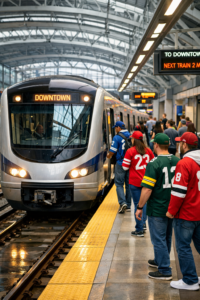
Cultural Authenticity: The “Mini Fan Hub” Phenomenon
One of the often neglected elements of the Base Camp strategy for the 2026 World Cup is the more culturally rewarding experience of being in a small town that is fully committed to the event.
The Community “Takeover” Effect
Whereas in a big host city such as New York or Los Angeles, the World Cup will be simply among many events taking place, for the base camp cities such as Renton or Fort Worth, the World Cup is the only thing taking place. The 2026 World Cup Base Camp strategy offers you a chance to witness an enthusiastic community that has gone ahead to beautify their downtown, hold their own festivals, and warmly welcome you.
Authentic Local Cuisine vs. Fan Zone Food
The “Fan Zone” at the host cities is well known to have costly and bland foods served in the stadium. Through adopting the Base Camp Strategy of the 2026 World Cup, you will eat like the locals do, enjoying genuine Texas BBQ from a Fort Worth suburb or even the spectacular variety of Asian dishes from the outskirts of Seattle. This “Sensory Review” of the tournament is not possible with AI but must be experienced firsthand in the streets.
Establishing a “Home Base” Routine
Such a tournament spans one whole month, and it takes stamina to complete all activities. The Base Camp Strategy for the 2026 World Cup allows you to feel at home. You visit the same café, and you have met the bartender from the pub just down the road. You avoid “traveler’s burnout” due to the familiarity that such a strategy gives. Going back to your base camp, where it is silent and comfortable after the madness of a soccer field, is important for your well-being.
Interaction with Local Fan Clubs
The cities acting as base camps also tend to emerge as the de facto capital city of certain nations’ fan clubs. In the 2026 World Cup Base Camp Strategy, one recommendation involves investigating the locations where “your” country’s fans have gathered. It is not uncommon for a suburban hotel to be booked by a particular country’s fan club organization, making the entire suburb an extension of the country’s culture through its festivities.
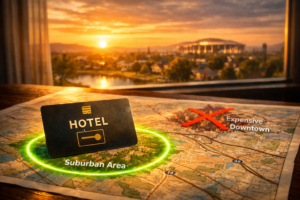
Safety and Logistics: The “Off-Grid” Advantage
Safety and ease of movement are paramount during global events. The 2026 World Cup Base Camp Strategy offers a tactical advantage in both areas.
Reduced Crowding and Lower Anxiety
Crowds can cause great stress and increase the probability of having to undergo a security check. Using the World Cup Base Camp Strategy of 2026 will ensure that you spend most of your non-game time in less-crowded spaces. This will decrease your mental burden of having to move around within and around the various security zones. For family and elderly fans who travel with their children, peace of mind is vital.
Direct Access to Regional Airports
The airports in the host city such as JFK, LAX, or DFW will be a bottleneck through and through. The 2026 World Cup Base Camp Strategy usually drops you off in closer proximity to the regional/secondary airport. This means faster access to security lanes and car rentals at the same time. Staying at a location that provides fast access to the regional airport helps you move around the area before anyone gets stuck waiting for five hours to clear customs.
Local Medical and Service Infrastructure
In case you fall ill or need a drugstore in a host city’s downtown area during the World Cup, be prepared for a lengthy wait time. According to the 2026 World Cup Base Camp Strategy, you will be located in an operational residential area where the local infrastructure won’t be overwhelmed. Being able to go to a suburban walk-in clinic or a 24-hour drugstore without having 50,000 more visitors swarming through it is a smart contingency plan few people consider.
Secure Parking and Car Management
But if you’re driving, then the host city will be a nightmare with parking fees of $80 per day. In the case of the 2026 World Cup Base Camp Strategy, the parking facility would be free or minimal parking costs at hotels in the suburbs. Your rental car could remain a backup transportation mode without being a burden on your finances. You could use your spare time to visit national parks or other sites.
Frequently Asked Questions (FAQ)
What exactly is a “Base Camp City”?
The Base Camp City, also known as Suburbia Satellite Cities, is a city that is between 10 and 30 miles away from the main hosting city for the 2026 FIFA World Cup games. These cities provide good accommodation options and are well-connected by rail to the stadium.
How much can the 2026 World Cup Base Camp Strategy save me?
Typically, the cost of staying in base camp towns such as Renton and Fort Worth is anywhere between 40% and 60% cheaper than in the host city center. Once we factor in lower costs for food and transport surge prices, a family could save more than $2,000 in ten days.
Is the commute from a Base Camp city difficult?
No, as long as you go for a city along an important rail transit route. This is because the 2026 World Cup Base Camp Plan is focused on cities such as Secaucus, New Jersey, or Kent, Washington, which offer rail services right to the stadiums.
Will I miss out on the “atmosphere” by staying outside the host city?
In reality, however, you will often enjoy a more pleasant atmosphere. Base camp cities usually identify more personally with the competition, thus establishing what can be termed “Mini Fan Hubs” rather than the large, corporate FIFA Fan Festivals.
Should I rent a car if I use this strategy?
It depends on the city. In Seattle or New York, the 2026 World Cup Base Camp Strategy is best suited for public transportation. In Dallas or Houston, it is better to have a car when you are in a base camp city.
Final Conclusion: The Smart Fan’s Blueprint
The 2026 World Cup will not only be an endurance challenge but also an occasion for celebrating the spirit of the game. If you allow yourself to get swept up into the flow of the crowds into the costly and crowded centers of the hosting cities, you may already be drained of energy before the kickoff whistle blows. When you opt for the 2026 World Cup Base Camp Strategy, you make a smarter choice.
From enjoying the sunset of the Puget Sound on the tranquil shores of Renton to indulging in a gourmet steak at Fort Worth following an enthralling game at Arlington, you will understand that the concept of “Base Camp” is not about being distant from the action but being positioned perfectly for the enjoyment of the event. Ensure your transit passes are ready, your suburban suites booked, and prepare for an unforgettable World Cup experience.

3 thoughts on “The 2026 World Cup Base Camp Strategy: Where to Stay to Save Thousands”