
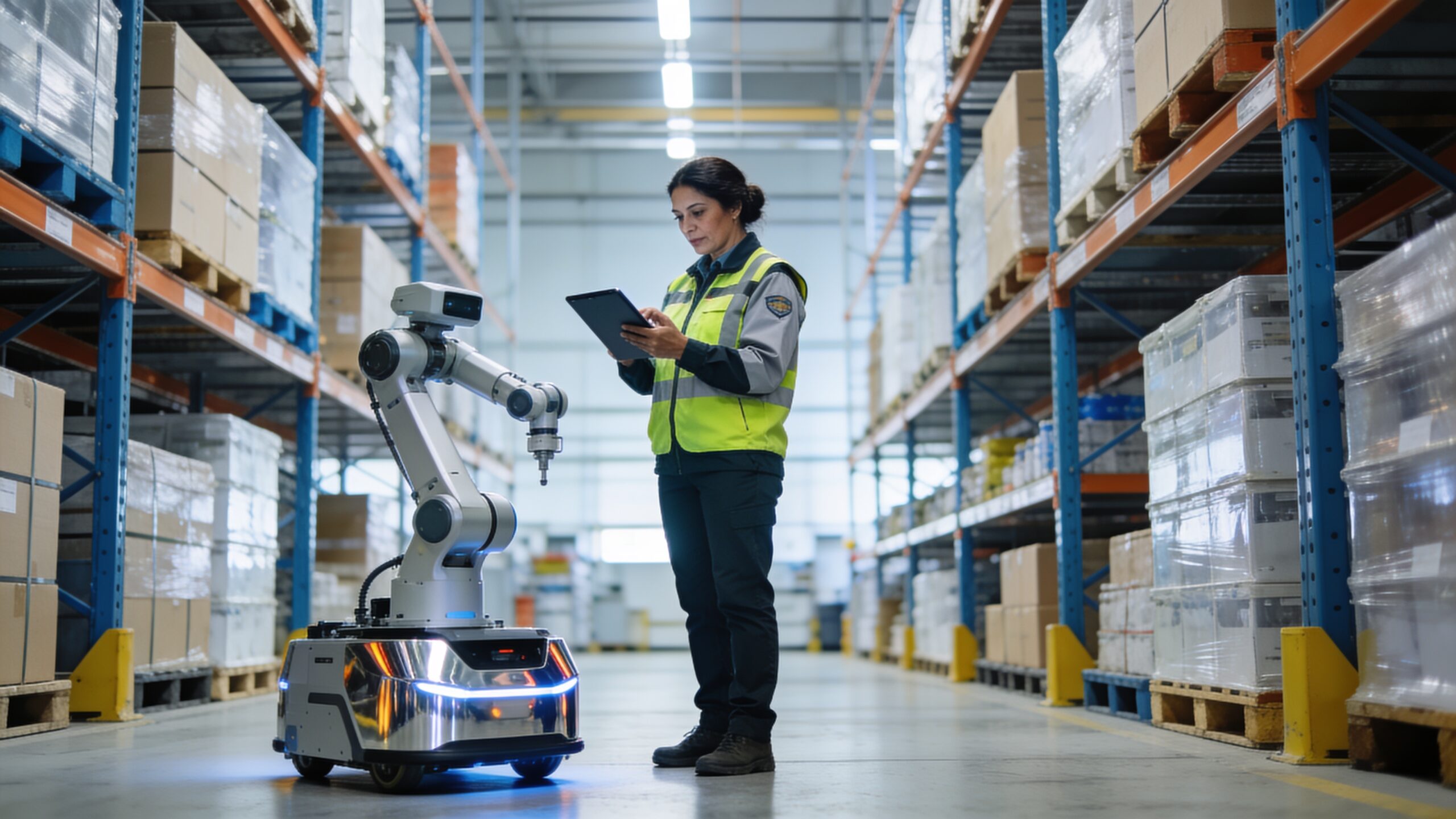
Physical AI and Smart Warehouse Automation
Physical AI and smart warehouse automation are driving a monumental paradigm shift across global supply chains and logistics networks. Industrial operations across the United States and European nations are rapidly evolving beyond stationary conveyor setups and rigid script-based automation. Today’s distribution centers leverage embodied artificial intelligence—fusing computer vision, spatial perception, and Vision-Language-Action (VLA) models—to deploy autonomous mobile fleets capable of reasoning through unpredictable physical environments in real time.

Navigating this hyper-automated industrial era requires a comprehensive understanding of both edge robotics hardware and multi-agent software architecture. Enterprise logistics directors, supply chain architects, and warehouse operations managers depend on smart warehouse automation to address persistent labor shortages, mitigate inventory shrinkage, and satisfy accelerating demand for same-day order fulfillment. By examining core technological shifts across embodied intelligence, agentic warehouse orchestration, digital twin spatial modeling, and collaborative human-robot workflows, organizations construct agile logistics ecosystems that maximize operational throughput and deliver long-term competitive advantages.
Embodied Intelligence and Vision-Language-Action Frameworks in Physical AI and Smart Warehouse Automation
Industrial robotics is undergoing a fundamental transformation as rule-based programming gives way to embodied intelligence models. This section details Vision-Language-Action frameworks, multi-sensor perception, adaptive robotic manipulation, and edge-processed spatial navigation.
Vision-Language-Action Models and Unstructured Spatial Reasoning
Deploying Vision-Language-Action (VLA) models allows industrial robots to translate visual observation and natural language instructions directly into precise motor controls. Unlike traditional systems restricted to pre-programmed trajectories, VLA-enabled machines interpret complex physical spatial scenes dynamically. This cognitive spatial reasoning enables picking robots to recognize damaged packaging, adjust grasp angles, and clear fallen inventory across busy warehouse aisles without human intervention.
Multi-Sensor Fusion and Edge-Based Perception Systems
Integrating high-resolution LiDAR, depth cameras, and tactile array sensors grants mobile warehouse robotics high-fidelity environmental awareness. Real-time sensor fusion algorithms process spatial data at the hardware edge, mapping dynamic obstacles and calculating velocity vectors instantly. Superior edge perception ensures autonomous mobile fleets maneuver safely around human workers and sudden drops, preventing costly collisions while preserving rapid transit speeds.
Adaptive Articulated Manipulation and Soft Robotic End-Effectors
Utilizing adaptive articulated arms fitted with pneumatic soft-grippers enables automated picking systems to manipulate delicate or variable stock-keeping units (SKUs) smoothly. Machine learning models dynamically regulate vacuum pressure and tactile grip strength based on object weight, surface texture, and structural rigidity. Variable material handling eliminates product crushing risks, expanding automated fulfillment capabilities across fragile electronics, fresh produce, and apparel lines.
Real-Time Spatial SLAM and Infrastructure-Free Navigation
Implementing Simultaneous Localization and Mapping (SLAM) protocols allows autonomous mobile robots (AMRs) to map and navigate facilities without requiring magnetic tape or optical floor markers. AMRs construct spatial floor plans on the fly, dynamically adjusting travel routes when aisles become congested. Infrastructure-free navigation simplifies fleet scaling, allowing logistics operators to modify warehouse floor plans without undertaking expensive structural overhauls.
Agentic Supply Chain Orchestration and WES Software in Physical AI and Smart Warehouse Automation
Achieving peak operational throughput requires intelligent software layers capable of orchestrating heterogeneous hardware fleets dynamically. This segment covers agentic Warehouse Execution Systems (WES), predictive task wave allocation, automated anomaly mitigation, and inter-system interoperability.
Agentic WES Platforms and Multi-Agent Fleet Dispatching
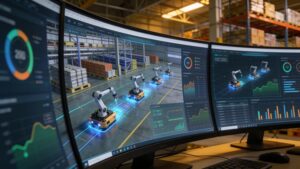
Adopting agentic Warehouse Execution Systems (WES) replaces legacy static batch scheduling with autonomous multi-agent task dispatching. Autonomous software agents assign work orders based on real-time robot battery levels, worker proximity, and order urgency. Decentralized orchestration prevents picking bottlenecks at high-velocity storage zones, ensuring smooth material flow from inbound docks to outbound shipping bays.
Predictive Wave Allocation and Dynamic Order Slotting
Applying predictive machine learning algorithms to inventory slotting continuously optimizes product placement based on real-time order velocity. Intelligent orchestration platforms reorganize high-demand items closer to outbound packing stations during demand spikes. Dynamic inventory repositioning drastically reduces total transit travel time for picking fleets, boosting daily order fulfillment capacity across large-scale e-commerce fulfillment hubs.
Autonomous Anomaly Mitigation and System Exception Handling
Integrating self-correcting exception handling algorithms enables warehouse software to resolve inventory discrepancies automatically. When a robot encounters an empty pallet or misfiled barcode, the agentic WES reroutes secondary units instantly while updating inventory databases. Automated exception handling eliminates manual intervention delays, keeping fulfillment lines moving smoothly while maintaining strict inventory tracking accuracy.
Open-Standard Interoperability Protocols and VDA 5050 Integration
Implementing open-standard communication frameworks like VDA 5050 allows warehouse operators to manage multi-vendor robot fleets within a single control interface. Standardized middleware translates proprietary vendor commands into unified navigational protocols. Unified fleet communication prevents vendor lock-in, enabling enterprises to deploy specialized sorting, towing, and picking robots from different manufacturers within the same facility.
Digital Twins and Predictive Simulation in Physical AI and Smart Warehouse Automation
Constructing virtual replicas of physical facilities allows supply chain leaders to test operational changes without risking active operations. This section details industrial digital twins, physics-based spatial simulation, predictive maintenance, and energy management.

Industrial Digital Twin Modeling and High-Fidelity Spatial Simulation
Building 3D industrial digital twins provides a real-time, data-rich mirror of warehouse operations. Physics-based simulation platforms model spatial congestion, traffic bottlenecks, and equipment utilization across millions of theoretical shift scenarios. Simulating layout adjustments virtually allows facilities managers to validate CapEx investments and optimize equipment positioning before modifying physical floor space.
Predictive Hardware Maintenance and IIoT Vibration Diagnostics
Connecting Internet of Things (IIoT) diagnostic sensors across automated storage and retrieval systems (AS/RS) enables continuous equipment health monitoring. Machine learning models analyze motor vibration frequencies, thermal output, and power consumption spikes to detect bearing degradation before failure occurs. Predictive maintenance prevents unexpected system downtime, extending machinery lifespans and safeguarding delivery commitments.
Simulate-Then-Procure Workflows and Risk-Free Expansion
Adopting simulate-then-procure strategies streamlines facility expansion by testing new robotic hardware inside virtual environments first. System integrators run synthetic stress tests to identify potential throughput limits and software integration hurdles. Risk-free virtual validation shortens commissioning timelines, ensuring new automated distribution centers achieve target operational efficiency faster upon physical launch.
Dynamic Energy Grid Balancing and Thermal Load Optimization
Utilizing machine learning to balance facility energy consumption optimizes electrical power draw across automated charging bays and HVAC systems. Predictive energy platforms schedule high-power battery charging cycles during off-peak rate hours while throttling idle machinery power usage. Algorithmic energy management reduces facility operating expenses, supporting corporate sustainability targets across energy-intensive automated logistics hubs.
Human-Robot Collaboration and Safety Standards in Physical AI and Smart Warehouse Automation
Creating efficient automated environments requires establishing seamless, safe collaboration between human logistics personnel and autonomous robotic fleets. This segment covers collaborative cobots, ergonomics, ISO 3691-4 safety protocols, and workforce augmentation.

Collaborative Mobile Robotics and Safety-Rated Speed Control
Deploying collaborative mobile robots (cobots) equipped with safety-rated speed and separation monitoring allows workers and machines to operate safely in shared spaces. Cobots automatically slow down or adjust travel paths upon sensing human proximity. Dynamic speed regulation maintains high operational productivity without compromising worker safety or requiring restrictive physical safety cages.
Ergonomic Human Augmentation and Wearable HMI Interfaces
Providing warehouse personnel with wearable human-machine interfaces (HMIs), such as smart glasses and ring scanners, streamlines picking workflows. Augmented reality overlays display optimal picking routes and item verification codes directly within worker vision fields. Hands-free wearable interfaces reduce cognitive fatigue, lower picking error rates, and accelerate onboarding times for temporary logistics staff.
Compliance with ISO 3691-4 and ANSI/RIA R15.08 Safety Standards
Ensuring strict adherence to international safety standards like ISO 3691-4 and ANSI/RIA R15.08 governs the safe operation of driverless industrial trucks. Modern physical AI systems integrate certified emergency stop circuits, redundant laser scanners, and fail-safe braking mechanisms. Comprehensive safety compliance protects workers, lowers liability risks, and satisfies regulatory oversight across European and American logistics operations.
Augmenting the Human Workforce and Higher-Value Skill Transition
Transitioning repetitive manual tasks like heavy tote transport to autonomous fleets elevates human roles into higher-value supervisory positions. Logistics personnel shift focus toward quality control, exception management, and fleet maintenance supervisory roles. Augmenting human labor with smart robotics improves job satisfaction, reduces physical strain injuries, and fosters safer workplace environments.
Frequently Asked Questions (FAQ)
What is Physical AI and smart warehouse automation?
Physical AI and smart warehouse automation combine embodied artificial intelligence, Vision-Language-Action models, autonomous mobile robots (AMRs), and real-time orchestration software to perform physical material handling, picking, and logistics tasks autonomously.
How do Vision-Language-Action (VLA) models improve picking accuracy?
VLA models allow picking robots to process visual scenes and natural language instructions simultaneously, enabling them to adapt grasp pressure and angles dynamically for irregular or fragile stock-keeping units.
What role do digital twins play in modern warehouse management?
Digital twins create real-time virtual simulations of physical facilities, allowing operators to model traffic patterns, test layout changes, and run predictive maintenance scenarios without disrupting ongoing operations.
How do autonomous mobile robots (AMRs) differ from traditional AGVs?
Unlike automated guided vehicles (AGVs) that follow fixed magnetic floor paths, AMRs use LiDAR, cameras, and onboard spatial AI to navigate dynamically around obstacles and re-route automatically.
Final Conclusion
Adopting Physical AI and smart warehouse automation is essential for logistics leaders, supply chain executives, and operations managers striving to thrive in today’s fast-paced fulfillment landscape. Integrating embodied AI models, autonomous mobile robotics, agentic orchestration software, and digital twin simulation creates an agile operational framework capable of handling volatile market demands. Moving away from rigid, legacy conveyor systems allows forward-thinking enterprises to build scalable, resilient supply chains.
As customer expectations for rapid delivery accelerate across North America and European nations, establishing flexible, energy-efficient automation becomes paramount. Investing in infrastructure-free navigation, predictive maintenance, and safe human-robot collaborative environments yields sustained returns in order processing speed, picking accuracy, and workplace safety. Embracing these foundational technologies prepares global logistics networks to meet future supply chain challenges with confidence.

1 thought on “Physical AI and Smart Warehouse Automation Blueprint for 2026”