
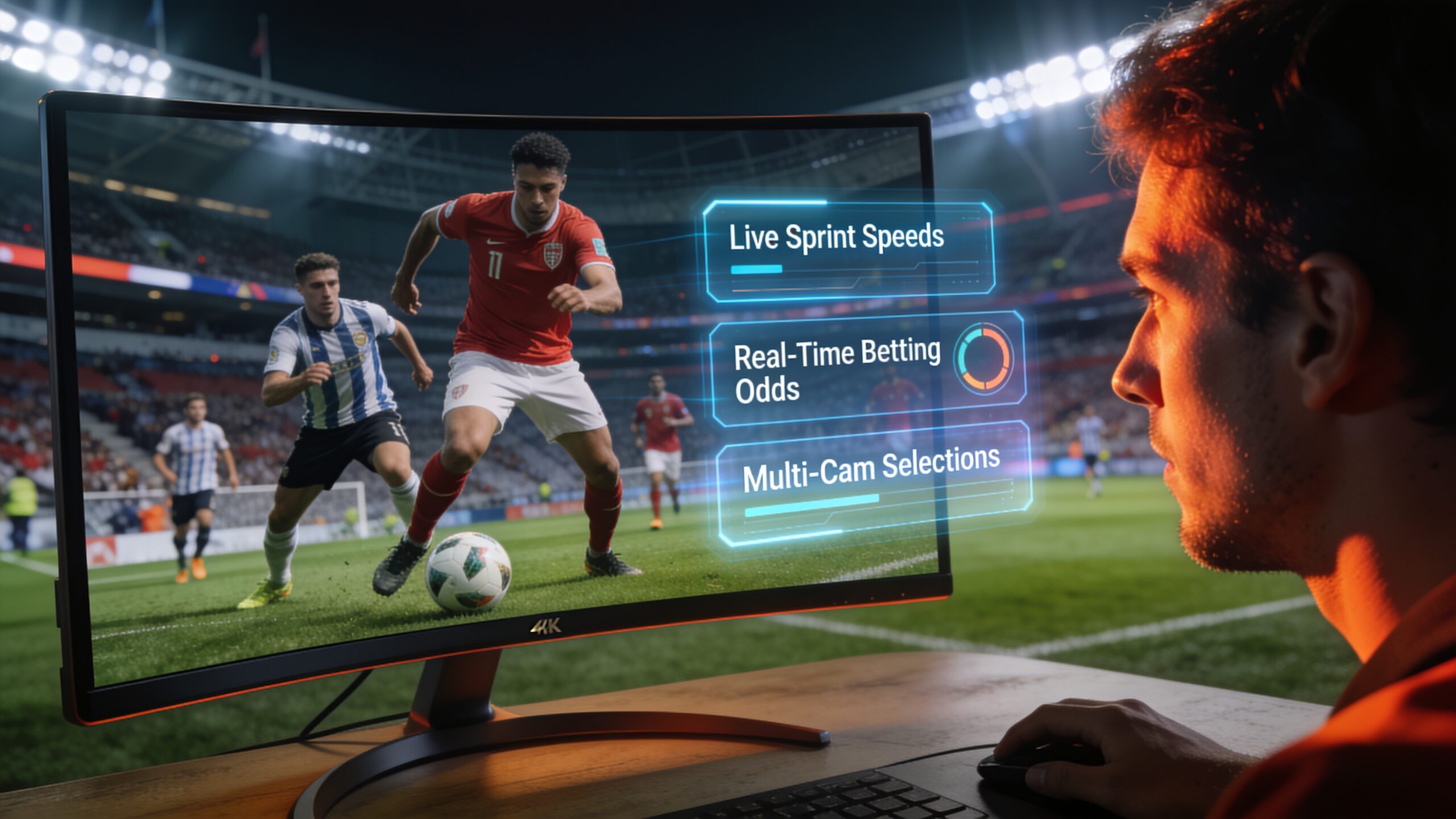
Direct to Fan Sports Streaming Models
Direct to fan sports streaming models represent a fundamental restructuring of how major sports leagues, federations, and franchises broadcast live competition to global audiences. For decades, sports organizations relied almost exclusively on lucrative linear television packages and regional sports networks (RSNs) to handle production, distribution, and subscriber monetization. However, the rapid decline of traditional cable bundles, paired with a global streaming market projected to spend over $14.2 billion on live sports rights annually, has forced rights holders to reclaim direct control over their digital broadcasting infrastructure.

By launching proprietary over-the-top (OTT) direct-to-consumer applications, sports leagues are establishing unmediated relationships with their fans. This strategic evolution allows organizations to capture valuable first-party viewer data, implement dynamic AI-driven personalization, and integrate real-time interactive commerce directly into live game broadcasts. Navigating these technology shifts is now central to long-term commercial survival for sports executives, media buyers, and digital broadcast engineers.
The Collapse of Cable Bundles and the Shift to Direct-to-Consumer Distribution
The financial decline of legacy regional sports networks has accelerated the push toward league-owned digital streaming platforms. This section examines changing broadcast economics, cord-cutting statistics, first-party data capture, and global audience expansion.
Legacy Regional Sports Network Decline and Rights Disruption
Traditional regional sports networks relied on guaranteed monthly carriage fees from cable providers regardless of whether consumers actually watched live sports. As millions of households cancel traditional pay-TV subscriptions, regional sports networks face bankruptcy or severe revenue contractions, stranding professional franchises without guaranteed local broadcast partners. Direct-to-fan OTT platforms provide leagues with a secure, self-controlled alternative to legacy broadcast bankruptcy risks.
First-Party Fan Data Capture and Personalization Architecture
Distributing games through third-party television networks shielded sports leagues from knowing who their actual viewers were, what merchandise they bought, or how often they watched. Operating a direct-to-consumer app gives leagues direct visibility into individual viewing habits, device preferences, and localized engagement patterns. Collecting first-party data enables personalized content recommendations, targeted ticket offers, and hyper-customized sponsor promotions that maximize fan lifetime value.
Overcoming Geographic Blackout Restrictions and Global Accessibility
Legacy sports broadcasting contracts frequently enforced restrictive local blackout rules that prevented nearby fans from streaming home games online. Direct-to-fan streaming platforms remove artificial geographic barriers, enabling supporters across international jurisdictions to access live feeds seamless on any device. Removing friction in global accessibility allows niche and international sporting properties to build dedicated worldwide subscriber bases without needing regional cable clearance.
Hybrid Monetization: Combining SVOD, FAST, and Pay-Per-View
Modern OTT platforms rarely rely on a single subscription tier; instead, they deploy flexible, multi-tiered pricing models. Free Ad-Supported Streaming TV (FAST) channels capture casual fans with highlight reels and archive matches, while premium Subscription Video on Demand (SVOD) tiers unlock full live game access. Offering targeted Pay-Per-View passes for single key matches gives non-subscribers an affordable entry point while diversifying league broadcast revenue.
Technical Infrastructure and Interactive Fan Engagement Features
Delivering low-latency live video to millions of concurrent viewers requires sophisticated cloud architecture and interactive user interfaces. This segment details ultra-low-latency encoding, multi-camera feeds, integrated live data overlays, and cloud scalability.

Ultra-Low-Latency Cloud Video Processing and Edge Distribution
Live sports broadcasts require sub-second video delivery to prevent online streams from lagging behind social media alerts or live stadium reactions. Migrating video pipelines to edge-based cloud computing networks drastically reduces buffering and transmission delays across global streaming networks. Achieving glass-to-glass latency comparable to traditional cable broadcasts ensures a synchronized, frustration-free viewing experience for real-time sports fans.
Custom Multi-Camera Switching and Dynamic Driver/Player Cam Feeds
Direct-to-fan platforms empower viewers to customize their own broadcast experience rather than accepting a single master director cut. Fans can switch between onboard vehicle cameras, dedicated player tracking angles, tactical high-end views, or team-specific commentary feeds on demand. Interactive camera selection increases fan immersion and encourages longer overall view times during live sporting events.
Integrated Real-Time Statistics and AI Graphical Overlays
Deploying AI-driven computer vision systems allows OTT platforms to overlay real-time telemetry, ball trajectories, and athlete performance metrics directly on top of the live video stream. Viewers can toggle interactive graphical widgets to view player sprint speeds, shot probabilities, or historic head-to-head records without leaving the main video player. Data-rich visual overlays turn passive spectating into an active, informative digital experience.
Cloud Scalability and Concurrent Audience Surge Handling
Major sporting events experience sudden massive spikes in network traffic right at kickoff or during critical tournament moments. Auto-scaling cloud architectures dynamically assign server capacity to absorb tens of millions of simultaneous sign-ins without service degradation or video crashes. Maintaining robust backend cloud infrastructure protects league brand reputation and prevents revenue loss during peak broadcast traffic surges.
Modern Commercialization and In-Stream Monetization Strategies
Direct-to-consumer streaming turns the broadcast screen into a dynamic, two-way digital storefront. This section covers targeted virtual advertising, one-click social commerce, interactive microtransactions, and dynamic sponsorship integration.
AI Dynamic Virtual Advertising and Targeted Local Ad Insertion
Traditional linear television broadcasts display identical perimeter physical stadium ads to every viewer globally regardless of location. Advanced OTT streaming platforms utilize virtual advertising insertion to replace physical field board signage digitally based on the viewer’s country or demographic profile. Dynamic virtual ad replacement allows leagues to sell the exact same visual advertising space to dozen of different regional sponsors simultaneously.
One-Click In-Player E-Commerce and Official Merchandise Integration
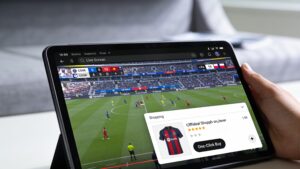
Integrating frictionless e-commerce features inside the video player allows viewers to buy official jerseys or team gear instantly without interrupting the game. When a featured player scores, context-aware digital prompts can offer limited-edition merchandise drops directly on screen. Converting spontaneous fan excitement into instant merchandise sales opens high-margin revenue channels for streaming platform operators.
Interactive Fan Microtransactions and Micro-Betting Integrations
Direct-to-fan applications seamlessly combine live viewing with real-time gamification features, such as predictive polls, trivia, and micro-wagering opportunities. Fans can purchase digital badges, tip creators, or place real-time micro-bets on the outcome of the very next play directly through certified partner widgets. Interactive micro-monetization tools drive sustained engagement during blowouts or break times in live competition.
Strategic Multi-Platform Syndication and B2B White-Labeling
Building proprietary OTT streaming technology enables sports federations to license their backend broadcast platforms to smaller regional leagues or partner sports. White-labeling enterprise streaming architectures creates recurring B2B software revenue while sharing infrastructure development costs across multiple sporting organizations. Multi-tenant software syndication transforms sports federations into scalable media technology companies.
Frequently Asked Questions (FAQ)
What are direct to fan sports streaming models?
Direct to fan sports streaming models are proprietary, over-the-top (OTT) digital platforms operated by sports leagues or franchises to broadcast live games, non-game content, and interactive features directly to consumers without relying on traditional cable television networks.
Why are sports leagues moving away from regional cable networks?
Leagues are moving away from cable networks due to widespread cord-cutting, bankruptcy risks among regional broadcast operators, loss of carriage fees, and the desire to own their fan data directly.
How do direct-to-fan streaming apps monetize live viewers?
Direct-to-fan apps combine monthly subscription fees (SVOD), free ad-supported channels (FAST), pay-per-view access, targeted virtual ad replacement, and integrated in-stream e-commerce sales.
How does cloud technology improve live sports OTT streaming?
Cloud processing enables ultra-low latency streaming, automated server scaling during traffic surges, AI-driven real-time statistical overlays, and multi-camera viewing options.
Final Conclusion
The transition toward direct-to-fan sports streaming models marks a permanent structural shift in global sports media and entertainment. For decades, major leagues, federations, and franchises operated at a distance from their actual audience, relying entirely on legacy broadcast networks and regional sports cable bundles to manage fan interaction and revenue distribution. As cord-cutting accelerates and traditional cable ecosystems crumble, rights holders are discovering that building proprietary, over-the-top (OTT) digital infrastructure is the single most effective way to secure their financial independence and safeguard their media rights value.
By cutting out traditional intermediaries, sports organizations gain direct ownership of valuable first-party viewer data. This digital intimacy transforms how leagues interact with their global fan bases. Instead of delivering a passive, one-size-fits-all television broadcast, modern direct-to-consumer platforms offer personalized, interactive experiences tailored to individual viewing habits. From multi-camera switching and instant biometric telemetry to interactive micro-bets and integrated in-player merchandise drops, direct-to-fan applications elevate live spectating into a dynamic, two-way digital ecosystem.
Moreover, the technical maturation of ultra-low-latency cloud encoding and scalable edge infrastructure ensures that online streams can now match—and even surpass—the reliability and speed of traditional satellite delivery. Combined with AI-driven virtual advertising and dynamic localized ad replacement, leagues can monetize the exact same live broadcast multiple times across different global territories simultaneously.
Ultimately, direct-to-fan OTT models offer a sustainable, future-proof blueprint for modern sports monetization. While the initial capital investment required to build, maintain, and scale proprietary streaming technology is significant, the long-term payoff is unmatched. Leagues that embrace direct digital relationships will not only insulate themselves from regional broadcast bankruptcies, but will also cultivate deeper, more profitable relationships with the next generation of global sports consumers. Direct-to-fan streaming is no longer just an alternative distribution channel; it is the core engine that will power the future of global sports entertainment.

2 thoughts on “Direct to Fan Sports Streaming Models: The Future of OTT 2026”