
Creative Hobbies for Adults: The Best Ideas for 2026 and How to Find One That Actually Sticks
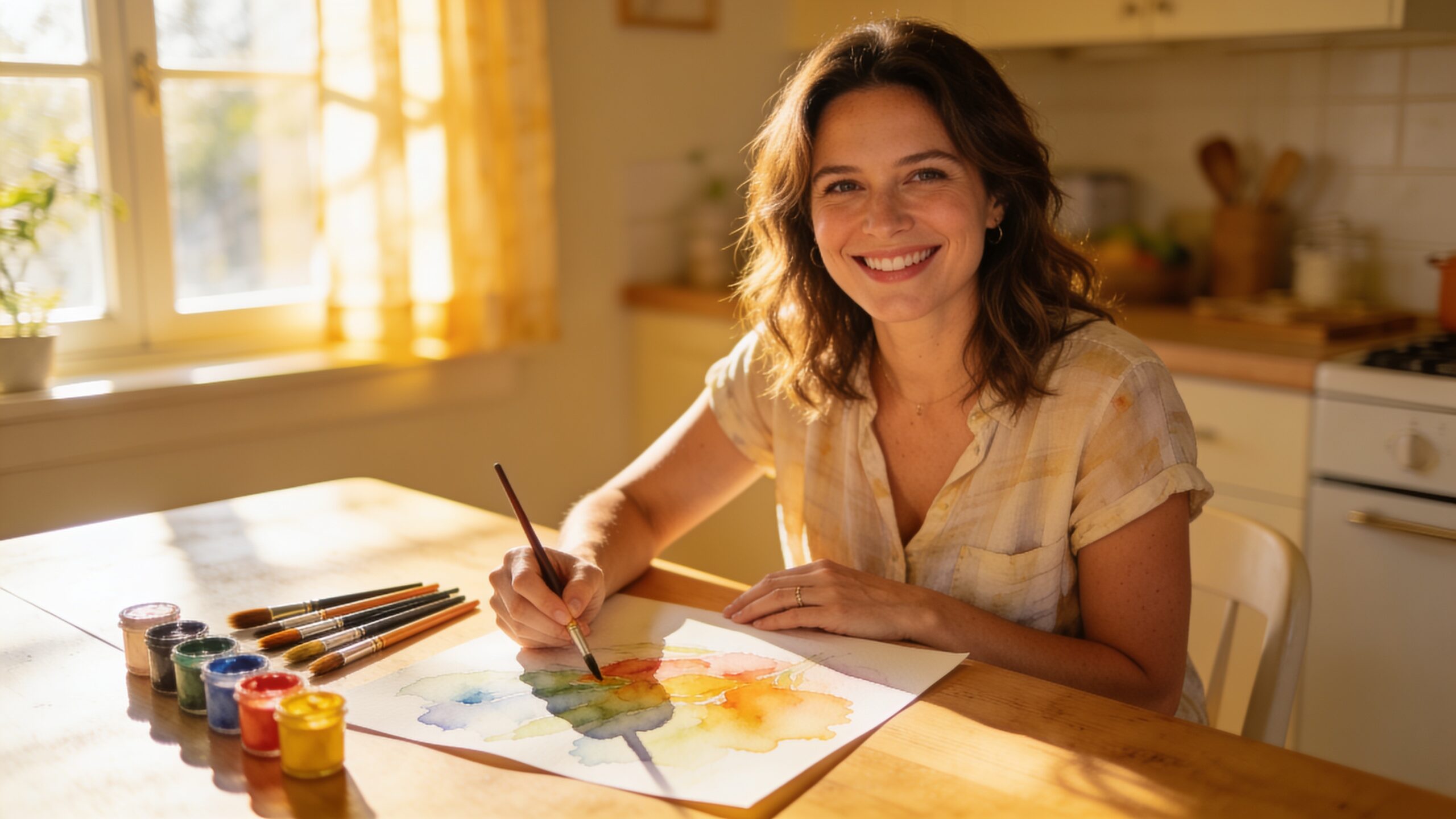
Creative hobbies are now on trend among grown-ups as a full-blown phenomenon, not simply as a temporary craze but as a new era marked by shifting away from passive activities and moving towards something much more interactive, creative, and personal. It is fair to say that after many years of technology and the Internet ruling our lives, we are entering 2026 armed with a desire to improve our quality of life and pursue some creativity in the process. Creative hobbies allow one to satisfy the urge to create something new without relying on the latest gadgets and technology.
The problem facing the majority of grown-ups is not their disinterest but the difficulty of deciding where to start since there are so many different activities available for people to try out. The abundance of opportunities is what causes the exact feeling of being overwhelmed as one spends a good 30 minutes looking through various shows on Netflix without selecting any particular choice. This list provides solutions to that feeling by categorising the top creative hobbies for adults depending on their preferences, schedule, and finances.
Why Creative Hobbies Matter More in 2026 Than They Have in Years
Before choosing a hobby, it helps to understand why this particular moment is so significant for creative pursuits — and why the benefits go well beyond simply filling free time with something more interesting than scrolling.
The Mental Health Case for Making Things With Your Hands
Creative leisure activities provide tangible psychological advantages which cannot be replaced by passive forms of recreation. According to a study conducted in 2023 on 93,000 elderly patients from 16 nations, individuals who had hobbies were found to experience higher degrees of happiness, wellness, and healthiness when compared to those who did not have any hobbies. This works on the basis of a specific psychological phenomenon: engaging in creative activities brings about a condition of focused attention and decreases activity in the brain’s default mode network, thereby minimizing ruminative tendencies, stress, and the brain’s internal noise created by excessive use of technology.
Why 2026 Is the Year People Are Choosing Creativity Over Consumption
What will make the most impact when it comes to entertainment in 2026? The move away from passivity and towards creation. The new concept of creating without pressure – not about doing it perfectly, but simply about having fun and allowing yourself to explore the beginner side of your personality. What is behind this movement? The phenomenon known as “digital fatigue” combined with an increased understanding of the emotional effect scrolling through content has on people. There is a desire for meaningful activities that bring a sense of fulfillment after them rather than a sense of emptiness.
The Social Dimension Most People Do Not Anticipate
Community-related hobbies have been one of the greatest trends in lifestyle during the year 2026. Everyone wants to get involved in something that allows them to develop new relationships, relieve stress, and enjoy their leisure time. Creative hobbies automatically create communities. People learn how to paint pots, knit items, draw lifelike pictures, or even write creatively in various workshops. This kind of activity makes it easier for adults to make new friends since the very process of creation eliminates any stressful social situations.
The Financial Logic of Creative Hobbies Over Passive Entertainment
Creative hobbies have never made more economic sense than they will in 2026. This is because as the price of passive entertainment continues to rise, in the form of subscription fees, movie ticket prices, or concert prices, the value of an entertaining hobby that only requires an outlay of $30 for material, but provides hours of enjoyment, is undeniable. In addition, most hobbies involve producing something of real worth, such as paintings, clothes, pottery, or even food. These items can be used as gifts, as home furnishings, or even as merchandise. When it comes to cost per hour, creative hobbies offer one of the best deals around.
The Best Creative Hobbies for Adults — Organised by What You Are Like
The fastest route to finding a creative hobby that sticks is matching it to your personality rather than choosing based on what looks impressive or what someone else enjoys. These four personality profiles cover the most common starting points.
If You Are Visual and Love Colour — Start With Watercolour Painting
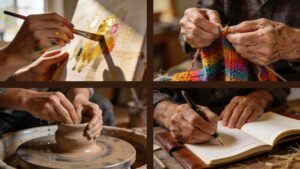
Watercolor painting is the easiest kind of visual art that any adult can learn since it is less intimidating than oils or acrylics, does not require many tools, and yields beautiful outcomes even at an early stage in learning the craft. The basic kit for a beginner costs anywhere from twenty to forty dollars and provides everything one needs for the first few months of training. The watercolor arts scene has a large following through YouTube channels, Instagram groups, and classes in the local area. It appeals to those attracted to colors, to those preferring quiet solitary work, and to those hoping to produce something aesthetically pleasing quite soon after picking up their brushes.
If You Are Patient and Love Texture — Try Knitting or Crochet
Among the most widely favored hobbies among adults for 2026, knitting and crochet stand out as two activities that are far easier to undertake than one would suspect on first hearing about them. One can easily pick up a functional understanding of each within the span of an afternoon via free YouTube tutorials, start with minimal initial equipment and supplies, and create useful products such as scarves, blankets, and even clothes right from the beginning. The meditative effects of working with one’s hands repetitively, as well as the enjoyment derived from color and pattern selection, make them especially good at alleviating anxiety symptoms. There is a knit/crochet group in almost every city across America and Europe.
If You Are Tactile and Love Making Things in Three Dimensions — Try Pottery or Sculpting
Of all the hobbies that you can get into, none of them create as much of a feeling of transformation as pottery, turning mud into something useful and beautiful using only your bare hands. Pottery classes with wheels and access to kilns are easily found in most medium-to-large sized cities in both the US and Europe, for as little as $30-$60 a month. Air dry clay and hand building are alternatives for home potting if you lack access to classes. Pottery would suit someone who finds the physical process of creating energizing, someone who enjoys feeling a tangible connection between the work and results of their efforts.
If You Are Reflective and Love Words — Start With Journaling or Creative Writing
Creativity in terms of creative writing and keeping a journal is perhaps the easiest creative hobby that an adult can get into – all you need is a notebook and a pen, and you will be able to see immediate gains even from your very first practice session. Keeping a journal, in particular, has been shown to help people better process their emotions, alleviate their anxiety levels, and become more self-aware – all independent of the fact of whether anyone else would ever see what you’ve written down. As far as creative writers are concerned, short stories, essays, and poems all offer creative puzzles that eventually evolve into actual skill development.
Creative Hobbies That Are Social, Active, and Best Done With Others
Not every creative hobby happens alone at a desk. These four options deliver the creative satisfaction of making something alongside the social energy of doing it with other people — the combination that 2026’s community-hobby trend is built around.

Cooking and Baking as Creative Expression
Cooking and baking may be two of the most widely available creative pastimes, in terms of their ability to generate an immediate product that can be shared and appreciated. There is certainly much more involved in the creativity of cooking beyond simply following recipes, with creative cooking involving taste experiments, presentation and even the discovery of cultures and traditions through food. Baking in particular seems to have a very strong element of community to it, with baking clubs, baking lessons and decorating cakes all being forms of creativity and enjoyment with a social element built in.
Photography as Everyday Creative Practice
Photography is the most popular form of hobby that can be done by people all around the globe – and in the year 2026, thanks to smartphones, it is really accessible to anyone at all times. One of the ways that photography as a hobby differs from just taking pictures is through intention – understanding how to look for light, composition, and moments beyond just recording everything that the camera catches in front of it. Photography walks, community websites, and local photography groups will not only teach skills but also help you socialize.
Music-Making for Complete Beginners
Musical instruments are among the most satisfying activities for creative adults to undertake — and among the most overlooked due to their potential accessibility. Within the span of three to six months from regular practice, most adults can learn to play the ukulele, keyboard, or guitar using the free instructional videos on YouTube and minimal start-up costs. Socializing through musical pursuits, which includes joining a beginning orchestra, adult chorus, or music group, creates some of the most enduring and meaningful connections that a creative activity can foster. It has been found time and again by creative adult musicians that the very act of learning music is just as enjoyable as playing it.
Crafting and DIY Projects With Immediate Practical Value
The field of crafting is very diverse indeed, ranging from scrapbooking and greeting cards to woodworking, candle making, and interior decorating. The one thing that all forms of crafting share in common is that their product has immediate value either practical or decorative that imbues the act of creating with a concrete meaning. Crafting is one of the most welcoming communities for people interested in being creative, both in the USA and in Europe, thanks to the plethora of craft nights, instructional online videos, craft kits subscriptions, and specialized stores. If you are an adult looking for a creative pursuit that would involve making something functional or useful, then there is no other field more versatile than crafts.
How to Start a Creative Hobby and Actually Stick With It
Finding a creative hobby is the first step. Building the habit that makes it a lasting part of your life requires a different approach — and most adults who try and abandon hobbies make the same three avoidable mistakes.
Start Smaller Than Feels Meaningful
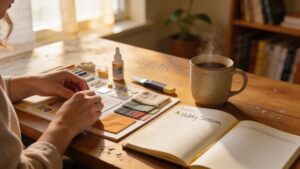
The number one reason why people stop doing a hobby is because it requires too much of an initial effort — like buying all the professional equipment or joining a three-month long class, or taking on a project beyond your ability. Take it easy until you are completely certain; if you want to start something you should have fun doing it. Buy a cheap starter pack and take a YouTube class just to see if watercolours work for you. Borrow a guitar and get a free lesson just to see if music is your calling. Not having any major commitment from the start will save you from the stress that destroys most hobbies before they even start.
Schedule It Like an Appointment — Not a Treat
Hobbies are killed by the difference between the desire to participate in the hobby and the time scheduled for it. Most adults wish to engage in their hobby at any time that’s left over; this extra time is never available. The key is treating the time devoted to your hobby as an inflexible part of your schedule rather than a negotiable part that can be traded off against all sorts of other things. Devoting 30 minutes of Sunday mornings to your hobby works far better than three hours’ worth of intentions about your hobby not being fulfilled.
Connect With Others Who Share the Hobby Early
There is just one absolutely dependable indication of how likely it is for a grownup to sustain a creative hobby for years on end, and that is whether they get connected with other people in relation to that hobby in the first month. People will come into 2026 more ready than ever for the experience of community through creativity, and the infrastructure for creating such a community already exists in every form of creative pursuit, either in physical form or even online. It might be a pottery class locally, a weekly knit group, a watercolor community online, or perhaps a creative writing community.
Give It Eight Weeks Before Deciding Whether It Is For You
The vast majority of people give up their creative pastimes in just two to three weeks — just when the novelty has worn off but skill levels are not sufficient to provide the pleasure necessary for sustained engagement with the activity. Eight weeks of regular practice is the bare minimum needed before one really knows if a particular creative pastime is right for him or her. In those eight weeks, the beginner clumsiness fades away, rudimentary skills emerge, and the particular pleasures of the craft — the meditative nature of knitting, the interplay of colors in painting, and the sounds of a phrase forming in music — become realizable in a way that was not possible earlier.
❓ FAQ
Q1: What is the easiest creative hobby for adults to start with no experience?
Watercolors, journaling, and crocheting are the three easiest ways for absolute beginners to get into their craft; each needs little in terms of supplies, costs less than $30 to get started, and can yield rewarding results from the very beginning without any previous knowledge. Of these three, journaling is perhaps the easiest as it only needs a notepad and a pen. Decide which one is right for you depending on your interests in visual artistry, writing, or making things by hand.
Q2: How much time do I need for a creative hobby as a busy adult?
Just half an hour twice a week is sufficient time to make considerable progress in just about any creative hobby and is something that most people can realistically commit themselves to even when extremely busy. It is important to understand that frequency is more crucial than length since practicing your hobby for half an hour twice a week will see faster progress than leaving it until you have several hours to spare on occasion.
Q3: Are creative hobbies worth starting if I have no natural talent?
Indeed – but there is a misunderstanding in the premise of the question that must be addressed. Creativity is mostly a learned skill than an inherent one, and anyone who starts a hobby creatively, without any background experience, will create excellent results in a matter of weeks after he started. The objective is not about developing creativity but about enjoyment and pleasure gained from the process of creation. All professional artists, musicians, writers, started completely from scratch and kept on going despite it all.
Q4: What creative hobbies are best for mental health specifically?
Knitting and crocheting have the most robust scientific evidence regarding anxiety management owing to their meditative aspect as well as the accomplishment gained by completing tasks. The scientific evidence in favor of journal writing is in its help for managing emotions and reducing stress. A creative hobby involving absorption of mind in some kind of creation has the necessary psychological advantage for promoting mental wellbeing because it helps in avoiding obsessive thinking caused by the overwhelming input of information in today’s world. The best creative hobby is the one that you enjoy doing.
📝 Conclusion
Adult creative activities are not indulgences but one of the most practical solutions to the challenges faced by those living in 2026. They help decrease stress levels, create connections with others, generate true happiness, and provide enjoyment that mere entertainment cannot offer. All that is needed is starting and all that is required to start is picking an activity from the list below and dedicating half an hour to it once this week. Start small, do it regularly, find like-minded individuals and do it for eight weeks. After this time frame passes, many are pleasantly surprised.