
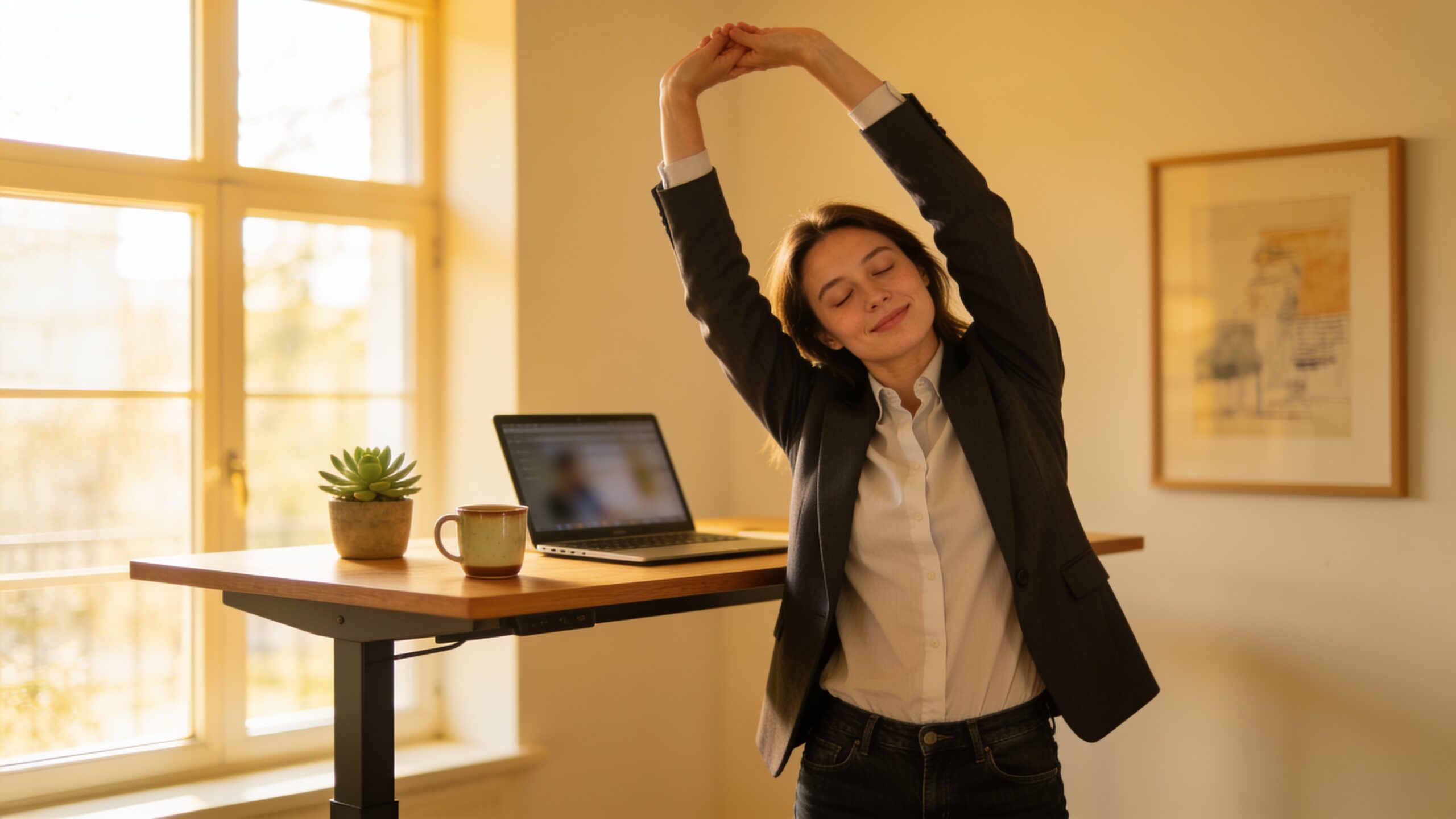
Movement Snacks for Busy People: The 2026 Health Habit That Fits Into Any Schedule
For the active individual, movement snacks are the most practical wellness fad of 2026, and unlike any other health fads, they do not require a membership at the gym, any kind of fitness equipment, an extra period of time for working out, or even any major changes to your current daily schedule. Movement snacks, as the name implies, are brief spurts of exercise done at different points during the day, each ranging from one to five minutes in duration and resulting in some form of physical benefit without an hourlong session of exercise.

The occurrence of this phenomenon is no coincidence. More than 70 percent of Americans would like to have more time to work out — the same thing applies to Europeans. However, the incidence of inactivity in the US and Europe continues to increase together with sedentary habits at work, commuting longer distances, and screen-based leisure activities. Movement snacks do not represent some kind of half-measure — they constitute an entirely new way of staying active that works much better for how we live today than going to the gym ever has. This book is dedicated to explaining what movement snacks are, what evidence there is behind them, and how to incorporate them into your lifestyle.
What Movement Snacks Are — And Why the Science Behind Them Is Compelling
Understanding why a practice works is the key to making any habit stick. The proof that underlies the benefits of movement snacks is exceptionally robust compared to most wellness fads, and not because of influencers, but due to extensive scientific studies

What a Movement Snack Actually Is
Movement snack is defined as a short period of planned physical activities that last from 30 seconds to 5 minutes that are done several times in the course of the day to interrupt sedentary behavior. They involve all forms of physical activities including stretches, walks, stairs climbing, body weight exercises or just simple movements. The key features here are brevity and frequency since what matters is not one long exercise session, but several short ones spread throughout the day. Such an approach helps to address the negative physiological impact of the sedentary lifestyle in a way that longer training sessions, even those carried out later, do not.
The Research That Makes This More Than a Trend
In a 2022 study that was published in Nature Medicine, it was discovered that individuals who performed only three quick sessions of rigorous exercise on any given day had a 48% to 49% reduced risk of dying from heart-related conditions compared to those individuals who performed no exercise at all – each of which taking only one to two minutes. Furthermore, individuals who performed only 4.4 minutes of rigorous exercise on any given day had a 32% to 34% reduced risk of dying from heart-related conditions compared to those individuals who performed no exercise at all. This is not something minor – it is indeed a clinically relevant effect derived from an extremely small investment of time.
Why Sitting All Day Cannot Be Undone by One Evening Workout
This is the understanding that makes movement snacks important from a medical standpoint instead of just being convenient. If you remain seated for long periods of time, your circulation will slow down, your muscles will become idle, and your metabolism will be adversely affected, and the effects on your physiology caused by eight hours of uninterrupted sitting cannot be made up for by an hour of exercise at the gym in the evening. Eventually, a long period of sedentary behavior will cause insulin resistance, fatigue, heart disease risk, and metabolic problems regardless of any other activity that is done at other times during the day.
The Cognitive Benefits That Surprise Most People
The benefits of moving snacks go far beyond the mere physiological ones. In fact, studies have proved that a mere 30 minutes of activity at a moderate intensity level are enough to substantially boost cognitive functioning through improved working memory, executive control, and alertness. Even a few seconds of taking moving snack have immediate positive impact on one’s ability to concentrate by increasing the amount of blood delivered to the brain. Regular inclusion of moving snacks into the workday has been found to result in higher attention span, no afternoon energy dips, better mood, and less perceived stress, which makes moving snacks not only a health but a productivity measure as well.
How to Build Movement Snacks Into a Real Working Day
The gap between knowing movement snacks are beneficial and actually doing them is entirely a scheduling and habit problem. These four approaches solve that problem for the most common working situations.
The Hourly Timer Method — The Simplest Starting Point
The most reliable way to access movement breaks is to have an hourly timer on your phone or computer, where you get reminded to move every hour after having moved for two to three minutes. It is a method of no prior planning and no decisions while working. At every ring of the alarm, you should get up and move around for two minutes — walking into another room, doing ten squats, push-ups at your desk, or stretching yourself out — and then sitting back down. If you do this over eight hours of working time, you will have accumulated 16 minutes of moving throughout the day.
Habit Stacking — Attaching Movement to What You Already Do
Habit stacking involves the addition of a new habit onto a pre-existing habit, and this is one of the most effective ways to form a regular habit of eating snacks that do not require the need of reminders or motivation. Stand when answering phone calls rather than when seated. Take ten calf rises while waiting for your kettle to boil. Walk to the office of your colleague as opposed to emailing them. Do squats prior to sitting down each time you go to the toilet. These activities do not require prior planning, special equipment, or any additional time since they utilize your current habits as a trigger for physical activity.
The Three-Snack Minimum — A Realistic Daily Target
Studies reveal that three movement snacks each day offer cardiovascular benefits, making three the most reasonable minimum for someone who wants to adopt this practice. The morning snack involves five minutes of walking or stretching exercises before settling down for work. The midday snack is for two minutes and should be taken separately from lunch. The afternoon snack involves walking exercises when you start feeling tired; this is usually around 2pm to 4pm. These three snacks take less than ten minutes of your time to complete, and you can do them without regard to where and what kind of work you are doing or even your fitness level.
Movement Snacks for Remote Workers Versus Office Workers
There is a slight difference in the execution of movement snacks at home and in an office setting. Home-based remote workers enjoy more physical freedom since they can move between the rooms, walk up and down the stairs, or walk outside for a bit, but there is a greater danger of sedentariness due to the absence of stimuli to move that one would receive in an office environment. The office-based workers will have access to preexisting options of movement – like taking stairs, walking to the colleague’s cubicle, using the bathroom on another floor – but will be embarrassed to do certain exercises while at their desk, in front of other people.
The Best Movement Snacks to Try — Organised by Time and Situation
Not all movement snacks suit all situations. These four categories cover the most practical options for the most common working and daily life scenarios — each requiring no equipment and no change of clothing.
60-Second Snacks — For When You Have Almost No Time
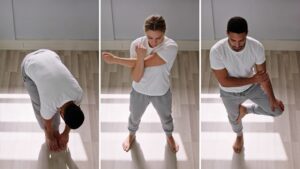
According to research conducted in 2022, even one to two minutes of intense physical activity have health benefits for the heart and blood flow. In other words, a minute of exercise is truly beneficial for our health. These movements can be, for example, ten squats using a chair while fully lowering yourself into the squat position; ten desk push-ups, in which your arms will need to move while touching the edge of the desk rather than the ground; 60 seconds of stretching your body while standing, starting from your ankles up to your neck; or 20 jumping jacks.
Three-Minute Snacks — The Most Effective Duration for Most People
Three minutes lies perfectly in between in case of movement snack because this is enough time not only to increase the heart rate but also to include various muscles in this process, and not too much for an employee to think about this movement snack as something unattainable. Here comes a three-minute movement routine which involves one minute of brisk walking from your workplace to any other place, one minute of doing ten slow squats and ten desk push-ups, and one minute of stretching your whole body including the neck, shoulders, and lower back which is strained the most while you are sitting behind your table.
Five-Minute Snacks — When You Have a Natural Break
The greatest impact that comes from the single session of five-minute movement snacks is the increased brain blood flow and alertness level after the snack period when going back to work. Five minutes of activity can be taken for a quick walk out of the office or up to another floor of the building, doing bodyweight exercises (squats, lunges, push-ups and plank), or doing a five-minute mobility flow with a help of a free application (for example, Down Dog) or a YouTube video. The best way to plan five-minute snacks is to schedule them during the natural breaks within the working day (for example, between meetings or right before evening activities).
Incidental Movement — The Movement That Does Not Feel Like Exercise
Incidental movement is by far the most sustainable way to practice movement snacking as it entails the kind of physical exercise that is seamlessly integrated into one’s routine that it takes neither self-discipline nor any effort to remind oneself of its necessity. Balance training such as standing on one foot or performing calf raises while one is brushing his/her teeth or while waiting for his/her turn at the checkout point is done without investing any extra minutes. Opting to use the stairs instead of using lifts, parking further away from the entrance of a building, going to your co-worker rather than sending him/her an email message, or even standing while talking on the phone add up to considerable physical exercise over the course of the day.
How to Make Movement Snacks a Permanent Habit
Discovering the movement snacks is no problem at all. However, making sure that these are retained for sufficient time in order to become habitual and to yield the health benefits derived from the repeated practice over months and years needs to be approached somewhat differently.

Starting With One Snack Per Day Before Adding More
The best approach to establishing a sustained pattern of movement snacks is to start with just one, fixed daily movement snack as opposed to starting off with a full programme right away. Select a certain trigger, which could be the end of your morning cup of coffee, a break in the working day, or after coming back to the desk after lunch, and make a commitment to yourself that you will do your two-minute movement snack at the exact same time each day for the next two weeks. Once you have established a single routine that you do without even thinking, add another one.
Tracking Progress in the Simplest Possible Way
Even something as simple as a grid of boxes for each snack you will complete, written in a notebook or notes application with a check placed in it once completed, is all the visual cue needed to keep yourself motivated to continue the habit through the weeks when your motivation levels are less than they were at the beginning. No fancy or high-tech equipment is needed for habit tracking. All it takes is a physical habit tracker on your desk, a simple note on your phone, or even just a weekly check of the number of snacks you have completed against the number that was planned in order to keep you going through the first important month.
Making the Environment Work For You
Environmental cues are more potent than will power when trying to maintain a new habit. Tie a resistance band on the desk as an environmental cue for taking breaks for moving around. Ensure that there is a glass of water located at a place where you have to stand to access it. Place your printer, coffee maker, or your charger of your cell phone out of reach so that you will have to get up when using them. Set the background of your computer to act as a reminder for taking your movement snacks.
What Success Actually Looks Like After Three Months
With just three months of continuous movement snacks – even with only three each day – there are noticeable differences in energy levels, focus, lower back ease, and cardiovascular health that almost everyone feels before achieving any sort of fitness milestone. The most frequently observed differences after three months are the following: substantially fewer energy lulls in the afternoon, a stable mood throughout the workday, less stiffness in the lower back and neck area, and better ability to fall asleep at night. They are not revolutionary changes – but quality of life differences that add up without being noticed and motivate further exercise all on their own.
❓ FAQ
Q1: Are movement snacks as effective as a regular workout?
Movement snacks act as an addition to and not a substitute for planned physical activity since they work on different biological principles. Planned physical activity is important as it develops physical fitness and strength through time. Movement snacks guard against the biological problems resulting from prolonged periods of continuous sitting, which cannot be undone by just one exercise period in the evening. Studies have shown that taking three one-to-two minutes’ movement snacks a day can bring down cardiovascular mortality by 48%.
Q2: How many movement snacks should I aim for each day?
The recommended amount for this is three based on research conducted. The ideal amount to shoot for which will offer the most benefits overall is five to eight throughout a working day. Start out with three and gradually build up. What is more important is consistency than how many times you snack per day, since three times a day consistently will offer more benefits than eight times one day and no times the other days during the week.
Q3: What are the easiest movement snacks to start with?
Three of the easiest places to begin without any preparation or embarrassment include: Ten squats on a chair near your desk, walking for two minutes to some other location or even outside, and stretching your entire body for 60 seconds while standing up. All of these activities can be done in your work clothes wherever you are working with no set-up or cool-down period needed. Start with whatever activity makes the most sense in your work environment because the best exercise snack is the one that you do!
Q4: Do movement snacks help with back and neck pain from desk work?
Yes – and this is one of the first obvious advantages that will become apparent to office workers who adopt the habit of movement snacks. Sitting in one position for prolonged periods leads to an imbalance and tightness in muscles and postures that develop over time to cause pain and discomfort. The breaks taken during the day, especially the ones which involve rotating the neck and shoulders and extending the spine, prevent this process from developing and help relieve it. Office workers experience decreased stiffness in their lower back and necks after about two weeks.
📝 Conclusion
Snacks in motion for those on the go will be the most straightforward health advice of 2026 – because they take into account where people really are instead of how wellness gurus wish they were. No one is going to suddenly have time for another hour at the gym. However, just about everyone can spare two minutes at a transition point, five minutes during their lunch, and a minute before sitting down after a quick break. This practice, done day-in and day-out, adds up to real gains that science has proven. Start with your first snack tomorrow. Everything else falls into place.

1 thought on “Movement Snacks for Busy People: How to Stay Active”