
Why Sports Trading Cards Are Popular Again in 2026 (and What the Numbers Actually Say)
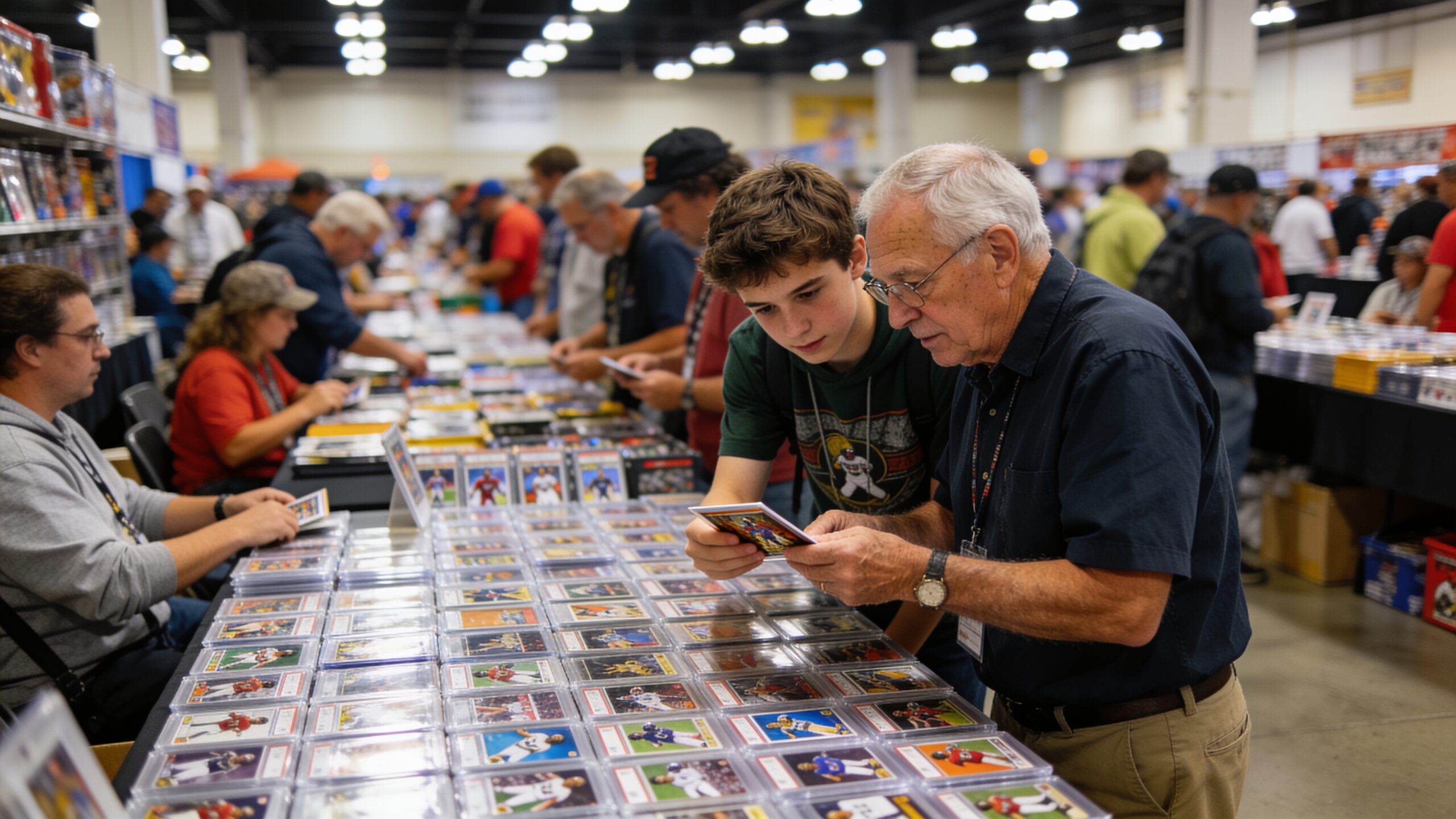
Walk into a card shop or a collectors’ show right now and you’ll see something that would have seemed unlikely ten years ago: long lines, packed tables, and grown adults and teenagers comparing rookie cards on their phones. Card grading companies are processing record volumes, a single rookie card can be graded thousands of times in a month, and the hobby is a regular topic on social media.

That’s the reason people keep asking why sports trading cards are popular again. The honest answer has a twist, though. The wider trading card hobby is booming, but sports cards specifically are growing more unevenly than the headlines suggest. Here’s what the data shows, what’s driving the comeback, and what to know before you buy a single pack.
How Big the Card Boom Really Is
The clearest evidence of a boom is in grading, the process where a company authenticates a card and scores its condition.

Grading Has Hit Record Volumes
According to GemRate data reported by Sports Illustrated, the industry graded more than 26 million cards in 2025, with overall volume up 32% from the year before. PSA, the largest grader, passed 2 million cards in a single month for the first time in March 2026, with 2,175,761 submissions across sports, trading card games, and other categories. Its monthly output has roughly doubled in four years, and April 2026 set another record at about 2.21 million. Grading matters to the market because authenticated cards in top condition tend to command strong price premiums, which gives collectors a reason to submit cards they might once have left in a shoebox.
Buyers Are Spending Billions on eBay
On the buying side, one 2026 roundup of eBay data reports that trading card singles sold for more than $2.6 billion on the platform in 2025, with sports cards accounting for about $1.78 billion of that across more than 42 million transactions. Those figures come from eBay and GemRate as summarized by a third-party site, so they’re worth checking against the originals, but they point the same way as the grading numbers: a lot of money and a lot of people.
Why Market-Size Estimates Range From $2 Billion to $15 Billion
If you search for the size of the sports card market, you’ll find numbers that don’t resemble each other. One research firm puts the global sports trading card market at about $2.3 billion in 2026. Another puts it near $14.9 billion. Broader estimates for all U.S. trading cards sit around $15 billion. The gap comes mostly from what each report counts: only physical sports cards, sports and non-sports together, or the whole trading card category including games like Pokémon. When you see a single number, check which definition is behind it. Some market reports also expect association football (soccer) cards to be among the fastest-growing segments globally, citing worldwide fandom, though those forecasts are less documented than the U.S. data.
What’s Driving the Comeback
Several forces are pushing in the same direction at once.

Star Rookies Create Instant Demand
Rookie cards of breakout players drive some of the biggest spikes. Victor Wembanyama’s 2024 rookie cards became the most-graded of any sports card, according to Sports Illustrated. In 2026, a rookie card of NBA player Cooper Flagg took the lead: his 2025 Topps base card (#201) had about 5,800 copies graded in March and about 7,400 in April, the highest single-month total for a modern sports card in over two years, according to grading trackers. Demand follows performance, which is exactly why prices for a single player can jump quickly. The scale is striking compared with a few years ago: when Luka Dončić’s Prizm rookie card passed 20,000 top-grade copies, it was treated as a milestone few thought possible, and several other rookie cards have since reached that range.
Nostalgia and Vintage Legends
Older cards are pulling their weight too. Sports Illustrated’s hobby coverage noted price spikes in vintage cards of legends such as Ken Griffey Jr., Michael Jordan, and Tom Brady, and the all-time record for a sports card remains a 1952 Topps Mickey Mantle that sold for $12.6 million in 2022. For many adult collectors, buying cards is partly a way of reconnecting with the ones they had as kids.
Social Media Turned Collecting Into a Spectator Sport
Industry analysts point to influencer-driven promotion and hybrid physical-digital products as part of the demand story, and the hobby’s visibility online has risen. Even a trend like “repacks,” where sellers bundle cards into mystery lots, surged in 2025 according to Sports Illustrated’s hobby preview. Watching other people open packs and find a valuable card has become entertainment in itself, which draws in people who might never have walked into a card shop.
Licensing and Consolidation
A few large companies now control much of the business. Fanatics Collectibles reportedly generated about $1.6 billion in revenue in 2024, up roughly 40%, according to figures reported by Sportico. Topps was also expected to regain a licence to make football cards in 2026, after not having released a licensed football set since 2015. Consolidation has reached grading too: Collectors, the parent company of PSA and SGC, acquired rival Beckett in 2025, and PSA alone is estimated to handle roughly 60% of professional grading by volume. Fewer rights holders and fewer graders can mean more marketing muscle and tidier standards, but it also concentrates power in a handful of companies.
The Part Headlines Skip
A balanced picture includes the parts of the story that don’t fit the “boom” narrative.

Sports Cards Aren’t Where Most of the Growth Is
Sports Illustrated’s analysis of GemRate data found that PSA’s sports card grading was essentially flat in 2025, up just 2%, while non-sports and trading card game categories drove much of the growth. March 2026 data showed a similar pattern: PSA’s roughly 700,000 sports submissions were up about 2% from a year earlier, even as total submissions across all categories grew far faster. In other words, sports cards remain the foundation of the hobby, but the biggest percentage gains are coming from elsewhere.
The “Junk Wax” Warning
Some collectors and analysts warn that high print runs of modern sets could repeat what happened in the late 1980s and early 1990s, when billions of cards were printed and most of them stayed worth very little for decades. The concern is that when a set is produced in huge quantities, the common cards lose value even if a few star cards hold up. Whether today’s production levels cross that line is debated, but the warning is worth knowing before you buy boxes hoping for a payoff.
Record Demand Means Waiting
Record volume has a practical cost for collectors: time. One card-grading tracking site reported that PSA was processing roughly 90,000 cards a day in mid-2026 and still had a backlog on the order of 10 million cards. That figure comes from a secondary source and may have changed, but the broader point holds: if you send cards in during a boom, you may wait a long time for them to come back, and the market can move in the meantime.
Hype Cycles Cut Both Ways
The same player-driven demand that creates spikes can reverse. A card that jumps 76% in grading volume in a month because a player is performing well can cool just as fast if the player is injured or plays poorly. People who bought at the peak of a hype cycle have often found that values drop once the attention moves on.
What This Means If You’re Thinking About Collecting
None of this should put you off if you simply enjoy the hobby, but a few habits help.

Collect What You Love First
The most consistent advice from long-time collectors is to start with players, teams, or eras you genuinely care about. You’ll enjoy the cards whether or not their value changes, and you’re less likely to make rushed purchases based on a trending name. Basic care matters too: soft sleeves and rigid holders protect corners and surfaces, and keeping cards out of direct sunlight and damp rooms helps them stay in the condition that collectors and graders care about.
Understand Grading Before You Pay for It
Grading can raise a card’s value, but it costs money and takes time, and most cards don’t earn the top grade. One 2026 analysis puts PSA’s all-time rate of the top grade, a PSA 10, at roughly 9% of submissions, with higher rates for some modern sets. That’s secondary data, so check PSA’s own population reports, but the point stands: a grading fee is a bet, not a guarantee.
Treat It as a Hobby, Not a Guaranteed Investment
Prices are volatile and depend on factors nobody controls, from a player’s health to how many copies exist. If you buy cards, spend only what you could afford to lose, keep cards in protective sleeves, and be wary of anyone promising big returns. Buying from established sellers, checking a graded card’s certification number against the grader’s online database, and asking for clear photos before you pay are simple ways to reduce the risk of counterfeits and misdescribed cards.
This article is general information about a hobby and market trends, not financial advice.

1 thought on “Why Sports Trading Cards Are Popular Again in 2026”