
Why Pickleball Is America’s Fastest-Growing Sport in 2026
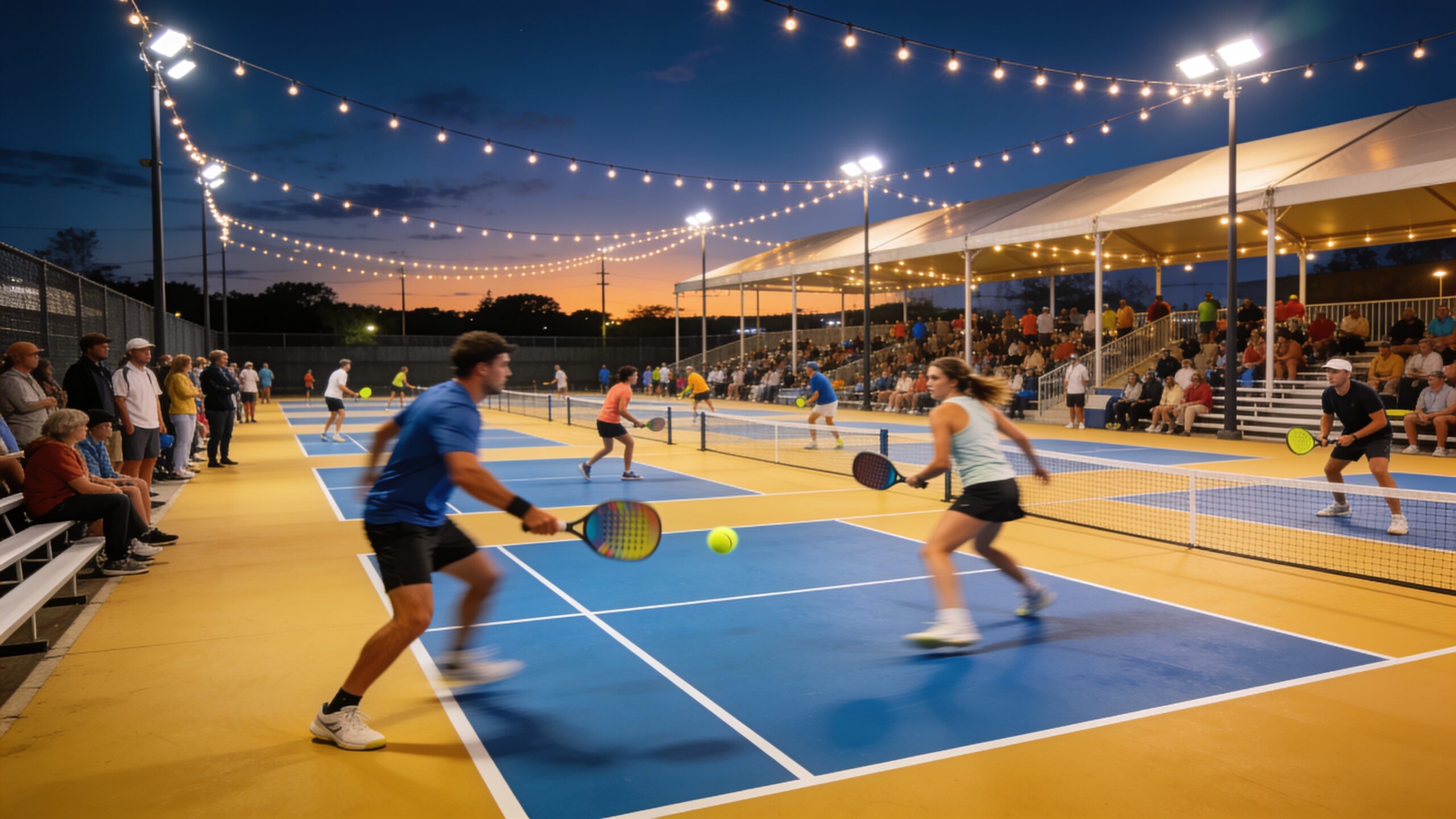
Walk past almost any public park these days and you’ll hear it before you see it — that distinctive pop of a plastic ball off a paddle, usually followed by laughter. A decade ago, that sound belonged almost exclusively to retirement communities. Today it’s coming from office happy hours, college campuses, and repurposed tennis courts in nearly every American city.
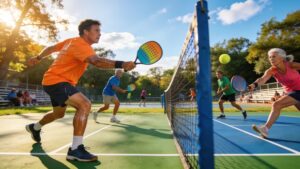
Pickleball isn’t just popular anymore — it’s the fastest-growing sport in the country, and it has been for five years running. What started as a quirky backyard game invented in the 1960s has turned into a full-blown industry, reshaping how Americans think about fitness, community, and even real estate. Here’s what’s actually behind the boom, and where it’s likely headed next.
The Numbers Behind Pickleball’s Explosive Growth
The participation data alone makes pickleball one of the most unusual growth stories in modern sports history — this isn’t a gradual climb, it’s a near-vertical one.
From Niche Pastime to 24 Million Players
According to the Sports & Fitness Industry Association (SFIA), 24.3 million Americans played pickleball in 2025 — up 22.8% from the year before, and a staggering 171.8% over just three years. For context, the sport had fewer than 5 million players as recently as 2022. Few activities in the history of American recreation have scaled this quickly, and SFIA has now named pickleball the country’s fastest-growing sport for five consecutive years.
Courts Can’t Keep Up With Demand
Infrastructure is racing to catch up with interest. USA Pickleball’s court database puts the total at more than 70,000 dedicated courts spread across upwards of 16,000 locations nationwide, with hundreds of new courts added in the past year alone — often by converting underused tennis courts or adding lines to existing gym space. Facility operators and city parks departments alike have named court supply, not player interest, as the biggest bottleneck to further growth.
A Sport That’s Getting Younger
Pickleball’s biggest myth is that it’s a retirees-only activity. Recent industry surveys tracking player demographics show the average age of participants has been trending noticeably younger over the past several years, with young adults and families increasingly driving new sign-ups alongside the sport’s original senior fan base. That broadening age range is a big part of why analysts don’t expect the growth to taper off anytime soon.
What’s Actually Driving the Boom
Explosive growth numbers are one thing — understanding why people are switching to this sport over others is what actually matters for anyone trying to predict where it goes next.

Low Barrier to Entry, High Social Payoff
Unlike tennis, which can take months to feel comfortable playing, pickleball’s smaller court and lighter paddle make it possible for a total beginner to enjoy a real rally within their first session. It also requires minimal gear — a paddle and a handful of balls — which keeps the cost of entry low. Combine that with a doubles-heavy, conversational style of play, and you get a sport that functions as much as a social activity as an athletic one, which is a major reason it has spread so fast through workplaces and friend groups rather than staying confined to dedicated athletes.
Professional Leagues Are Turning Players Into Fans
The sport’s spectator side has grown almost as quickly as its participation numbers. Three professional tours — the PPA Tour, the APP Tour, and Major League Pickleball — now run televised events with real prize money on the line, and mainstream sports networks have started carrying matches alongside traditional programming. That visibility creates a feedback loop: people watch a competitive rally on television, get curious, and then go try it themselves at a local court the same weekend.
A Fast-Growing Equipment Market
The gear side of the sport has scaled right alongside participation. Industry estimates now put the U.S. pickleball equipment market — paddles, balls, nets, and apparel — at roughly $2.3 billion, with established sporting goods brands and pickleball-only startups both competing for shelf space. That’s turned casual buyers into repeat customers, since serious players often upgrade paddles every season the way runners replace shoes, and it’s given retailers a genuine incentive to keep promoting the sport rather than just responding to demand.
Real Estate and Local Economies Are Cashing In
Dedicated pickleball facilities, indoor clubs, and mixed-use developments built around the sport have become a genuine business category, with private investment flowing into court construction, leagues, and branded apparel. Some municipalities have even pointed to new pickleball facilities as tools for local economic development, similar to how golf courses or public pools have historically been used to draw residents and visitors. Commercial developers have started treating a court or two as a standard amenity in new apartment and retail projects, the same way a pool or a gym once was, which suggests the sport’s footprint in everyday real estate is only going to grow from here.
How Pickleball Stacks Up Against Other Racket Sports
Pickleball isn’t growing in isolation — it’s part of a broader shift in what Americans want from a racket or paddle sport, and that context helps explain why its rise has been so durable rather than a passing fad.
Padel’s Parallel Rise
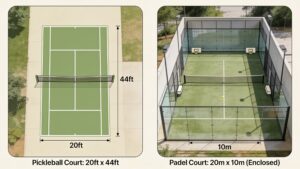
Padel, a related paddle sport popular in Europe and Latin America, is also expanding quickly in the U.S., often mentioned in the same breath as pickleball by industry trackers. The two sports share some DNA — smaller courts, doubles-first formats, social atmosphere — but padel is typically played in an enclosed court with walls, giving it a different feel. Some facility operators are now building venues that offer both, betting that fans of one will cross over to the other.
The Tennis Crossover Effect
Rather than cannibalizing tennis, pickleball appears to be pulling in people who never considered playing a racket sport at all, while also giving lapsed tennis players an easier way back into the game. Some tennis clubs have responded by adding pickleball courts rather than competing with the trend, treating it as a way to keep memberships active rather than a threat to their core sport.
Global Expansion Beyond the U.S.
While the United States remains the epicenter, international interest is accelerating too. Federations overseeing the sport report a rapidly growing list of member countries, and emerging pickleball scenes are showing up in places like Spain, Australia, and parts of Southeast Asia — often introduced through resorts, schools, or expat communities before spreading to the general public. That pattern mirrors how other niche sports have historically gone global: tourism and expat communities plant the seed, local schools and clubs pick it up, and within a few years there’s a homegrown competitive scene that no longer depends on American visitors to sustain it.
Common Misconceptions, Cleared Up
Even with all this exposure, a few myths keep circulating that don’t match the current reality of who’s actually playing.
“It’s Only for Retirees”
The average player age has been dropping for several years, not rising, as gyms, apartment complexes, and college campuses add courts aimed squarely at younger players. The sport’s original senior audience is still there — it just isn’t the whole picture anymore.
“It’s Basically Just Tennis, But Smaller”
The underlying rules, scoring system, and court dimensions are different enough that experienced tennis players don’t automatically have an advantage — some even report having to unlearn habits, like full-swing power shots, that don’t translate well to pickleball’s smaller court.
“It’s a Passing Fad”
Fads typically show a spike followed by a steep drop-off. Pickleball’s five-year run of consecutive growth, combined with strong player retention, looks far more like the early trajectory of an established sport settling in than a short-lived trend.
What to Expect From Pickleball’s Next Chapter
Five years of uninterrupted, record-breaking growth naturally raises the question of what happens when the initial boom starts to mature.
Where the Growth Might Level Off
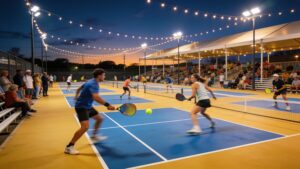
Some industry watchers have started flagging early signs that the pace of new court construction is moderating in a handful of already well-served markets, even as demand keeps climbing elsewhere. That’s a normal pattern for any fast-growing activity — early-adopter cities saturate first, while suburban and smaller-market growth continues for longer. It doesn’t suggest interest in the sport itself is fading; if anything, player retention numbers suggest the opposite.
A Sport Built for the Long Haul
What makes pickleball different from many fitness fads is retention: a meaningful share of players who try it keep playing regularly rather than dropping off after a few months, which is unusual for a sport that grew this fast, this quickly. That kind of stickiness is generally a better predictor of a sport’s staying power than raw sign-up numbers alone.
What It Means If You’re Thinking About Picking Up a Paddle
For anyone considering trying it, the practical upside is real: a decent starter paddle costs less than a typical yoga mat, community centers and parks departments now list open-play hours online in most cities, and several free apps make it simple to find nearby courts and pickup games. The learning curve is short enough that most beginners rally comfortably within their first session, and the sport is genuinely welcoming to newcomers regardless of age or athletic background. Whether pickleball’s current growth curve continues at this pace or eventually settles into something more sustainable, it has already cemented itself as one of the defining sports stories of the decade — one that’s still being written on courts across the country every single day.