
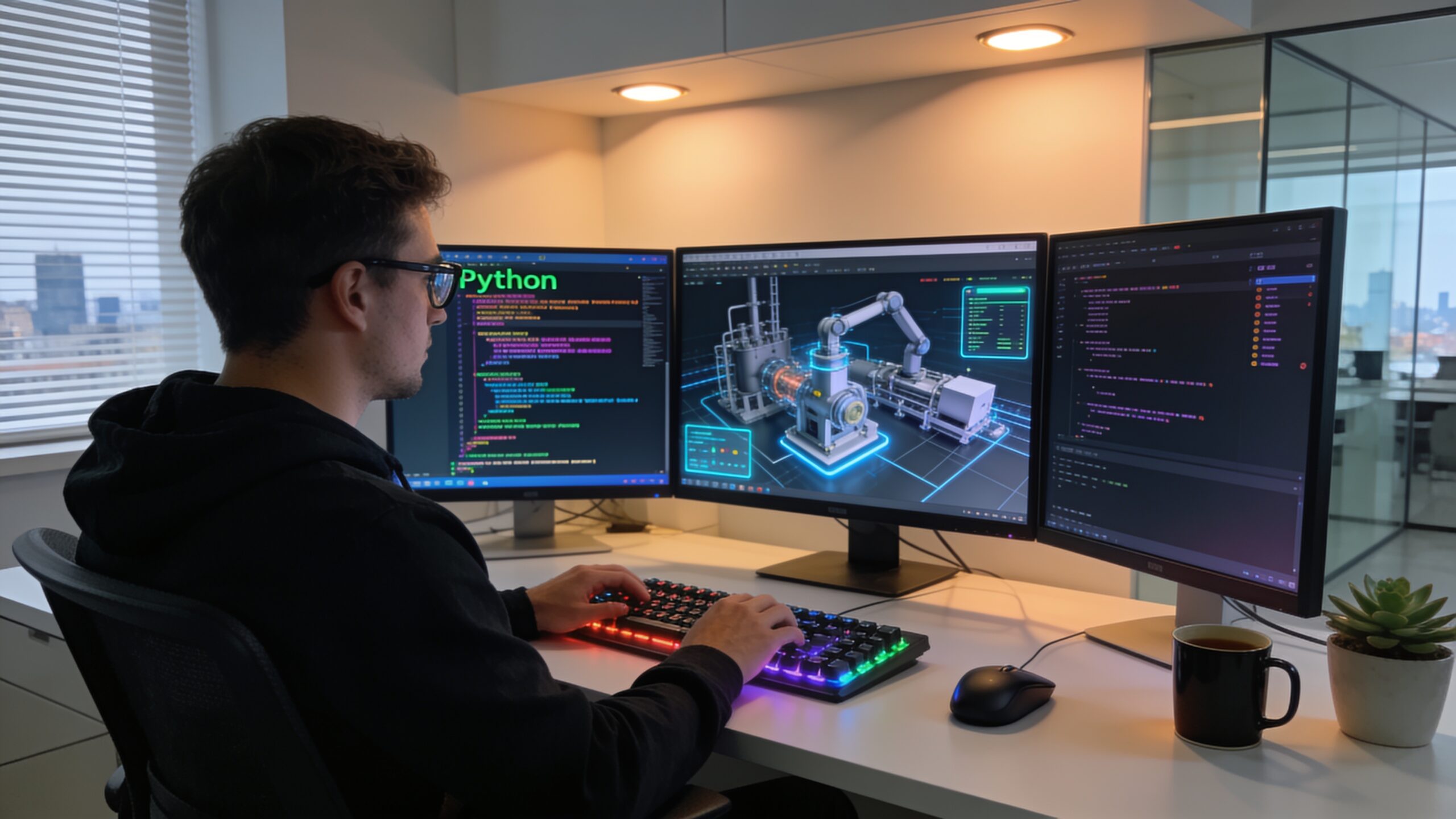
Next-Gen Tech Trends: Agentic AI and the Modern Digital Hardware Shift
Next-gen tech trends are fundamentally altering how individuals, enterprises, and research institutions across the United States and European nations interact with digital systems. For years, consumer and enterprise software operated on reactive models, waiting for manual human inputs to execute basic digital instructions. However, recent breakthroughs in agentic artificial intelligence, localized edge computing, spatial hardware, and quantum-safe cryptography have initiated a massive technological evolution.

Navigating modern next-gen tech trends requires evaluating how autonomous software agents collaborate directly with physical devices, smart sensors, and advanced cloud architectures. Rather than treating emergent technologies as isolated experiments, businesses now deploy integrated ecosystems that streamline productivity, protect sensitive data, and lower energy footprints. This core structural pivot offers an essential guide to the hardware, software, and operational paradigms defining the global technology landscape today.
Uncovering Agentic Systems and Next-Gen Tech Trends
Next-gen tech trends highlight how autonomous software agents move past basic chatbot prompts to execute multi-step workflows. This section explores multi-agent collaboration, persistent digital memory, task orchestration, and context-driven enterprise automation.
Understanding these autonomous software developments explains why global organizations are shifting away from manual software tools toward self-directing digital platforms.
Autonomous Multi-Agent Workflows in Enterprise Software
Modern software architecture is transitioning from passive tools into self-directing digital agents capable of complex decision-making. These systems analyze unstructured data, formulate action plans, and complete multi-step operations without requiring continuous human prompts. By handling complex supply chain logistics, customer service workflows, and code generation independently, agentic platforms dramatically accelerate operational speed while allowing human teams to focus on high-level strategic planning.
Persistent Long-Term Memory Architecture for Intelligent Agents
Early digital assistants suffered from context loss, forgetting user preferences as soon as a session ended. Contemporary agentic models utilize vector databases and dynamic long-term memory structures to retain contextual awareness across continuous operations. This persistent memory allows digital workers to track historical project data, refine output accuracy over time, and execute highly personalized enterprise tasks reliably across long project timelines.
Cross-Platform API Integration and Task Orchestration
Autonomous agents derive their power from seamless integration with external software applications, public databases, and cloud services. Through robust API connections, an agent can read incoming documents, extract vital metrics, update financial databases, and trigger external communication workflows automatically. Eliminating manual data entry across fragmented software tools lowers operational errors while maximizing overall business efficiency for fast-growing companies.
Real-Time Verification Engines and Algorithmic Observability
Deploying autonomous agents requires strict monitoring to prevent software hallucinations and operational errors. Modern enterprise platforms integrate real-time verification modules that check agent outputs against company rules before final execution. Establishing transparent audit logs and continuous observability stacks ensures automated systems remain secure, compliant, and fully aligned with organizational policies during daily operations.
Spatial Omics, Physical AI, and Edge Hardware Evolution
Emerging next-gen tech trends demonstrate a powerful convergence between digital intelligence and physical hardware environments. Below, we cover on-device small language models, spatial computing interfaces, physical AI robotics, and energy-aware chip designs.

Moving computational tasks onto local hardware reduces latency, preserves data privacy, and cuts reliance on centralized cloud infrastructure.
On-Device Small Language Models and Edge Computing
Processing artificial intelligence locally on consumer laptops, smartphones, and industrial sensors represents a major hardware shift. Compact language models optimized for specialized neural processing units deliver instant responses without sending sensitive data across external networks. Edge computing cuts recurring cloud bandwidth costs, guarantees offline functionality, and keeps personal data safe on local user hardware.
Immersive Spatial Computing for Professional Design and Work
Spatial computing hardware bridges physical work environments with digital 3D models, transforming engineering, healthcare, and remote collaboration. Field technicians wearing lightweight mixed-reality headsets overlay structural blueprints onto physical equipment for real-time repairs. Removing screens in favor of natural spatial interfaces streamlines complex manual tasks, speeds up technical onboarding, and enhances precision in specialized industries.
Physical AI Integration in Polyfunctional Autonomous Robotics
Combining machine learning algorithms with physical robotics allows machines to navigate dynamic environments and perform complex physical work. Modern polyfunctional robots move safely around human workers in warehouses, manufacturing plants, and medical facilities without needing rigid cages. Advanced sensor arrays and spatial awareness enable real-time adaptation, helping automated hardware perform delicate material handling and asset inspection efficiently.
Energy-Efficient Hardware Architectures and Dynamic Cooling
High-density computing demands innovative hardware engineering to curb surging power consumption in modern data centers. Chip manufacturers are deploying specialized silicon architectures and direct-to-chip liquid cooling systems to optimize processing efficiency. Building energy-aware hardware protects power grid capacity, lowers carbon emissions, and ensures long-term operational sustainability for high-performance computing centers worldwide.
Post-Quantum Cryptography and AI-Powered Cybersecurity
As computational power expands, next-gen tech trends focus heavily on protecting critical digital infrastructure from sophisticated threats. This breakdown covers quantum-safe encryption, autonomous threat detection, zero-trust architectures, and synthetic data validation.

Modern security strategies ensure digital assets remain resilient against both classical cyberattacks and future quantum decryption capabilities.
Implementing Quantum-Safe Encryption Standards across Networks
The emergence of commercial quantum processing presents potential risks to traditional public-key encryption protocols. Governments and financial institutions are upgrading communications to post-quantum cryptographic standards designed to withstand quantum attack vectors. Transitioning to lattice-based encryption algorithms ensures sensitive financial transactions, medical records, and national defense communications remain secure long into the future.
Autonomous AI Threat Detection and Rapid Mitigation
Legacy cybersecurity tools relying on static rules cannot counter modern, automated cyber threats operating at machine speeds. AI-driven security platforms monitor global network traffic continuously to spot anomalies, identify vulnerabilities, and isolate compromised endpoints in milliseconds. Automated threat mitigation prevents widespread data breaches, reduces system downtime, and protects corporate IT networks against zero-day exploit attempts.
Zero-Trust Access Architectures for Hybrid Remote Workplaces
Distributing corporate workforces across remote environments renders traditional perimeter security boundaries obsolete. Zero-trust architectures operate on a strict identity validation model, requiring continuous verification for every user, device, and software request. Granular access permissions prevent unauthorized lateral movement inside corporate networks, protecting sensitive business databases even if an individual employee credential becomes compromised.
Synthetic Data Generation for Safe Machine Model Training
Training advanced machine learning models requires vast datasets without violating personal user privacy mandates. Synthetic data generators construct high-fidelity artificial datasets that mimic real-world patterns without containing actual personal identifiers. Utilizing synthetic training environments accelerates technology innovation in healthcare and banking while ensuring full compliance with stringent international data privacy laws.
Sustainable Technology Initiatives and Green Computing
Accelerating technological expansion requires balancing processing power with environmental protection initiatives. Here we examine clean energy integration, circular electronics manufacturing, carbon-neutral software engineering, and smart grid optimization.

Aligning computing demands with sustainable technology practices preserves natural resources while maintaining digital innovation momentum.
Direct Clean Energy Integration for High-Performance Computing
Data center operators are building computing facilities alongside dedicated solar, wind, and advanced nuclear power generation sources. Pairing heavy computational workloads with clean energy grids prevents localized power disruptions and lowers reliance on fossil fuels. Direct green power sourcing allows technology providers to scale processing operations while meeting strict corporate carbon-neutral commitments.
Circular Electronics Manufacturing and Materials Recovery
Electronic waste represents a significant environmental challenge as consumer hardware upgrade cycles remain rapid. Leading technology manufacturers are establishing circular supply chains that reclaim copper, gold, and rare earth elements from recycled devices. Designing modular hardware components simplifies recycling and refurbishment, drastically cutting industrial waste while securing vital raw materials for future hardware production.
Carbon-Neutral Software Code Optimization Practices
Software developers are learning to write energy-aware code designed to minimize unnecessary CPU cycles and server requests. Efficient algorithmic programming reduces total power draw across millions of consumer devices running mobile applications daily. Optimizing software performance cuts operational electricity costs, extends battery life on portable devices, and lessens the environmental footprint of global digital services.
Smart Grid Management Through Distributed Edge Sensors
Upgrading electrical utility networks with intelligent edge sensors allows power distributors to match energy production with real-time consumer demand. Machine learning models analyze weather data and daily consumption patterns to balance electricity loads dynamically. Smart grid optimization minimizes energy waste, prevents regional blackouts, and supports the smooth integration of renewable energy sources into municipal power grids.
Democratized Development and Digital Twins Infrastructure
Modern software creation relies on intuitive interfaces and virtual simulation environments to speed up real-world deployment. This section explores low-code platforms, enterprise digital twins, synthetic testing environments, and unified intent interfaces.
Streamlining software development empowers non-technical teams while enabling engineers to model complex physical operations safely.
Low-Code and No-Code Platforms for Accessible Software Design
Visual software development environments combined with natural language coding assistants enable non-technical employees to construct functional business tools. Graphical drag-and-drop workflow builders translate simple logic into secure software applications automatically. Democratizing app creation relieves heavy backlogs for IT departments, fosters rapid workplace innovation, and allows non-technical workers to solve daily operational bottlenecks.
Industrial Metaverse Integration via Enterprise Digital Twins
Replicating physical factories, supply routes, and urban centers within virtual digital twin platforms allows organizations to test operational changes risk-free. Industrial operators simulate machinery strain, traffic congestion, or weather disruptions before executing physical changes on-site. Digital twin simulations reduce equipment maintenance downtime, optimize resource allocation, and prevent expensive engineering mistakes.
Synthetic Software Testing and Automated Delivery Pipelines
Testing complex software updates manually delays product releases and introduces security risks into live environments. Automated testing tools use simulated user actions to stress-test applications and identify hidden bugs prior to deployment. Continuous integration pipelines validate security standards automatically, ensuring software releases remain stable, performant, and reliable for end users worldwide.
Unified Intent-Based User Interfaces Replacing Multi-App Systems
Fragmented software tools requiring constant context switching are giving way to unified, intent-driven user interfaces. Users express complex goals in plain language, and background AI systems execute tasks across underlying business databases automatically. Removing complex menus streamlines daily digital workflows, lowers training times for new employees, and creates intuitive computing environments.
Frequently Asked Questions (FAQ)
What defines next-gen tech trends in modern software development?
Next-gen tech trends focus on agentic AI workflows, on-device small language models, spatial computing interfaces, and quantum-safe security frameworks that replace legacy static software tools.
How does agentic AI differ from traditional generative chatbots?
Traditional chatbots generate text based on prompts, whereas agentic AI plans multi-step tasks, uses external software tools, retains long-term memory, and executes workflows autonomously.
Why is post-quantum cryptography necessary today?
Advancements in quantum computing mean classical encryption methods could eventually be breached. Upgrading to quantum-safe algorithms protects sensitive networks against future data decryption attempts.
What are digital twins and how do enterprises use them?
Digital twins are virtual replicas of physical assets, factories, or networks. Companies use them to run predictive simulations, optimize maintenance, and test process changes without operational downtime.
Final Conclusion
The rapid momentum behind next-gen tech trends marks a permanent transition into an era of intelligent, decentralized, and highly secure digital hardware and software systems. As clinical research and enterprise benchmarks confirm, static software applications are rapidly giving way to autonomous agentic platforms capable of managing complex operations independently. By combining multi-agent workflows with local edge computing, spatial hardware interfaces, and quantum-resistant cryptographic security, organizations across the United States and European nations are establishing scalable frameworks designed to handle rising digital demands safely.
Furthermore, pairing software innovation with sustainable technology practices—such as direct clean energy sourcing, liquid cooling architecture, and e-waste recycling—ensures high-performance computing can expand responsibly without straining global resources. Embracing these modern tech shifts is not merely about staying ahead of digital fads; it represents an essential, empowering strategy for building operational resilience, protecting user privacy, and fostering long-term economic growth in an interconnected world.