

Periodization Training Frameworks in Elite Sports: 2026
Periodization training frameworks in elite sports represent the foundational architecture behind sustainable human performance, enabling world-class athletes across the United States and European nations to reach physical peaks for major international competitions. By systematically organizing training variables including volume, intensity, and specificity over defined time cycles, sports scientists eliminate training monotony while minimizing cumulative central nervous system fatigue. Understanding structured physical development allows coaches to guide athletes toward peak physical conditioning reliably.

Designing high-performance athletic programs requires balancing biological adaptation mechanisms with competitive schedule demands across congested seasonal calendars. From traditional linear models and block periodization strategies to dynamic tapering protocols and real-time autoregulation, modern sports science structures physical stress with mathematical precision. Integrating these macrocycle, meso cycle, and microc ycle models empowers endurance runners, team-sport athletes, and strength specialists to achieve optimal physical adaptations, prevent overtraining, and perform consistently at the highest level.
Traditional Linear Models in Periodization Training Frameworks in Elite Sports
Traditional linear models structure long-term athletic development by systematically decreasing training volume while simultaneously increasing exercise intensity across sequential training phases. This section covers macrocycle structure design, meso cycle volume progressions, neuromuscular intensity scaling, and endurance base development.

Macrocycle Structure Design and Long-Term Seasonal Planning
Designing an annual macrocycle establishes the overall roadmap for an athlete’s physical development across an entire competitive season. The macrocycle divides twelve months into preparatory, competitive, and transition phases to ensure peak physical readiness for target events. Structuring training targets systematically prevents premature physical burnout, optimizes physiological adaptations, and aligns long-term strength conditioning with crucial championship competition dates across professional sports seasons.
Meso cycle Volume Progressions and Hypertrophy Phase Management
Meso cycles typically span four to six weeks, focusing on specific physiological qualities like muscular hypertrophy or foundational strength. During initial preparatory meso cycles, coaches prescribe high movement volume at moderate intensities to build muscular endurance and connective tissue durability. Gradually accumulating mechanical workload stimulates protein synthesis, expands muscle cross-sectional area, and establishes the structural baseline necessary for heavy strength and explosive power work later.
Neuromuscular Intensity Scaling and Explosive Power Conversion
As athletes transition into late preparatory phases, training loads shift toward high-intensity, low-volume resistance exercises to target motor unit recruitment. Neuromuscular intensity scaling enhances maximal strength without inducing excessive structural muscle damage or metabolic fatigue. Converting foundational strength into explosive speed-strength through heavy force development sharpens athletic movements, optimizing rate of force development immediately prior to the start of competitive play.
Aerobic Base Development and Mitochondrial Biogenesis Protocols
Establishing a robust aerobic foundation during early linear training blocks enhances mitochondrial density and cardiovascular stroke volume. High-volume endurance work stimulates capillarization within skeletal muscle fibers, accelerating oxygen delivery and cellular metabolic waste clearance during repeated sprint efforts. A well-developed aerobic capacity speeds up inter-set recovery, preserves central nervous system stamina, and sustains high-intensity output throughout lengthy athletic seasons.
Block Loading Systems in Periodization Training Frameworks in Elite Sports
Block periodization concentrates high-density training loads onto minimal physiological abilities within brief, highly specialized training blocks. This segment explores concentrated load paradigms, residual training effects, transmutation block execution, and accumulation phase mechanics.

Concentrated Load Paradigms and Target Adaptation Isolation
Concentrated block loading subjects athletes to intense physical stress targeted directly at a single motor quality, such as maximal force. Isolating training stress prevents conflicting cellular signaling pathways from diluting physiological adaptations during short preparation windows. Concentrating stimulus drives rapid cellular adjustments, forcing the body past performance plateaus that frequently occur during multi-targeted, concurrent training programs utilized in basic conditioning regimes.
Residual Training Effects and Multi-Ability Stacking Strategies
Residual training effects represent the duration that specific athletic adaptations persist after concentrated training blocks conclude. Basic aerobic conditioning and maximal strength demonstrate long residuals lasting several weeks, whereas explosive power and sprint speed decay more rapidly. Understanding residual decay timelines allows sports scientists to stack complementary motor abilities strategically, ensuring all physiological systems peak simultaneously on race day.
Transmutation Block Execution and Sport-Specific Movement Integration
Transmutation blocks follow heavy accumulation periods, converting isolated physical qualities into specialized, sport-specific athletic capabilities. Training parameters shift toward explosive plyometrics, ballistic movements, and high-speed tactical drills executed under sport-specific fatigue conditions. This transformative phase bridge the gap between raw weight room strength and dynamic on-field athletic performance, maximizing mechanical energy transfer during fast-paced competitive game scenarios.
Accumulation Phase Mechanics and Fundamental Capacity Building
Accumulation blocks lay the physiological foundation by emphasizing high-volume work designed to build basic aerobic and strength capacities. Athletes execute high repetitions at submaximal intensities, inducing cellular stress that triggers structural adaptations in tendons, ligaments, and muscle fibers. Establishing high physical work capacity during accumulation blocks prepares the neuromuscular system to tolerate extreme training intensities during subsequent transmutation cycles.
Tapering Dynamics in Periodization Training Frameworks in Elite Sports
Tapering dynamics involve reducing physical training workload strategically during the final days preceding major competitive championships. This section covers exponential volume reduction, intensity maintenance principles, supercompensation curve optimization, and glycogen store maximization.

Exponential Volume Reduction and Systemic Fatigue Elimination
Executing an exponential taper involves systematically reducing total training volume by forty to sixty percent over two to three weeks. Decreasing repetition counts rapidly dissipates accumulated central nervous system fatigue and peripheral muscle damage generated during preceding heavy blocks. Systemic fatigue drops significantly faster than physical fitness declines, creating a physiological environment that allows hidden adaptation gains to emerge during competition.
Intensity Maintenance Principles and Neuromuscular Drive Preservation
Maintaining high movement intensity during tapering blocks is essential to preserve neuromuscular coordination and fast-twitch muscle fiber recruitment. Athletes perform low-volume, high-velocity drills at maximal effort to keep motor pattern firing rates sharp without accumulating metabolic fatigue. Preserving competitive movement speeds ensures muscles retain explosive power output, preventing the physical sluggishness often caused by complete rest or low-intensity recovery protocols.
Supercompensation Curve Optimization and Peak Readiness Timing
The supercompensation principle dictates that following heavy stress and subsequent rest, physical capacity rebounds above baseline levels temporarily. Timing the peak of this biological rebound curve to coincide precisely with competition dates requires careful workload monitoring. Balancing fatigue dissipation against fitness loss allows athletes to step onto the field at absolute peak physical power, mental sharpness, and structural readiness.
Glycogen Store Maximization and Muscle Repair Finalization
Combining reduced training volume during taper week with strategic carbohydrate intake optimizes skeletal muscle glycogen supercompensation. Decreased muscle strain preserves cellular energy stores while facilitating complete micro-tear repair inside structural muscle proteins. Athletes enter competition with fully saturated glycogen reserves and fully restored muscle tissue, providing the cellular fuel needed to sustain maximal athletic output throughout high-stakes matches.
Daily Autoregulation in Periodization Training Frameworks in Elite Sports
Daily autoregulation modifies planned training variables dynamically based on an athlete’s real-time physiological readiness and neurological status. This section examines velocity-based training feedback, subjective readiness questionnaire integration, rate of perceived exertion scaling, and bar speed regulation.
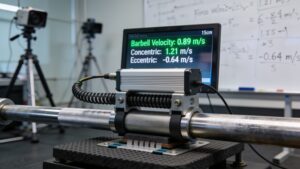
Velocity-Based Training Feedback and Daily Load Customization
Velocity-based training utilizes linear transducers or optical camera sensors to measure barbell movement speed during resistance exercises continuously. If measured bar speed falls below targeted velocity thresholds, training weight is immediately reduced to match current nervous system capabilities. Tailoring daily training intensity to real-time velocity metrics prevents acute overtraining, reduces joint strain, and optimizes explosive power development.
Subjective Readiness Questionnaire Integration and Psychological Stress Tracking
Collecting daily subjective readiness scores provides crucial qualitative context regarding an athlete’s sleep quality, muscle soreness, and psychological stress. Elevated life stress and poor sleep impair physical recovery capacity, lowering the threshold for mechanical injury and training fatigue. Monitoring subjective wellness trends allows coaching staff to adjust training workloads proactively before negative physiological markers appear during high-intensity training sessions.
Rate of Perceived Exertion Scaling and Flexible Micro cycle Adjustments
Applying modified Rate of Perceived Exertion scales enables strength coaches to auto-regulate training sets based on perceived repetitions in reserve. On high-readiness days, athletes increase training resistance to capitalize on elevated physical capacity; on low-readiness days, loads are reduced to facilitate recovery. Flexible micro cycle adjustment accommodates natural biological fluctuations, maintaining long-term adaptation momentum without exposing athletes to excessive physical strain.
Bar Speed Regulation and Central Nervous System Fatigue Management
Tracking mean bar velocity across warm-up sets serves as an objective window into central nervous system readiness prior to main workouts. A noticeable drop in bar speed at standard submaximal loads signals lingering neurological fatigue or unrecovered muscular strain. Regulating workout volume based on warm-up bar velocity prevents pushing a fatigued nervous system, protecting structural tissues and preserving long-term performance durability.
Frequently Asked Questions (FAQ)
What is the primary difference between linear and block periodization?
Linear periodization gradually decreases volume while increasing intensity over months, making it ideal for foundational development or single-event peaking. Block periodization concentrates highly specialized training loads (e.g., maximal strength) into concentrated 2 to 4-week blocks, making it superior for elite athletes with frequent competitive events.
How long should an effective athletic tapering phase last?
An effective tapering phase typically lasts between 8 to 21 days, depending on the sport, athlete’s fatigue levels, and preceding training volume. Research indicates that reducing training volume by 40% to 60% while maintaining high training intensity yields the greatest supercompensation performance gains.
What is velocity-based training (VBT) and how does it prevent overtraining?
Velocity-based training uses sensors to measure how fast a weight moves during an exercise. Because barbell speed reflects central nervous system readiness, dropping below target velocities signals fatigue. Adjusting training loads based on bar speed prevents overloading an unrecovered nervous system.
Can endurance and strength training be periodized together?
Yes, but coaches must manage the “interference effect” where endurance adaptations blunt muscle hypertrophy signaling. Using block periodization or separating heavy strength sessions from intense aerobic sessions by at least 6 to 8 hours ensures optimal cellular adaptation for both qualities.
Final Conclusion
Implementing periodization training frameworks in elite sports is the definitive method for turning raw athletic potential into predictable, world-class competitive performance. By systematically structuring macrocycles, deploying block loading strategies, executing scientific tapers, and utilizing daily autoregulation, high-performance programs maximize physiological adaptations while safeguarding athletes against injury and overtraining. Moving beyond static, unvarying routines to data-driven, structured periodization allows athletes to achieve physical peaks when stakes are highest.
As sports science continues to advance across North America and European nations, the precise management of volume, intensity, and recovery remains the ultimate competitive differentiator. High-performance coaches, strength specialists, and dedicated sports scientists who master periodization principles empower their athletes to break records, maintain long-term durability, and achieve sustainable athletic success season after season.

1 thought on “Periodization Training Frameworks in Elite Sports: 2026”