
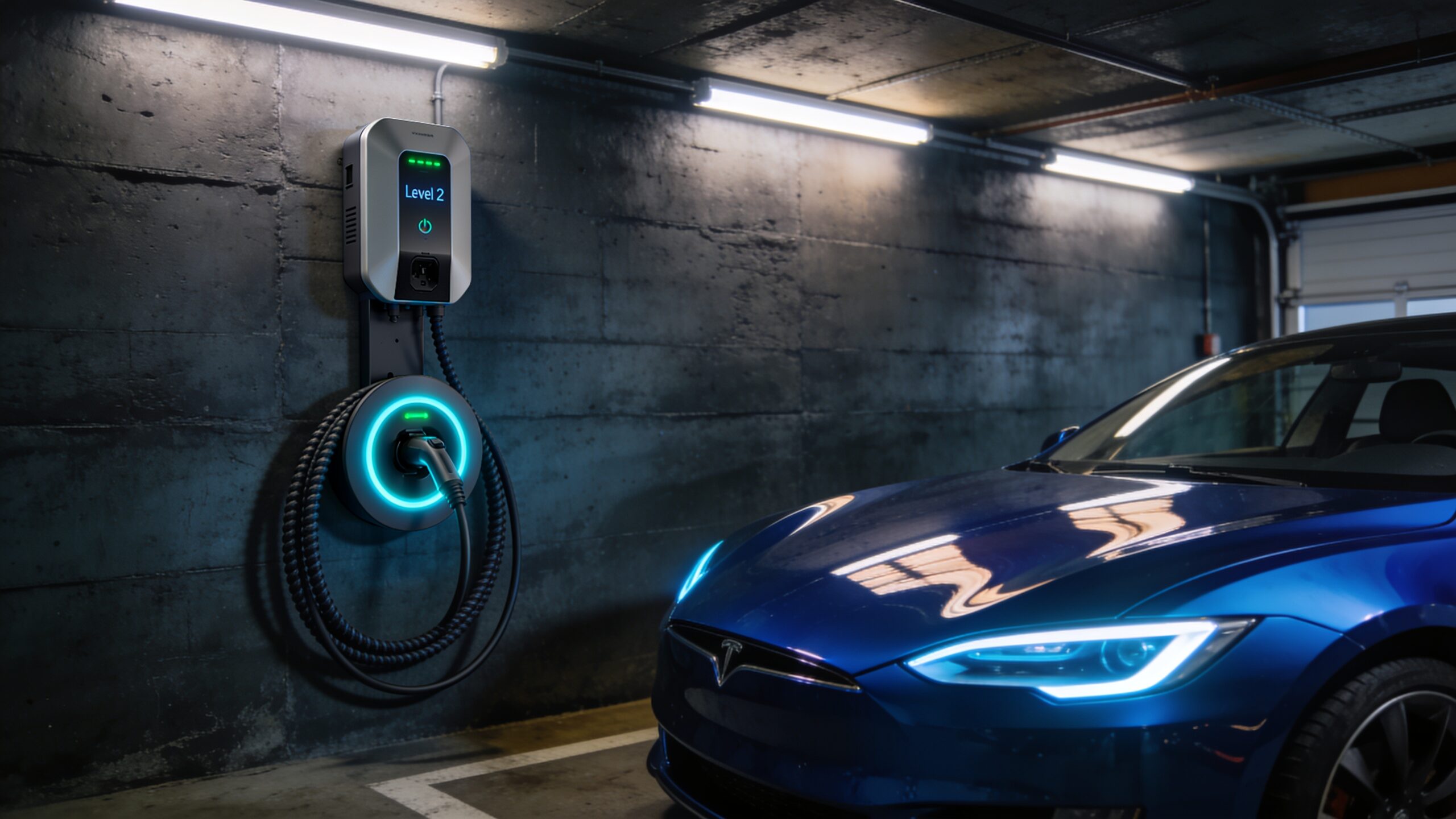
Level 2 EV Home Charger Buying Guide Solutions: 2026
Level 2 EV home charger buying guide solutions are essential for millions of electric vehicle owners across the United States and European nations who want fast, reliable, and cost-effective daily charging right in their own driveways. Relying solely on standard 120-volt Level 1 trickle chargers or searching for public fast-charging stations often leads to range anxiety and unnecessary daily hassle. Upgrading to a dedicated 240-volt Level 2 charging station provides up to ten times faster charging speeds, allowing you to replenish over thirty miles of driving range per hour while your car rests overnight.
Selecting the right home charging station requires careful evaluation of electrical panel capacities, plug types, weatherproofing, and smart connectivity features. With automotive manufacturers transitioning rapidly toward universal charging connectors like the North American Charging Standard (NACS) alongside traditional J1772 fittings, choosing a future-proof setup ensures seamless compatibility for years to come. By matching your daily commute demands with your home’s electrical infrastructure, you can select an efficient charger that lowers monthly power costs, elevates daily convenience, and adds lasting value to your residential property.
Amperage Output and Speed in Level 2 EV Home Charger Buying Guide Solutions
Evaluating electrical amperage and charging speed forms the foundational starting point in Level 2 EV home charger buying guide solutions to match your vehicle’s onboard battery capabilities. This section examines thirty-two amp entry options, forty-eight amp high-speed hardwiring, continuous load safety buffer requirements, and daily range replenishment benchmarks.
32-Amp Plug-In Units for Standard Household Electrical Circuits
Thirty-two amp plug-in chargers provide a practical balance between speed and easy installation for most typical single-family homes. Delivering approximately seven point two kilowatts of continuous power, these entry-level units add twenty to twenty-five miles of driving range per hour. Operating safely on a standard forty-amp electrical breaker using a NEMA 14-50 outlet, they eliminate expensive electrical panel upgrades while supplying plenty of overnight charge.
48-Amp Hardwired Chargers for Maximum Home AC Output
Hardwiring a forty-eight amp charger directly into your home’s main electrical panel unlocks maximum alternating current charging speeds. Generating eleven point five kilowatts of power, these high-output stations deliver up to thirty-seven miles of range per hour to large battery electric vehicles. Requiring a dedicated sixty-amp circuit breaker installed by a certified electrician, hardwired setups deliver maximum power and superior weather resistance for outdoor installations.
National Electrical Code Continuous Load Margins and Safety Margins
Safety guidelines established by the National Electrical Code require EV chargers to operate at no more than eighty percent of a circuit breaker’s rated capacity. This means a forty-amp breaker safely supports a thirty-two amp continuous charging load, while a sixty-amp breaker handles forty-eight amps safely. Adhering strictly to these continuous load margins prevents dangerous electrical overheating, nuisance breaker tripping, and potential household fire hazards during long overnight charging sessions.
Daily Driving Range Replenishment Rates and Battery Health
Matching charger amperage to your average daily commuting distance prevents overspending on unnecessary electrical electrical panel upgrades. A standard thirty-two amp charger easily replenishes fifty miles of daily driving in less than three hours, keeping your battery operating within optimal thermal limits. Consistent, moderate-speed AC home charging preserves long-term lithium-ion battery health far better than frequent high-voltage DC fast charging at public commercial stations.
Connector Types and Compatibility in Level 2 EV Home Charger Buying Guide Solutions
Navigating plug standards and physical connector compatibility represents a crucial decision in Level 2 EV home charger buying guide solutions for mixed-vehicle households. This segment details J1772 universal plugs, NACS Tesla integration, dual-head universal adapters, and durable heavy-duty cable lengths.
J1772 Standard Connectors for Traditional North American Electric Vehicles
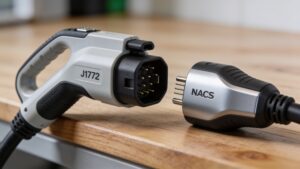
The SAE J1772 plug handle remains a widespread connector standard across non-Tesla electric vehicles produced over the past decade. Featuring a five-pin layout with a mechanical latch, J1772 chargers connect directly to popular EVs from Ford, Hyundai, Chevrolet, and Volkswagen. Choosing a J1772 station provides broad compatibility for older and current EV models, though newer vehicles may require simple plug adapters for daily charging access.
NACS Tesla Connector Standardization and Future Vehicle Compatibility
The North American Charging Standard, originally designed by Tesla, has quickly become the unified plug design for new electric vehicles across North America. Featuring an ultra-compact, lightweight handle without bulky mechanical latches, NACS supports both home AC charging and high-speed DC public fast charging. Selecting a NACS-native home charger ensures immediate compatibility with modern Tesla models and upcoming electric vehicles from major global automakers.
Universal Built-In Adapters and Dual-Head Charging Handles
Universal charging stations equipped with integrated lockable adapters allow households to charge both J1772 and NACS electric vehicles effortlessly from a single unit. These hybrid chargers feature a clever mechanical interlock that releases the appropriate plug adapter based on which car you are plugging in. Investing in a universal charging station eliminates adapter clutter while future-proofing your home setup for visiting guests or new vehicle upgrades.
Heavy-Duty Cable Lengths and Flexible All-Weather Rubber Shielding
Selecting a charger with a flexible twenty-five-foot charging cable ensures comfortable reach whether your vehicle is parked nose-in, backed into the garage, or parked outside in the driveway. Premium heavy-duty rubber jacketing remains flexible even during sub-zero winter temperatures, preventing stiff, tangled cords that are difficult to coil. Sturdy cable management hooks and holster docks keep handles clean, dry, and protected from accidental garage vehicle roll-overs.
Smart Connectivity in Level 2 EV Home Charger Buying Guide Solutions
Leveraging intelligent mobile software and automated energy tracking enhances the daily financial savings offered by Level 2 EV home charger buying guide solutions. This section covers Wi-Fi scheduling controls, utility rate synchronization, panel load balancing, and multi-vehicle power sharing.
Wi-Fi Mobile App Controls and Remote Charging Management
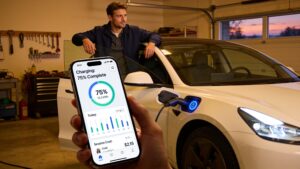
Integrated Wi-Fi connectivity allows homeowners to control, monitor, and customize their vehicle charging sessions directly from a smartphone application. You can pause charging remotely, view real-time kilowatt delivery speeds, and receive push notifications if the cable becomes unplugged unexpectedly. Mobile app controls provide complete convenience and peace of mind, allowing you to manage home energy usage without stepping foot into the cold garage late at night.
Time-of-Use Rate Scheduling and Automated Electricity Arbitrage
Smart charger apps allow users to program automated charging schedules that align precisely with local electric utility time-of-use discount windows. By restricting vehicle charging to late-night off-peak hours when electricity rates are lowest, homeowners significantly cut monthly charging costs. Automated rate scheduling ensures your vehicle charges at maximum speed during cheap hours, maximizing household financial savings without altering your morning driving schedule.
Dynamic Panel Load Balancing and Home Energy Monitor Integration
Advanced smart chargers integrate directly with home electrical panel energy monitors to adjust charging output dynamically in real time. If heavy household appliances like electric clothes dryers or heat pumps turn on simultaneously, the charger automatically throttles its current down to prevent overloading the main panel. Dynamic load balancing allows homeowners to install high-speed chargers without paying thousands of dollars for full home electrical service upgrades.
Dual-Charger Power Sharing and Multi-EV Household Management
For households owning two electric vehicles, smart power-sharing technology allows two chargers to share a single high-voltage electrical circuit safely. The smart stations communicate continuously, splitting total available amperage equally when two cars are plugged in and routing full power to a single car once the other completes charging. Intelligent circuit management eliminates the need to install expensive duplicate electrical breakers or heavy copper wiring feeds.
Installation and Durability in Level 2 EV Home Charger Buying Guide Solutions
Understanding physical mounting requirements, weather protection ratings, and certified electrical safety ensures long-term dependability in Level 2 EV home charger buying guide solutions. This section covers NEMA weather enclosure standards, plug-in versus hardwire trade-offs, electrical breaker upgrades, and third-party safety certifications.
NEMA 4 and IP66 Weatherproof Enclosures for Outdoor Mounting
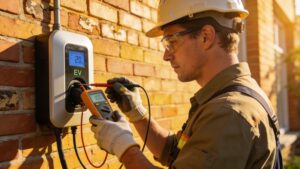
Selecting a charging station housed inside a NEMA 4 or IP66 weather-rated enclosure guarantees reliable operation in heavy rain, blowing snow, and scorching summer sun. Rugged aluminum or automotive-grade polycarbonate housings shield internal circuit boards against dust, humidity, and extreme temperature fluctuations. Industrial-grade weatherproofing allows homeowners to mount chargers confidently on exterior house walls, carports, or unheated outdoor driveways without risking electrical short circuits or premature equipment corrosion.
NEMA 14-50 Plug-In Versatility vs Permanent Hardwire Reliability
Plug-in chargers utilizing standard NEMA 14-50 wall outlets offer easy portability, allowing you to unplug the unit and take it along when moving to a new home. However, hardwired installations remove physical outlet failure points, withstand harsh weather far better, and permit higher electrical amperage speeds above forty amps. Weighing portable flexibility against maximum hardwired power output helps determine the best physical mounting strategy for your specific residential layout.
Electrical Panel Capacity Assessments and Service Subpanel Upgrades
Before purchasing a Level 2 charger, a certified electrician must conduct a thorough electrical load calculation on your main breaker panel. Homes equipped with older one-hundred-amp service panels may require subpanel expansion or service upgrades to handle a forty-amp continuous charging load safely. Evaluating your main panel capacity beforehand prevents unexpected installation delays and guarantees your home infrastructure operates within safe National Electrical Code guidelines.
UL and ETL Safety Certifications and Manufacturer Warranty Terms
Choosing charging hardware tested and certified by recognized independent safety organizations like Underwriters Laboratories (UL) or Intertek (ETL) ensures strict compliance with electrical fire safety standards. Certified hardware includes built-in ground-fault protection, overcurrent protection, and automatic thermal shutoff sensors that prevent overheating. Pair safety certification with a strong three-year manufacturer warranty to ensure prompt replacement support if internal power electronics fail unexpectedly down the road.
Frequently Asked Questions (FAQ)
What is the main difference between Level 1 and Level 2 home EV chargers?
Level 1 chargers plug into standard 120-volt household outlets, adding only 3 to 5 miles of range per hour. Level 2 chargers use a dedicated 240-volt electrical circuit, delivering 20 to 37 miles of range per hour for vastly faster overnight battery replenishment.
Can I install a Level 2 EV charger by myself?
While plug-in units can be plugged into an existing NEMA 14-50 outlet, installing the dedicated 240-volt circuit breaker, heavy-gauge wiring, or hardwiring the station directly should always be completed by a licensed electrician to ensure safety and electrical code compliance.
What is the difference between J1772 and NACS charging connectors?
J1772 is the traditional North American plug standard used by most non-Tesla vehicles. NACS (North American Charging Standard) is the compact connector originally developed by Tesla that is rapidly becoming the universal standard across almost all new electric vehicles in North America.
How much money can I save by scheduling EV charging during off-peak hours?
Utilizing smart app scheduling to charge during off-peak utility hours (typically overnight) can reduce your electricity costs for vehicle charging by 30% to 60%, saving hundreds of dollars per year compared to charging during peak afternoon demand hours.
Final Conclusion
Investing in Level 2 EV home charger buying guide solutions is one of the most effective upgrades an electric vehicle owner can make to enjoy seamless daily driving, fast overnight replenishment, and lower fuel expenses. By evaluating amperage output, selecting universal or NACS connector designs, utilizing smart time-of-use scheduling software, and insisting on UL safety-certified hardware, you can select a home charging system perfectly matched to your lifestyle. A quality Level 2 charger transforms your garage into a private, high-speed fueling station that eliminates public charging hassles entirely.
As automakers rapidly align around unified connector standards and smart grid capabilities, installing a versatile Level 2 home charger future-proofs your residence for decades of electric mobility. Whether you choose a plug-in 32-amp unit for simple installation or a hardwired 48-amp charger for maximum charging speed, prioritizing certified quality ensures safe and dependable operation. Take time to calculate your daily driving range needs, consult with a qualified electrician, and choose a charger that delivers effortless power every time you plug in.