
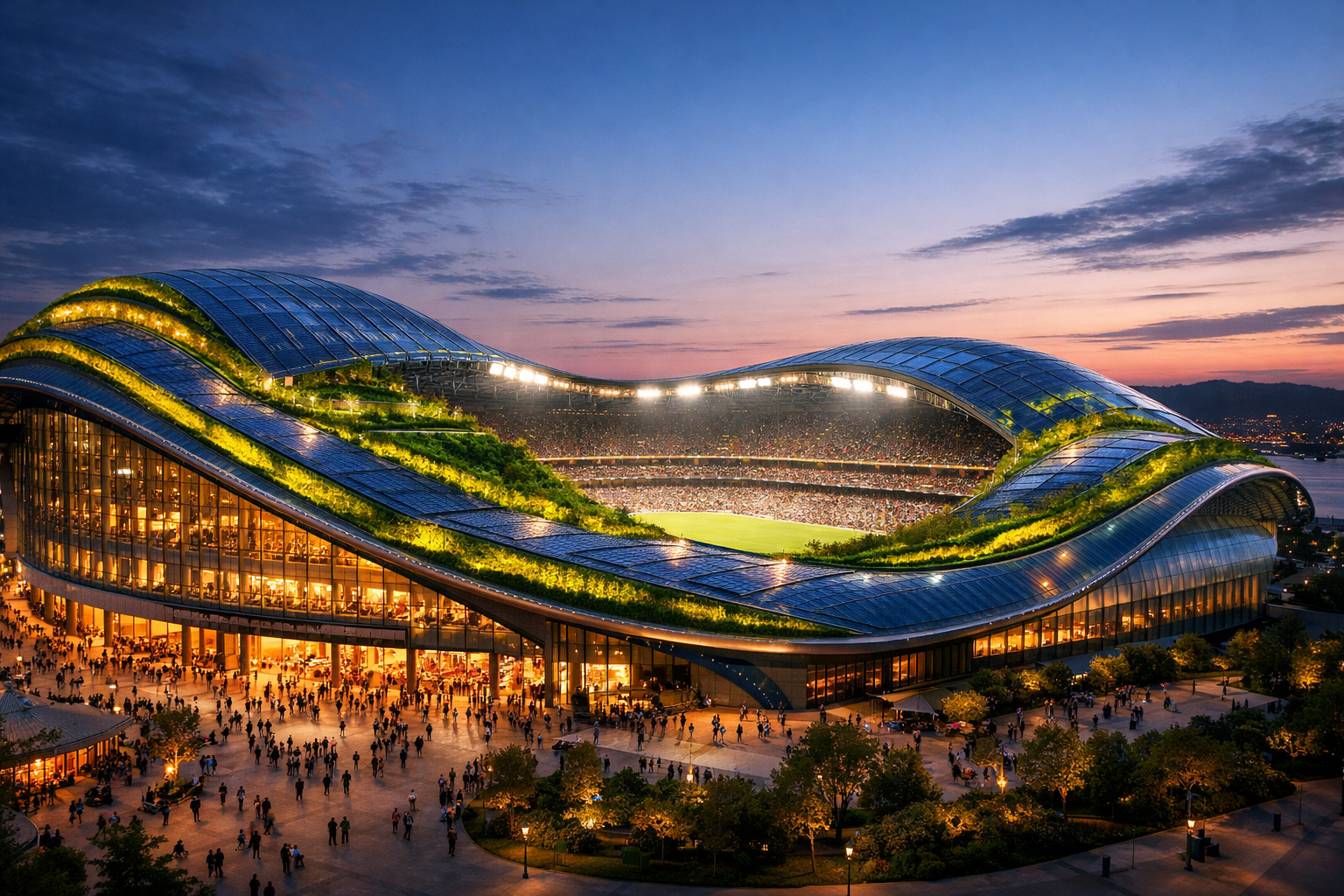
Sustainable Stadium Design Principles: Building the Next Generation of Net-Zero Super-Arenas
The construction of gigantic sports arenas was based on a similar pattern for years and years – clear vast areas of land, build a huge amount of regular Portland concrete, and assemble a huge monolith building that consumes energy from municipal sources and water systems on game days. Now, an important change of circumstances takes place in connection with the fact that the sports industry worldwide is about to experience a great time of ecological expansion. The owners of stadiums have started acting like progressive eco-businesses, and the protection of the environment has become not just a PR-list but a necessity. Since the structural concrete and steel contribute up to 80% to the initial carbon footprint of the arena, the materials issue remains key for today’s architecture.
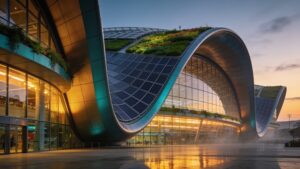
Sports facilities today experience immense, multi-faceted pressure from city authorities, international sport governing bodies, eco-aware supporters, and financial backers to dramatically cut down greenhouse gas emissions, avoid waste in landfills, and provide an environmentally sustainable legacy. Through the application of innovative concepts of sustainable stadium architecture, trailblazing architects are making an incredible shift in making sports facilities adaptable and net-zero commercial centers. Such sports facilities are not only environmentally sustainable by being minimally harmful but even produce renewable energy, extract their own water supply, and become a perfect example of a circular development for the world. For journalists who cover news in the US and European countries, knowledge about such innovations becomes a brilliant source of inspiration and valuable data for the future.
Low-Carbon Materials and Embodied Carbon Mitigation
The adoption of sustainable design practices in stadium creation demands an immediate departure from normal building materials, which have high emissions, in order to reduce the carbon footprint of the new stadium.
Any new structure should always weigh its load-bearing abilities against the responsibility that is required environmentally and use smart engineering techniques to counteract the massive negative ecological impact of such structures.
Mass Timber Structural Systems
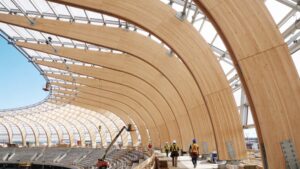
The substitution of the existing structure composed of conventional steel and concrete with mass timber structures, such as cross-laminated timber, will be an unprecedented step towards sustainable building. If the trees used for mass timber are sustainably sourced in Europe or America, then the stadium will literally store carbon dioxide inside its “bones” while being highly fire-resistant at the same time.
Recycled Structural Steel Frameworks
Where the structures call for the capability of long spans that can only be provided by metals, using recycled structural steel rather than raw ores saves more than 75% of the energy used in the manufacturing process. The scrap metal is collected and melted in modern electric arc furnaces before being redesigned into trusses, resulting in lower levels of greenhouse gases while providing sufficient structural strength.
Green Geopolymer Concrete Mixes
The manufacture of standard Portland cement contributes to about 8% of the total emissions of carbon in the entire world because of the high level of chemical reactions carried out in the kiln. The modern environmental-friendly places have adopted green geopolymer concrete which uses the waste products of industries as its binder, thus reducing its carbon content by 80%.
Sourced Local Sub-Contractor Materials
Local purchase of aggregate rock, masonry blocks, and finish materials from certified vendors situated within 100 miles of the construction site prevents long-haul truck transportation of goods. This process significantly reduces diesel exhaust emissions through heavy vehicles and generates thousands of dollars for the local economy, which is one of the cornerstones of sustainable development.
Advanced Renewable Energy and Smart Microgrids
Sports facilities of the next generation capitalize on their vast surfaces to harness ambient environmental energy and convert sports seasons into self-powered energy stations that positively contribute to the neighboring local community.
This chapter provides an insight into how new energy harnessing systems and energy storage technologies can be used for efficient handling of sharp power peaks caused by live sports events.

Building-Integrated Photovoltaics (BIPVs)
Instead of installing hefty and old-fashioned solar panels on top of a roof structure that is already constructed, the sustainable design concept of stadiums requires the incorporation of tailor-made photovoltaic cells into the physical structure of the building. The transparent solar glass canopy, kinetic solar louvers, and façade panels will help capture the solar energy and provide natural shading.
Second-Life EV Battery Banks
However, huge power spikes associated with the powering of lights, trucks, and stands for night games have the potential to black out the power grid of the municipalities concerned. The solution to this challenge comes in the form of installation of large-scale energy storage systems that consist of second-hand electric batteries that store solar energy.
Kinetic Energy Floor Tiles
Utilizing high-energy harvesting plates under highly active fan zones, including the entrance turnstile areas and concourses, allows for the creation of electrical power from crowd activity. The pressure exerted by the foot traffic of thousands of fans creates energy, which is then harnessed for use in powering the low-voltage display systems for concessions and lighting systems.
Wind Micro-Turbine Roof Arrays
With the integration of aerodynamically efficient micro-wind turbines mounted on the high-speed edges of the stadium roof, it is possible to tap into stable and high-level air currents for energy production. The small-sized and bird-friendly vertical-axis micro-wind turbines rotate constantly in any direction and supply continuous power during cloudy winter afternoons in the stadium facilities.
Closed-Loop Water Conservation and Stormwater Engineering
Since large sports events will lead to an enormous amount of water usage, which occurs all at once in a very dense manner, there is an absolute necessity for circular water management.
Modern sports facilities have worked hard to incorporate various mechanisms to achieve the proper recycling of water, including biological purification beneath the ground.
Aerodynamic Rainwater Harvesting Roofs
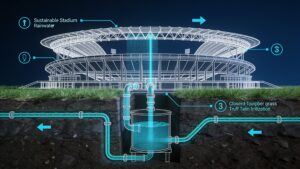
The large and inclined canopy roofs have been designed in such a way that they funnel huge amounts of pure rainfall whenever it rains heavily. The water captured by these roofs does not go into the sewer system that is stressed out, but rather into underground storage tanks that will serve all the stadium needs.
On-Site Membrane Bioreactors
Through the installation of highly sophisticated membrane bioreactor technology straight in the plant, the stadium is able to treat all the wastewater from the sinks and showers on site. Through a series of highly advanced filtration techniques, it is possible to eliminate all the organic and chemical compounds without using any toxic chemicals in the environment.
Vacuum-Assisted Restroom Plumbing Fixtures
The replacement of conventional toilets that use the force of gravity to discharge with ultra low flow vacuum sanitation systems will save more than 85% of water used in the restrooms. This is because this system uses the principle of high-pressure air velocity differential to clean the bowls without using a lot of water.
Sub-Surface Turf Irrigation Networks
The old-style overhead watering systems use up to 40 percent of their total output by simply evaporating into the air and getting lost due to drifting winds. It is more sustainable for stadiums to utilize sub-surface drip irrigation systems that will be located under the natural turf, with the help of computerized moisture sensors to water the field.
Circular Waste Diversion and Smart Stadium Operations
To run a truly environmentally sustainable sports venue involves a paradigm shift in the way that materials and resources are used from the linear style of consumption to an entirely traceable and zero-waste approach.
This chapter provides an overview of the methods involved in keeping large amounts of event waste out of regional landfills.

Industrial Composting Sorting Facilities
The current generation of environmentally-friendly stadiums features resource recovery centers within the loading docks of these stadiums. Organic scraps and compostable material from stadium food packaging is then physically separated and processed in these centers to produce fertile soil compost. The produced soil compost is used by communities for agricultural purposes.
Aluminum Reusable Cup Ecosystems
The removal of disposable plastic cups used in beer and soda consumption, and instead introducing infinitely recyclable and thick aluminum cups in stadiums is an absolute game changer in the carbon footprint of the stadium. These robust metallic cups are then sorted in special bins and sterilized through highly efficient dish washing systems.
Digital Ticketing Access Infrastructure
It is a rule that 100% of digital tickets and stadium digital maps are to be issued in the cloud. The rule ensures that no glossy and plastic-coated tickets are thrown away into local trash cans, while at the same time ensuring a smooth flow of fans entering the game without any physical interaction required.
Surplus Food Donation Networks
By partnering with local organizations that recover food, unsold but quality food from concessions in the luxury suites and restaurants will never go to waste. The volunteer workers will gather and deliver the excess food within hours after the last whistle, feeding thousands of needy citizens without producing methane gas from the decaying food.
Frequently Asked Questions (FAQ)
What is the primary focus of sustainable stadium design principles?
The primary focus is to minimize a sports arena’s total environmental footprint across its entire lifespan. This includes lowering the embodied carbon created during initial construction, reducing water and energy use during live events, and ensuring the venue can be repurposed for long-term community use.
Why is mass timber considered a safer option than traditional building concrete?
Mass timber acts as a natural carbon storage vault, keeping carbon locked inside the structure instead of releasing it into the atmosphere. Additionally, engineered timber panels char slowly and predictably during fire events, providing exceptional structural safety that matches or exceeds traditional steel beams.
How do second-life electric vehicle batteries help stabilize local power grids?
These battery banks store clean solar power generated during quiet weekdays. When a major game starts and power demand peaks, the batteries discharge their stored energy to run stadium systems, completely preventing heavy load spikes from disrupting the surrounding city power grid.
Can old sports stadiums be retrofitted to meet these new green standards?
Absolutely. While new builds offer the most flexibility, older iconic stadiums can be successfully retrofitted by upgrading to LED sports lighting, installing low-flow vacuum plumbing, adding rooftop solar panels, and implementing strict zero-waste composting programs.
Final Conclusion: The Architecture of Tomorrow’s Champions
Embracing progressive sustainable stadium design principles is no longer a luxury choice for elite sports clubs; it is an absolute necessity to secure the future of global sports entertainment. By moving away from resource-heavy construction methods and investing in circular water, net-zero energy, and community-focused spaces, modern sports architecture is proving that mega-arenas can actively help heal our planet. These eco-friendly venues demonstrate that the thrilling passion of live sports can coexist beautifully with deep environmental care. As more cities across the United States and Europe adopt these building standards, the stadiums of tomorrow will be celebrated not just for the trophies won on their fields, but for the lasting green legacies they leave behind for the communities that surround them.