
What Is the Silver Economy? Why an Aging World Is Becoming a Major Economic Force
If you’ve seen the term “silver economy” in a business headline and wondered what it actually means, you’re not alone. It sounds like a niche corner of finance, but it describes something much bigger: the economic activity created by a world where people are living longer, having fewer children, and holding a growing share of global spending power.

It also isn’t a distant forecast. The people who make up this market are already here, already spending, and already changing what shops, airlines, homebuilders, and banks offer.
Here’s what the silver economy actually is, how the numbers look when you compare the major research estimates side by side, how older consumers really spend their money, and why this shift comes with real strain as well as real opportunity.
What the Silver Economy Actually Means
The phrase gets used in two slightly different ways, which is the main reason the headline numbers don’t always match.

Two Different Numbers, Two Different Definitions
In the broadest sense, the silver economy means all the spending done by people aged 60 and over. By that measure, the World Economic Forum reports that this group accounts for roughly $19 trillion of the $70 trillion consumers will spend in 2026. In the narrower sense, it means the products and services built specifically for older adults, such as senior living, healthcare, financial planning, and travel aimed at that age group. One 2026 market report puts that narrower market at about $4.5 trillion, growing at roughly 7% a year in real terms. Both figures are legitimate; they just measure different things.
Who Counts as “Silver”
Most researchers draw the line at age 60, though some use 65 and others 50. That choice matters, because it changes the size of the group by hundreds of millions of people. Using the 60-plus definition, the UN estimates there were 196 million people in this age group in 1950, about 8% of the world’s population. Today there are roughly 1.2 billion, about 15% of the global total.
The Four Core Markets
According to one analysis, four categories make up close to 90% of the narrower silver economy market: senior living and care, health and longevity, financial services for later life, and senior tourism. Technology built for older adults, often called “AgeTech,” cuts across all four and is estimated at around $286 billion on its own. That’s a smaller figure, but it’s one of the fastest-evolving pieces of the market.
The Numbers Behind the Shift
The scale of this trend is easier to grasp once you see how quickly the underlying population is changing.

A Population Growing Three Times Faster Than Everyone Else
The global population aged 60 and over has grown from about 200 million in the early 1960s to roughly 1.2 billion today, and it’s now expanding more than three times faster than the world’s population as a whole. Projections suggest it will pass 2 billion by 2050, which would put it above 20% of humanity. The drivers are simple: people are living longer, and birth rates have fallen in much of the world.
15% of People, 27% of Spending
The most striking comparison is between population and purchasing power. Adults 60 and over make up about 15% of the world’s people but account for about 27% of global consumer spending. In the United States, spending by this group is estimated at somewhere between $6.7 and $7.4 trillion a year, and analysts expect it to climb past $11 trillion by 2036. Older consumers also tend to be wealthier per person than the working-age population, which is part of why their share of spending runs so far ahead of their share of the population.
Not Every Estimate Agrees
It’s worth knowing that research firms vary a lot on market size. Some industry reports using narrower definitions put the 2026 silver economy market between roughly $3.0 and $3.3 trillion, noticeably lower than the $4.5 trillion figure above. The gap mostly reflects which categories get counted. Anyone citing a single number should check which definition sits behind it.
Where the Growth Is Concentrated
North America, led by the United States, is the largest silver market today and is expected to stay that way for the next decade. One narrower-definition estimate splits the 2026 market roughly as North America 32%, Asia-Pacific 30%, Europe 28%, and the Middle East and Africa 10%, though other reports weight Europe more heavily because of its older population. Within the U.S., analysts expect the Sun Belt to lead regional growth, and they point to health, beauty, financial services, and home-related categories as the ones set to gain most from older shoppers’ spending.
How Older Consumers Actually Spend
The stereotype of older consumers spending mostly on medicine and basics doesn’t match the current data.

Travel Is a Top Priority
AARP’s 2026 Travel Trends survey found that 86% of adults 50 and over rank travel among their top three priorities for discretionary income. About 64% expected to travel in 2026, and expected annual travel spending rose from roughly $6,850 in 2025 to about $7,300 in 2026, with the largest increase among those aged 60 to 69. Spending time with family and friends was the leading motivation, cited by 57%, and the share using AI tools to find travel deals doubled from 8% to 16% in a year.
Aging in Place Is Driving Home and Technology Spending
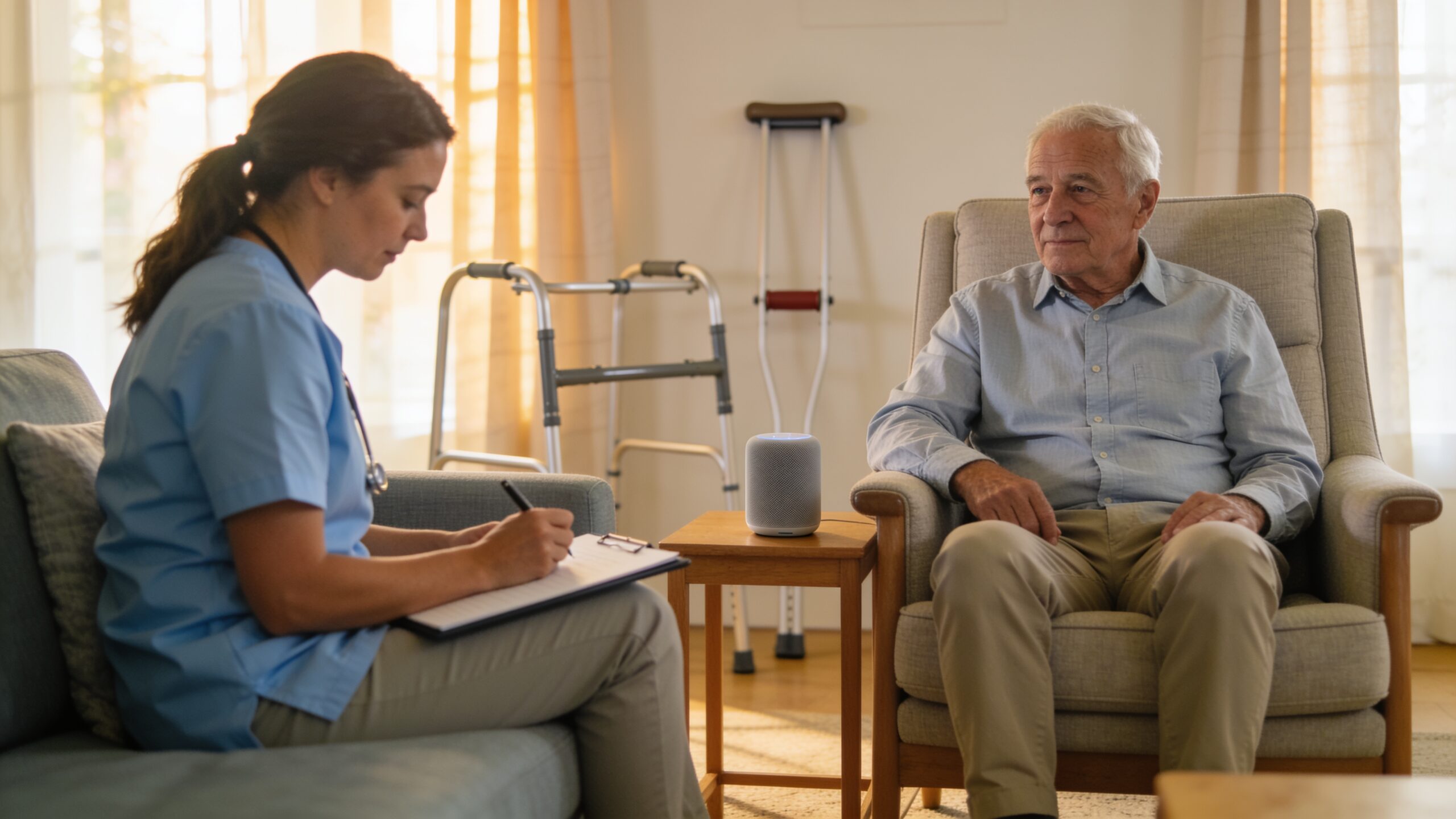
Most older adults say they’d rather stay in their own homes than move into a care facility. One industry survey found that over 90% of adults preferred home to assisted living, while only about one in ten homes was considered ready for aging in place. That gap is creating demand for home modifications, smart-home devices, fall-detection sensors, and remote health monitoring. The same survey found nearly half of older adults already own at least one smart-home device, and about half of those who moved recently chose a home that was easier to get around in. Industry commentators also expect artificial intelligence to play a growing role, with monitoring systems that try to flag a problem before it becomes an emergency rather than reacting after the fact. Whether those tools earn older adults’ trust, and protect their privacy, will matter as much as how well they work.
Communities Built Around Later Life
A newer trend is communities designed specifically for later life, rather than care facilities that treat aging as decline. Industry trackers point to large retirement communities in the U.S. and city-level policies in places like Chengdu, China, as examples of what they describe as integration rather than isolation: housing, healthcare, social life, and local policy designed together. The pitch is that older residents stay active and connected instead of being separated from the rest of the economy.
They’re More Digital Than the Stereotype
The World Economic Forum describes today’s 60-plus consumer as optimistic, tech-literate, and value-driven rather than passive or digitally averse. That matches the AARP finding on AI use and the ownership of smart-home devices. Marketers who treat older shoppers as a single, technology-shy group are working from an outdated picture.
What This Means Going Forward
None of this is purely good news, and a balanced picture includes the pressure points.

Opportunity Comes With Real Strain
A larger older population also means rising demand on healthcare systems and on the people who provide care. Industry commentary on aging in place points to workforce shortages in home health and direct care roles as one of the most pressing obstacles. In Canada, for example, one estimate puts the average healthcare cost for people 65 and over at roughly $12,000 per person, compared with about $2,700 for younger people. Those costs fall on families and public budgets alike, and balancing paid work with caring for an aging parent is already a daily reality for many households, which is why “silver economy” discussions among policymakers focus as much on pensions, caregiving, and workforce planning as on new markets.
Why the Forecasts Deserve Some Skepticism
Market forecasts in this space come largely from consultancies and industry groups with an interest in showing a large opportunity. The underlying demographic trend is well documented by the UN and other bodies, but projections of how much people will spend, and on what, depend on assumptions about income, health, and retirement that can change. Treat any single dollar figure as an estimate, not a fact, and look for the underlying demographic data first.
How to Read Silver Economy Headlines
A practical way to cut through the noise is to ask three questions. First, which age group is being counted, 50, 60, or 65 and over? Second, does the figure cover all spending by that group or only products built specifically for them? Third, who produced the estimate and what do they sell? With those answers, the numbers become much easier to compare. What stays constant across every source is the direction: an older, larger, and more economically active population is reshaping what gets built, sold, and funded around the world. For businesses, that means designing for a customer who is far more varied than the old stereotype allows. For governments and families, it means planning for care, income, and housing over a longer stretch of life than earlier generations ever had to.