
The Connected Space: A Definitive Smart Home Ecosystem Buying Guide for Modern Living
It has become necessary to have a full smart home system shopping guide for the technologically savvy homes that are trying to maneuver through the maze of smart home living today. For years now, having internet-based home systems involved a disjointed and tedious process of selecting various products from rival brands to create a system. This sole dependence on discrete products is now a thing of the past, thanks to the integration of voice control, energy intelligence, and digital privacy in one package.

For creating a sustainable and efficient automated home environment, both novice consumers and seasoned experts need to get beyond gimmicky marketing strategies and focus on infrastructure, fundamental compatibility, and secure data measurement standards. This includes moving away from low-cost and unverifiable devices to secure consumer privacy by using central network systems that would be easy to upgrade for many years to come. For specialized magazines focusing on lifestyle technology and providing high-quality consultations to home owners all over the US and Europe, this knowledge of the hidden reality is crucial.
Core Interoperability and Protocol Standards in a Smart Home Ecosystem Buying Guide
It’s important that you analyze the fundamental communication protocols and wireless languages that your automated hardware uses in order to communicate effectively. This section talks about the essential elements needed to make sure that there will be no lag when using your home’s Internet network.

Matter Protocol Compliance and Future-Proofing
The universal Matter protocol has brought about total transformation in the contemporary home automation systems through ensuring that the hardware devices from rival tech firms operate seamlessly from the moment they are installed. The purchase of Matter certified devices assures one of being relevant and operating efficiently even in the future when there is need to change the platform for the smartphones or the voice assistants.
Thread Networking Infrastructure and Device Speed
Thread is a very efficient and power-saving mesh network technology which helps connect smart devices directly without going through the central router. In contrast to traditional wireless technologies which become slower by connecting even more devices, a Thread-connected system will work even better and faster. The use of this innovative base makes it possible to eliminate command delays, preserve batteries of small sensors and ensures automation processes work correctly.
Local Processing Capabilities and Network Independence
It is critical to focus on hubs as well as automation systems that can work within the same location in your home in order to perform the tasks as opposed to transferring data to cloud servers, which are located far from the location. This particular design is important for making sure that everything works instantly regardless of the fact that you have lost connectivity in your network.
Legacy Wireless Backward Compatibility
The construction of a new and improved automated home frequently demands the inclusion of old devices with the use of traditional Zigbee, Z-Wave, or Wi-Fi connectivity technology along with the newest protocol of devices. The selection of a hub that supports all protocols helps your old smart plug and sensors work seamlessly with new state-of-the-art security systems. Such an approach will save you a lot of money and also minimize electronic waste.
Advanced Security Layers and Consumer Data Privacy Metrics
Keeping your private home safe from all kinds of digital attacks as well as corporate spying is an extremely important aspect in our buying guide for smart homes. Here we will discuss the essential security elements that you need to guarantee safety.

End-to-End Encryption Standards for Video Streams
The residential surveillance cameras record very intimate videos both indoors and outdoors of your home, which makes it imperative to have end-to-end encryption in order to protect yourself against unauthorized access of your confidential video feed. The encryption technology will ensure that your personal video is always encrypted when it leaves the camera lens. Your family will be protected from digital prying eyes.
Local Storage Media Options vs. Cloud Subscriptions
Using cloud servers on a subscription basis to store security footage from your home exposes your personal life to potential data leaks and hefty monthly bills. Choosing a device that offers options of having backups of data stored locally through encryption cards and private network drives allows you to have complete control over your data. Financially, this choice will save you from paying any monthly bills as well.
Multi-Factor Authentication Requirements for User Profiles
Your first layer of protection from remote hacks attempting to enter your automated door locks and security systems is through the strict implementation of multi-factor authentication. The requirement of a one-time biometric scan or sending a secure password to your phone ensures that no one who is not authorized will be able to take control of your home system. This vital protection protocol greatly lowers any threat of credential theft.
Automatic Firmware Deployment and Vulnerability Patching
Selecting brands that offer automated firmware updates to all their products is crucial for future-proofing against digital hackers who are very intelligent. Automated patches fix security holes in the software, bring new encryption methods on the wireless systems, and improve device efficiency without any manual work by the consumer. Such ongoing security updates protect your automated system from threats throughout its life cycle.
Intelligent Energy Optimization and Climate Engineering
Achieving energy savings by utilizing automation systems that reduce expensive utility bills and lower environmental impact is the main objective highlighted in this smart home ecosystem buyer’s guide. This part focuses on the particular hardware components necessary to construct an environmentally friendly home.

Predictive Climate Scheduling and Geofencing Adjustments
These smart thermostats use high-tech software that is capable of understanding the heating patterns of your particular household in order to automatically adjust the temperature based on whether you are around. By connecting to your family’s tracking through their cellphones, such smart thermostats automatically reduce the consumption of energy in case the house is completely empty during the working day.
Automated Window Blind Integration and Thermal Tracking
Using intelligent motorized blinds that can be operated using light sensors helps you to control the inside temperature of your house in accordance with the sunlight. In summer, when the temperatures are very high outside, these blinds automatically close during the day in order to minimize the use of AC systems, and open during winters to maximize the use of solar energy.
Real-Time Electrical Monitoring and Smart Plug Automation
Connecting old household gadgets to smart plug devices that come with living energy metering software reveals the invisible electricity wastage happening inside your home. These small gadgets are able to measure how much electricity is consumed by your devices and will help you plan total shut-offs for the electricity-sucking entertainment systems when you are fast asleep.
Smart Lighting Control Zones and Ambient Dimming
Use of dimming modules and occupancy sensors to replace conventional toggle switches guarantees that lights are switched on only when someone is present in the room. Automated adjustment of dimming patterns to coincide with changes in outdoor daylight helps reduce eye strain while at the same time saving energy. Such lighting arrangements guarantee that your bulbs will have an extended life while helping you save money on your utility bills.
Centralized Interfaces and Whole-Home Voice Architecture
The last structure of an efficient smart home buying guide is concerned with selecting the interface of control and voice processing devices that will be used to link up the entire house. This chapter talks about developing a user-friendly interface for all members of the family.
Hands-Free Voice Integration and Ambient Microphone Arrays
Choosing an ideal voice assistant system that can recognize natural language without continuous repetition will make living in a hectic home a breeze. Smart speaker systems have evolved to incorporate state-of-the-art acoustics which help filter out ambient noise and guarantee your instructions are taken with absolute accuracy even when you are talking from a distance.
Dedicated Touchscreen Hub Placement and Accessibility
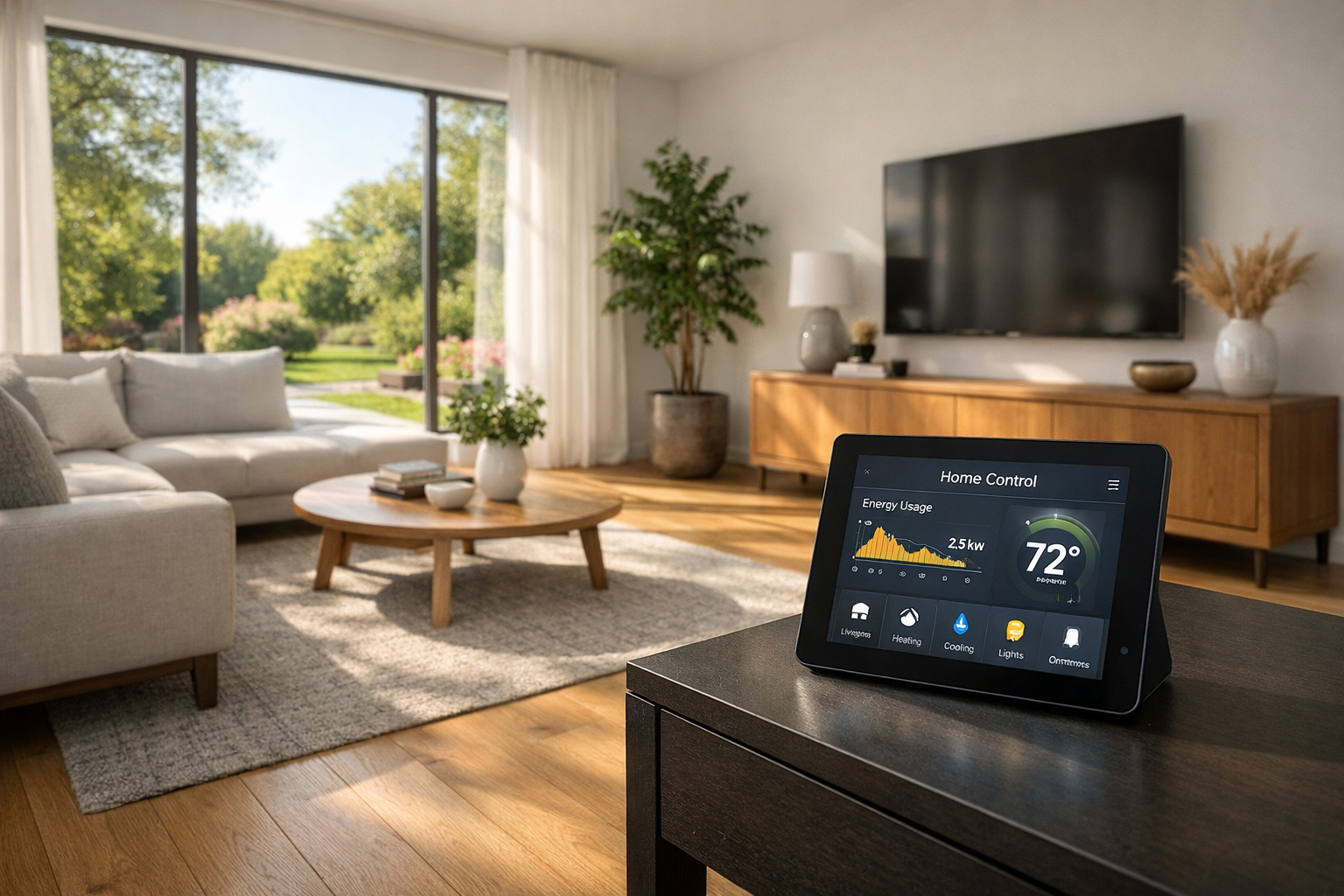
While using a smartphone application to control your home is easy, the installation of a fixed touch-screen panel is definitely revolutionary for your home. Having a fixed panel enables kids, visitors, and guests from your family the chance to have full control over the lights and temperatures of your home without requiring any additional app. This control panel creates an inviting atmosphere for everyone who comes into your smart home.
Complex Multi-Device Scene Creation and Macros
The real magic of a thoughtfully planned home is realized by combining various tasks into one customized command. It will take just a few minutes to come up with a customized phrase like “Good night” that locks all doors, dims all lights, and sets the thermostat for you. This helps save time and effort on daily basis.
Visual Status Verification and Real-Time Notifications
The best control systems ensure that there is immediate and precise visual verification when your doors lock, garage door opens, or when the motion sensors detect movement outside your home. Creating customized alerts on your mobile device will alert you instantly in case something out of the ordinary happens around your home, such as a sudden leak from underneath the kitchen sink.
Frequently Asked Questions (FAQ)
Can I mix different device brands within one smart home ecosystem buying guide framework?
Absolutely. The best way to do this is to go by a contemporary smart home buying guide for ecosystems, which is going to include Matter-certified products in abundance. It means that all your accessories will be able to communicate via a single app.
Will a smart home system still function if my residential internet connection goes down?
Your house can still function without any glitches even if you decide to go with the centralized hub for scheduling everything and sending your commands. Although you might not be able to see what’s going on in the cameras when you are away from your home, everything else is going to work fine.
How much internet bandwidth do smart home devices typically consume during daily use?
The majority of the common automation devices such as smart plugs, wall switches, and environmental sensors consume very little bandwidth since they transfer small data packets in text form. It is only the high definition cameras and door bells that consume considerable bandwidth since they stream videos to cloud storage servers.
Are smart locks safe enough to secure a main entryway against physical and digital entry?
High-quality smart locks by reputable security companies use premium physical deadbolts and high-tech encrypted software that are as secure as bank-level encryption. Ensuring that you have strict multi-factor authentication for your accounts and do not use an easy-to-guess pin code means that your entry is just as safe as a key lock.
Final Conclusion: The Value of Planned Automation
Making an informed investment in a smart home ecosystem buying guide is without a doubt the most reliable strategy for creating a secure, effective, and comfortable home environment. The old fashioned approach of purchasing gadgets that would end up overcrowding your Wi-Fi connection is fast becoming obsolete as companies embrace the future and develop science-based home solutions using protocols such as Matter and Thread. By ensuring that your first investment into building your home goes towards creating an excellent local computing ability, solid data encryption, and advanced energy conservation systems, you will ensure that your family remains private online, while cutting down on utility bills significantly. With the adoption of modern technology continuing to sweep through the USA and Europe, homeowners who live comfortably will be the most compatible.

2 thoughts on “Smart Home Ecosystem Buying Guide: 16 Best Choices 2026”