
Generative AI in Film Production and Entertainment: 2026
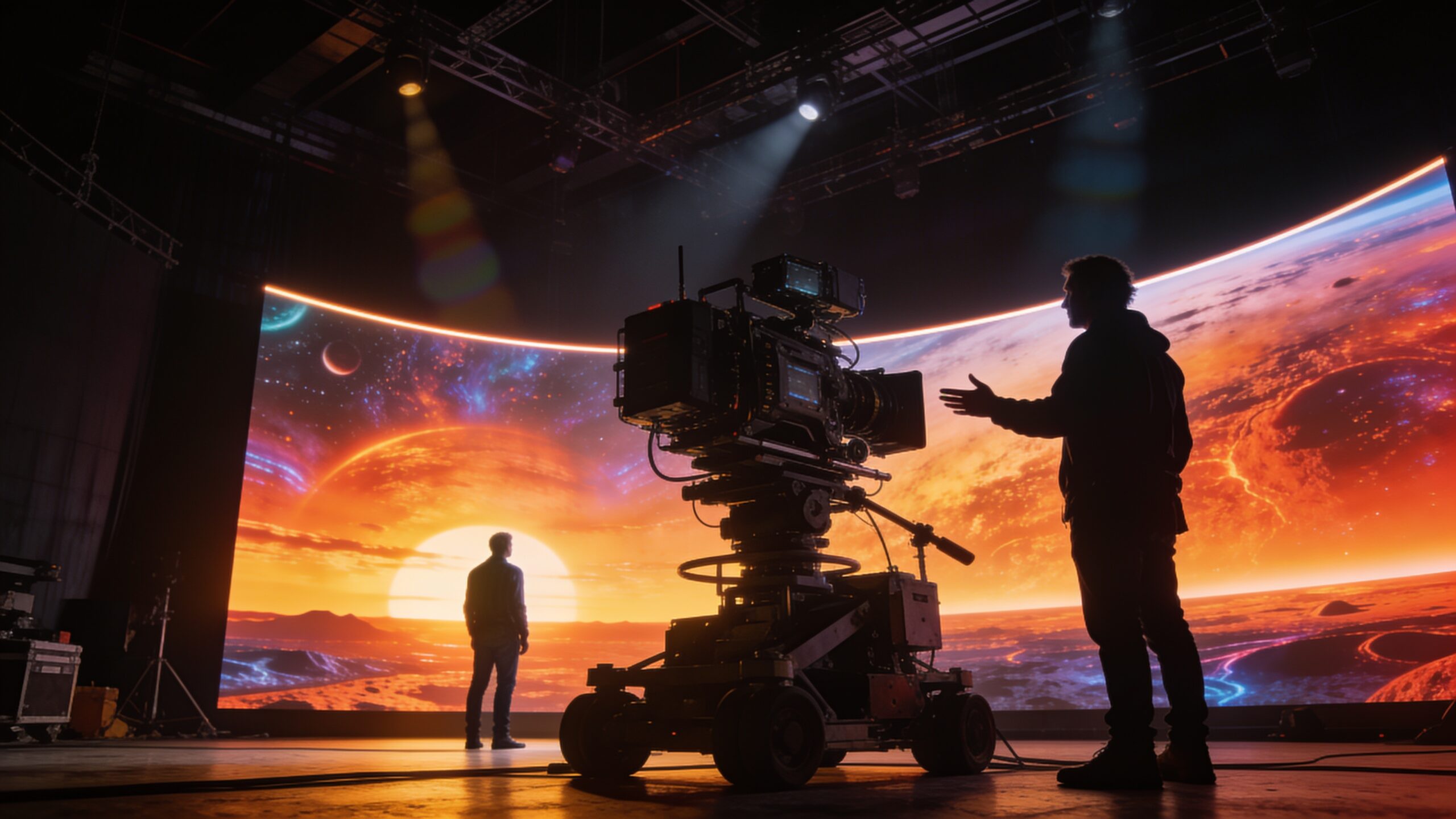
Generative AI in film production and entertainment has fundamentally restructured how motion pictures, digital series, and immersive media are conceived, shot, and edited across North America and Europe. Filmmakers, independent directors, and major Hollywood studios now leverage deep generative neural networks to streamline pre-visualization, generate complex visual effects, and optimize production budgets without sacrificing artistic vision. Rather than replacing human talent, these powerful technological systems act as digital co-creators, allowing directors to visualize intricate cinematic worlds in minutes rather than months.
Understanding the multi-layered ecosystem of generative AI in film production and entertainment requires examining script analysis engines, dynamic pre-visualization tools, virtual volume environments, and automated post-production pipelines. As major institutions like the Festival de Cannes establish regulatory standards regarding human authorship and synthetic media, the entertainment industry is forging a balanced path forward. This comprehensive guide provides an in-depth analysis of the core technologies, ethical governance standards, and operational workflows defining modern cinematic production.
Pre-Production Innovation through Generative AI in Film Production and Entertainment
Deploying generative models during pre-production provides creative teams with unprecedented speed and precision during early development phases. This section explores natural language script analysis, automated storyboard rendering, rapid 3D environment synthesis, and virtual actor pre-casting.
Natural Language Script Coverage and Narrative Pacing Engines
Analyzing feature-length screenplays using natural language processing models gives studio executives and producers immediate structural breakdown reports. These intelligent platforms evaluate dialogue density, character arc progression, tone consistency, and narrative pacing across three-act structures. Quantifying story beats early in development allows screenwriters to refine plot points, resolve thematic inconsistencies, and optimize dramatic tension prior to expensive physical shooting schedules.
Automated Photorealistic Storyboard Rendering and Pre-Visualization
Translating written scenes into photorealistic, fully camera-tracked digital storyboards eliminates weeks of manual concept artist illustrations. Directors input shot descriptions, focal lengths, lighting preferences, and blocking instructions to generate complete storyboard animatics instantly. This rapid visual feedback loop enables creative heads of department to test camera movements, establish color palettes, and align framing decisions well before stepping onto set.
Rapid 3D Asset Generation and Scene Geometry Synthesis
Generating complex digital environments for virtual sets historically required hundreds of hours from specialized 3D modeling artists. Modern diffusion models convert text prompts or two-dimensional concept sketches into fully textured, lighting-ready three-dimensional background assets in seconds. Populating virtual scenes with custom props, architecture, and background foliage dramatically accelerates set construction and reduces pre-production overhead costs.
Synthetic Pre-Casting and Ensemble Dynamics Simulation
Simulating character chemistry and lighting interactions prior to physical casting calls assists directors in making informed talent decisions. Generative synthesis models project digital actor stand-ins into pre-visualized set lighting to evaluate wardrobe contrast, skin tone reflections, and framing proportions. Testing ensemble visual dynamics during pre-production ensures seamless artistic alignment between costume designers, cinematographers, and casting directors before talent commitments are finalized.
On-Set Virtual Production and Generative AI in Film Production and Entertainment
Integrating generative models with real-time render engines on physical soundstages transforms traditional film production into an interactive virtual environment. This segment details smart LED volume backgrounds, real-time lighting synthesis, camera tracking integration, and dynamic set modification.
Real-Time In-Camera Visual Effects and LED Volume Integration
Projecting generative three-dimensional environments onto massive, wraparound LED volume stages replaces traditional green screens with dynamic, in-camera final pixels. High-frequency rendering systems update background perspectives instantly as the physical camera moves, creating perfect parallax depth. Actors perform within realistic lighting environments, eliminating unnatural color spill and delivering far more convincing, authentic performances on set.
Neural Lighting Synthesis and Interactive On-Set Reflections
Synthesizing real-time environment lighting across physical actors and props guarantees flawless visual blending between real-world elements and virtual sets. Generative algorithms analyze camera exposure values and calculate ambient light bounces continuously across the LED wall panels. Adjusting sunset angles, weather conditions, or ambient highlights at the touch of a button provides cinematographers with total lighting control throughout full filming days.
Automated Camera Motion Tracking and Perspective Matching
Fusing optical camera tracking hardware with real-time generative engines maintains exact alignment between camera lens parameters and virtual background projection. Sensors monitor focal distance, aperture changes, and spatial position sixty times per second to update background geometry without noticeable latency. Perfect spatial synchronicity eliminates motion blur artifacts and preserves natural depth of field across complex moving camera shots.
Dynamic Environment Modification and On-the-Fly Prop Adjustments
Modifying digital set elements during active filming eliminates the costly downtime associated with physical set re-dressing. Directors can relocate virtual buildings, shift tree placements, alter sky coloration, or clean unwanted background clutter instantly from a central control console. This agility allows crews to capture dozens of distinct setup variations within a single production day without leaving the soundstage.
Post-Production Workflows and Generative AI in Film Production and Entertainment
Enhancing post-production operations through neural rendering networks accelerates editing cycles while elevating overall visual fidelity. This section examines automated video editing, deep generative color grading, neural voice dubbing, and AI-driven rotoscoping.
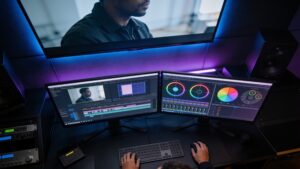
Automated Rough Cut Assembly and Intelligent Scene Logging
Processing raw camera footage through multi-modal computer vision models automates time-consuming asset logging, transcript sync, and shot tagging. Algorithms index facial expressions, line accuracy, camera movement stability, and focus sharpness to assemble initial rough cuts automatically. Providing editors with structured, highly organized timelines lets creative cut-out choices focus entirely on emotional pacing, narrative rhythm, and performance selection.
Neural Color Grading and Atmospheric Style Transfer
Applying advanced neural style transfer models allows colorists to match complex visual tones across disparate filming locations seamlessly. AI engines evaluate color charts, shadow density, and skin tone highlights to balance footage captured across multiple days or camera bodies. Transforming daytime shots into convincing night scenes or matching vintage film stocks is achieved with extreme color accuracy and minimal artifacts.
Generative Neural Voice Dubbing and Lip-Sync Localization
Translating feature films for international distribution across European and global markets historically suffered from jarring lip-sync mismatches. Generative audio and visual synthesis models adjust a performer’s subtle mouth movements to match translated voice actor phonemes perfectly in any target language. This preserves artistic nuance, emotional weight, and narrative immersion for global audiences without requiring physical reshoots.
AI-Driven Rotoscoping and Automated Matte Generation
Extracting physical actors and props from complex backgrounds without green screens previously required painstaking manual frame-by-frame masking. Machine learning segmentation models isolate moving foreground elements automatically, generating crisp, production-grade alpha mattes in a fraction of the time. Accelerating rotoscoping workflows frees visual effects artists to spend their energy on high-level compositing, lighting integration, and creative detailing.
Ethics, Copyright, and Governance in Generative AI Film Production
Establishing clear legal framework boundaries protects intellectual property while preserving authentic human artistic expression. This segment addresses actor likeness rights, copyright eligibility standards, union labor protections, and festival transparency rules.
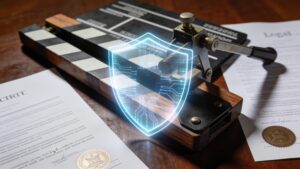
Digital Likeness Rights and Voice Cloning Consent Protocols
Establishing strict legal consent frameworks prevents unauthorized digital replication of an actor’s face, body motion, or voice characteristics. Modern guild contracts mandate explicit written licensing agreements and equitable compensation whenever digital replicas or synthetic voice clones are generated. Establishing sovereign control over personal biometric assets protects performers from unethical exploitation across future franchise iterations.
Copyright Eligibility and Human Authorship Legal Standards
Navigating intellectual property law requires clear distinctions between human creative authorship and autonomous machine output. Copyright offices across the United States and European Union mandate that works generated entirely by synthetic software without human creative control cannot be copyrighted. Studios must maintain detailed documentation demonstrating dominant human creative direction, scriptwriting, and editorial control throughout the production process.
Film Festival Governance and Selection Transparency Mandates
Leading cinematic institutions, such as the Festival de Cannes, have established strict rules regarding generative media eligibility. Regulations require filmmakers to submit detailed transparency disclosures detailing the precise extent of synthetic tools used in scripting, visual generation, or performance synthesis. Enforcing clear selection boundaries protects traditional cinematic craftsmanship while establishing dedicated exhibition spaces for hybrid digital works.
Guild Agreements and Labor Protections for Creative Crafts
Negotiating collective bargaining terms between studio unions and creative guilds establishes essential guardrails for industry craftspeople. Agreements protect screenwriters, visual effects artists, and voice talent from systemic replacement by automated software suites. Framing generative tools as supportive utility software rather than creative replacements ensures fair wages, artistic credit, and industry career longevity.
Frequently Asked Questions (FAQ)
What defines the primary advantage of generative AI in film production and entertainment?
The main advantage is accelerating production timelines while lowering costs. Filmmakers can visualize complex environments, automate visual effects, and streamline post-production without sacrificing human creative vision.
How do LED volume virtual stages differ from traditional green screens?
LED volumes project fully rendered, interactive 3D backgrounds directly behind actors in real time. This provides realistic camera parallax, accurate lighting reflections on actors, and immediate in-camera final pixels.
Can AI-generated movies be copyrighted under current media law?
Purely synthetic content generated without human authorship cannot be copyrighted. Copyright offices require proof that human artists exercised dominant creative control over scriptwriting, direction, and editorial assembly.
How are film festivals regulating the use of generative technologies?
Major festivals require formal disclosures regarding the use of synthetic tools. Events like Cannes restrict films with fully synthetic scripts or performances from official competition to champion human authorship.
Final Conclusion
Embracing generative AI in film production and entertainment represents a transformative evolution in how stories are brought to life on screen. By integrating intelligent pre-visualization tools, real-time LED volume virtual sets, automated editing workflows, and neural voice localization, filmmakers can expand their creative horizons exponentially. These advanced technologies democratize high-end visual effects, allowing independent storytellers and major studios alike to execute ambitious cinematic visions with unprecedented efficiency.
As adoption expands across North American and European entertainment hubs, maintaining robust ethical standards and labor protections remains vital. Establishing legal safeguards around likeness rights, copyright ownership, and festival transparency ensures that technological innovation continues to serve human artistic expression. Balancing computational speed with human creativity guarantees that cinema remains a deeply resonant, authentic medium for global audiences.

1 thought on “Generative AI in Film Production and Entertainment 2026”