
The Future of Ownership: A Complete Guide to Mastering Digital Assets in 2026
Digital assets refer to a broad spectrum of items that go from your crypto currency holdings in the digital wallet all the way up to your professional photographs stored on cloud storage services. The future is pointing towards a “tokenized” economy where pretty much anything of value can now be expressed digitally. From the perspective of those living in the USA or Europe, this presents an enormous opportunity to increase diversity in one’s portfolio, which previously could only be accessed by wealthier people.
Considering the present situation of finance, it becomes evident that the emergence of digital assets is no mere fleeting phenomenon. Rather, it presents a crucial evolution of the “plumbing” of the world’s financial system by making trading possible at all hours without intermediaries, which gives them unparalleled levels of liquidity and transparency that banks are unable to provide. The following essay provides an extensive framework to allow you to get prepared for the changes in the economy in the late 2020s.
Defining the Landscape of Modern Digital Assets
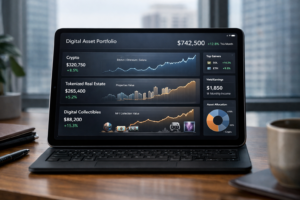
In order to develop a strategy, it is important to know about the various types that exist within this asset class. All forms of digital assets are not alike, and they each play their part in contributing to a diverse financial system.
Cryptocurrencies and Stablecoins
The most familiar representation of digital currencies is through cryptocurrencies. Bitcoin and Ethereum continue to be the cornerstone of the domain, serving as digital gold and a computational network respectively. In 2026, there has also been an unprecedented surge in the emergence of stablecoins, which are tied in value to the USD and the EURO. Stablecoins allow for the advantages of the blockchain system, such as instantaneous transactions, but not the volatility experienced by early crypto currencies.
The Evolution of NFTs and Digital Collectibles
The buzz surrounding “cartoon pictures” may be long gone, but the underlying technology powering NFTs has developed considerably since. Presently, NFTs are employed for practical applications such as concert tickets, verification of luxury goods, and identification of individuals online. In Europe, many fashion houses apply this technology to monitor the life cycle of an item of clothing from its production through to the buyer’s wardrobe; thus, providing them with an unforgeable certificate of possession.
Tokenized Real Estate and Physical Goods
One of the most interesting innovations is being able to invest in a part of a real estate property using blockchain technology. For example, one doesn’t have to be wealthy enough to afford a flat in Manhattan or Mayfair; one could simply invest in tokens representing the shares of such properties. This is called fractional ownership and allows people to receive rental income and gain from the appreciation of their asset in real time.
Intellectual Property and Media Rights
Your content creation and writing efforts are themselves digital assets. By 2026, artists and authors have been increasingly employing blockchain technology for royalty management. Through tokenization, one may ensure that every play and resale of their music or book earns them payment. With this, there is no need to rely on record labels and publishing firms; rather, the creator can earn from their own content.
Security Protocols: Protecting Your Digital Assets
Owning digital currencies makes you your own bank. Owning that kind of freedom comes at a price, which includes putting an immense emphasis on security because you might not get another chance if things go south.
The Role of Hardware Wallets
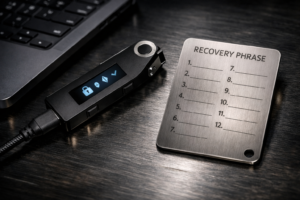
The ultimate tool used in 2026 to protect one’s digital currency is the hardware wallet. This is due to the fact that such devices store your private keys offline in a manner that they cannot be accessed by any hacker on the Internet. It is very essential for any person storing valuable money in this way, since no one can access your wealth unless he gains access to this device.
Multi-Signature Wallets for Enhanced Safety
However, Multi-Sig wallets act as a safety net for the storage of digital assets for business partners or family members. In this type of wallet, transactions can only be made if they are authorized by several individuals. Thus, it eliminates the risk of a single point of failure where if one key is compromised, no one will be able to withdraw the funds without other signatures.
Avoiding Phishing and Social Engineering
Your largest vulnerability is not likely to be a coding error, but rather a mistake made by yourself as an individual. Cyber attackers can employ the phishing technique, in which you receive fake emails or websites designed to resemble your cryptocurrency trading platform or bank in an attempt to fool you into divulging your login credentials. You should always verify the URL and never provide anyone else with your seed phrase.
The Importance of Digital Estate Planning
What will happen to your digital inheritance if you are not there anymore? In contrast to money in your bank account, the digital wallet you use will be difficult for your relatives to access without the correct decryption key. Therefore, it is critical that you plan ahead and incorporate your digital estate into your will, making sure that your relatives have a reliable method to recover your recovery codes.
Regulation and Compliance in the US and Europe
As digital assets become mainstream, governments in the West have introduced clearer rules to protect consumers and prevent illegal activity. Navigating these rules is essential for long-term growth.
The MiCA Framework in the European Union
The Markets in Crypto Assets (MiCA) is one of the most advanced regulations introduced in Europe. It offers a comprehensive guideline for firms that deal with digital assets, requiring them to have adequate capitalization and observe stringent consumer protection laws. For individuals living in Europe, there has been a significant improvement in their safety when engaging with a regulated exchange, which is not the case with non-regulated exchanges, unlike five years ago.
SEC and CFTC Oversight in the USA
The regulations for digital currency are fragmented among multiple organizations in the US. The SEC and CFTC seek to ensure that the tokens are not used for fraud against investors. Although there are certain complications regarding regulation, the rise of Bitcoin and Ethereum ETFs have now made it extremely convenient for people in the US to purchase such currencies via their normal brokerages such as IRAs or 401(k)s.
Tax Implications and Reporting Requirements
It is worth noting that, first of all, the vast majority of governments consider digital currencies to be forms of property. Consequently, any transactions made through selling tokens and exchanging them for other digital currencies will likely fall under capital gains tax. By 2026, both American and European tax authorities are employing highly advanced software to monitor blockchain transactions. Therefore, it is essential to utilize specialized tools for tracking taxes to ensure proper documentation of your activities.
Anti-Money Laundering (AML) Standards
In order to curb the potential misuse of the cryptocurrency as an asset, the crypto exchanges have introduced “Know Your Customer” (KYC). You will need to provide proof of your identity along with your address. Even though this might not have pleased the pioneers at first, this was necessary to attract institutions to invest their money here. There are now regulated ‘on ramps’ and ‘off ramps’ where you can transfer your crypto funds back into your usual banking accounts.
Building a Diversified Portfolio of Digital Assets
Investing in digital currencies requires you to consider the same rules as those governing the stock exchange: Diversification is the essence of investment. It is never advisable to concentrate your resources on a single investment opportunity.
Core Holdings: Bitcoin and Ethereum
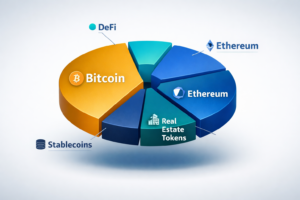
Most individuals should start building their portfolio of digital assets using the “Blue Chips.” Bitcoin is considered a value store, and it is used as an inflation hedge, while Ethereum is used as the underlying layer that supports the decentralized finance ecosystem and applications. The two assets are usually worth between 60% and 70% of a safe digital asset portfolio.
Exploring the World of DeFi (Decentralized Finance)
DeFi or Decentralized Finance gives you an opportunity to earn interest from your crypto money by not having any middlemen at all. You just have to provide some liquidity to a decentralized exchange in order to earn some portion of transaction fees that will be paid by other users. Nevertheless, there is more risk associated with using DeFi as compared to token-holding. As early as 2026, most “prosumers” have earned passive income via DeFi.
The Rise of Utility Tokens
A utility token is an asset that grants its holder access to a certain product or service. This type of asset could be needed, for instance, to access a particular decentralized cloud storage system or play a game on a blockchain-based platform. The risk level for utility tokens is higher than for Bitcoin because their prices depend on the performance of the particular platform they work on. One needs to consider the “tokenomics” of such an asset before buying it.
Balancing Risk with Stablecoins
However, even in a portfolio that focuses on technology, cash reigns supreme. By having some of your digital assets in stablecoins, you will always be “liquid.” Being liquid means that if the market dips unexpectedly, you will still have money to invest in the assets you favor at a lower cost. By 2026, most investors maintain between 10% and 20% of their digital assets as stablecoins in Euros or Dollars.
Frequently Asked Questions (FAQ)
What exactly counts as a digital asset?
A digital asset can be defined as any item existing in digital form, which is accompanied by the right to use and ownership of the same. Examples include cryptocurrencies such as Bitcoin, digital images, website domains, and even tokenized physical assets such as land and gold.
How do I start buying digital assets?
However, the best and most convenient option for beginners would be to use an exchange platform that is regulated by a government body, such as Coinbase, Kraken, and Binance. The first step involves linking your bank account with the exchange and verifying your personal details. After this process, you can easily purchase different assets with the money from your account.
Are digital assets legal in the USA and Europe?
Indeed, it is legal to own digital currency in most Western nations. In both the United States and the European Union, there are systems in place that guarantee the legality of trading and owning digital currencies on condition that you adhere to tax regulations.
Can I lose all my money in digital assets?
There are also risks associated with this type of investment. Given that the market is quite new, there may be high volatility in the price. In addition, in case of losing the private key or falling victim to any sort of fraud, one might end up losing all their digital money.

Final Conclusion: Embracing the Digital Shift
The emergence of digital currencies marks one of the greatest transformations in finance ever seen. This is because we are witnessing a transition from the current approach of issuing ownership through a central body to proving one’s ownership through mathematical calculations recorded in a decentralized ledger. The people living in America and Europe will find themselves enjoying control of their assets that has never been seen before. While it might be challenging at first to get familiar with the technicalities involved, the gains are immense.
With the passage of time in 2026, the difference between “traditional” and “digital” finance will become increasingly blurred. In the near future, your bank will start offering you services to store your digital currencies, while your local grocery stores will begin accepting stablecoins for transactions. By educating yourself and practicing extreme caution, you are not merely buying digital currencies but building the foundation of the future. The digital age is upon us, and those who learn to traverse this domain will prosper.