
Charged for Subscriptions You Never Signed Up For?
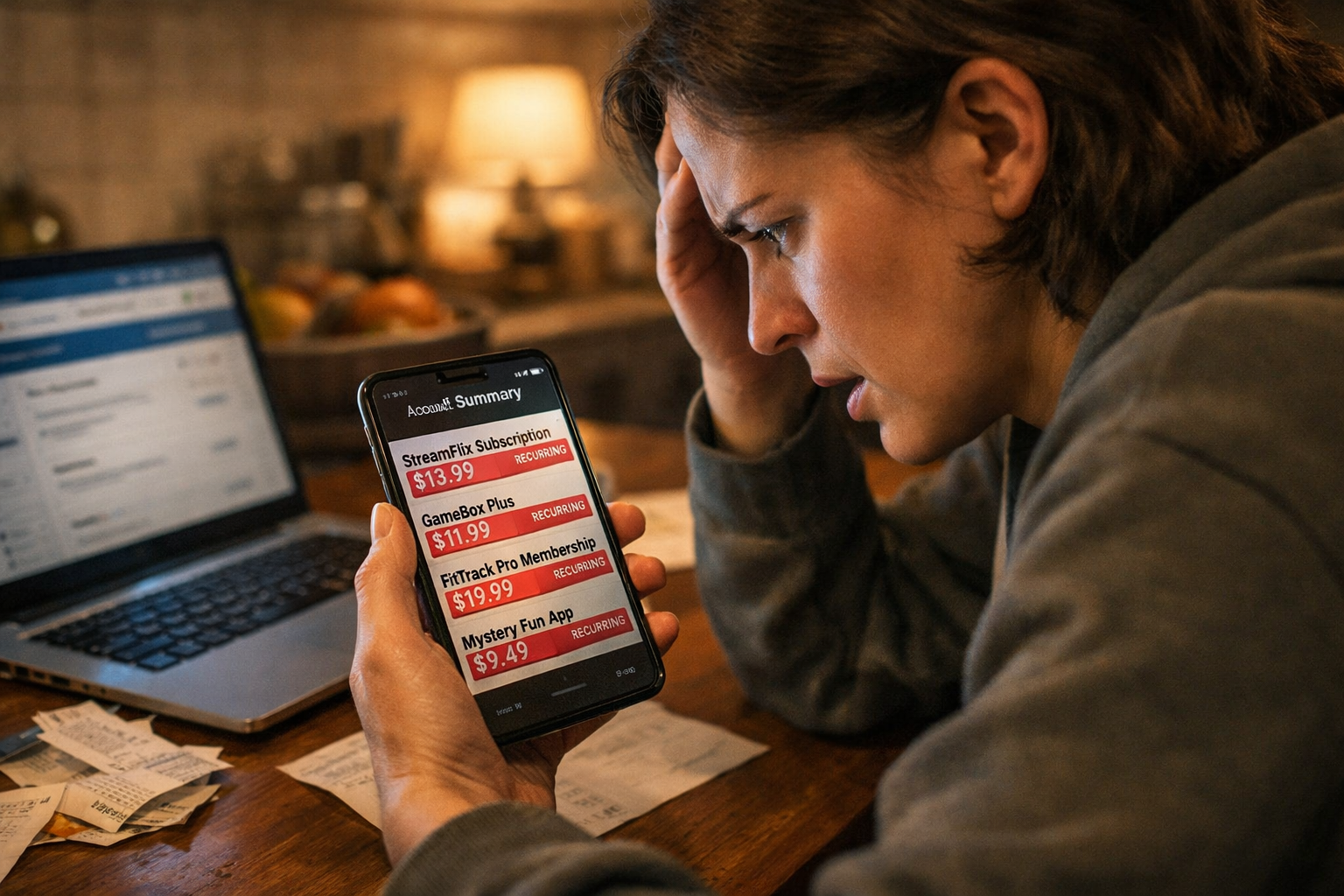
Unnecessary subscription charges rank among the most prevalent and frustrating cases of consumer fraud in 2026. As soon as you see your monthly bank statement, you discover charges on products that you don’t even know much about — some are minor fees that you simply brush off, while others are considerable payments that you haven’t realized you have been paying for many months now. Based on SubBuddy’s analysis in February 2026, consumers waste an average of $219 per year on unnecessary subscriptions, and 42% say they have incurred charges on subscription trials that they failed to cancel.
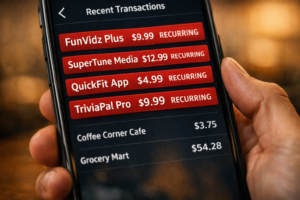
The harsh reality is that this kind of behavior is often no accident at all, from the corporation’s point of view. This is the result of purposeful design called “dark patterns,” which are designed explicitly for taking your credit card information, enrolling you automatically without your knowledge, and making it incredibly hard for you to unsubscribe from them. The research conducted by TeraDact revealed that 81% of apps and web pages involved with subscriptions use auto renewal techniques, while 70% lack proper cancellation guidelines and 67% do not mention the deadline before the next charge takes place.
This guide outlines the specific reasons why you’re being billed for subscription services that you did not knowingly consent to. It will detail how these pitfalls are set up by companies and outline all your rights and exact actions needed to remove these unwanted fees.
How You End Up Subscribed Without Realising It
Most surprise fees associated with subscriptions don’t result from any form of fraud but rather result from a calculated way of tricking consumers. Having knowledge on how such tactics are carried out makes it easier for you to detect them early enough.
Free Trials That Silently Convert to Paid Subscriptions
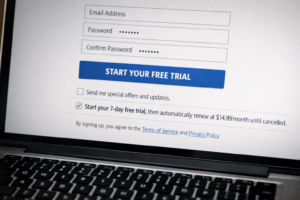
The most common form of subscription trap is the “free trial” offer which gets automatically upgraded into a paid subscription once the free trial ends. As highlighted by TeraDact, 66.4 percent of subscription websites ask users to pay their credit card information for availing a free trial. But in most cases, no proper notice about when and how payments would be taken is shared. According to SubBuddy, more than 42 percent of users who have ever used a free trial on such websites received charges even when they did not remember to cancel the trial.
Pre-Ticked Checkboxes and Automatic Opt-Ins
Pre-ticking of check boxes is one of the dark patterns that work best in coercing consumers into subscription services without their conscious awareness. As consumers go through the sign-up process, download an application, or make any kind of transaction online, there is always a ticked box for them to subscribe. However, if they don’t consciously detect the box and untick it, they will be automatically signed up and charged for the service. According to Chargebacks911’s Subscription Scam Guide, automatic opting-in as well as pre-ticking “monthly subscription” over “one-time purchase” have been two of the most prevalent dark patterns used from 2025 to 2026.
The “Roach Motel” — Easy In, Impossible Out
Among the most cynical labels used for dark patterns is that of “roach motel,” which refers to subscriptions that take mere seconds to sign up but hours to unsubscribe from. In their analysis from 2026, SubBuddy has outlined several concrete instances of this type of dark pattern, such as companies requiring users to call them to cancel an online subscription, cancellation processes that involve multiple retention screens to hide the unsub button and even companies who use phrases like “We’re sorry to see you go” while continuing to retain your subscription in the background. This is exactly what led to the infamous $2.5 billion FTC case against Amazon for its “Iliad” cancellation process.
Third-Party App Charges Bundled Through Platform Billing
One major surprise fee provider is not the website but rather the application store. In the case where an app in your iPhone or Android requires access to your payment method “necessary for unlocking additional features” and you give your consent, it could launch an automatic subscription plan charged through either Apple or Google. According to the ShareUHack consumer’s guide released in April 2026, many consumers remain oblivious to the fact that such apps’ payments are deducted through your phone’s operating system and not the app itself. The fees show up under the names of the application store in your bank statements.
Your Consumer Rights — What the Law Says in 2026
There have been changes within the legal world concerning these types of situations. Having some knowledge about what your rights are, as well as understanding these changes, will give you a better idea of what you can do to deal with certain issues.
The FTC’s Click-to-Cancel Rule — What Happened and Where It Stands
The FTC established its groundbreaking rule on Click to Cancel in October 2024, where companies were obligated to ensure that cancellation of subscriptions was as simple as signing up. According to Coulson PC’s review in October 2025, however, the US Court of Appeals for the Eighth Circuit reversed the decision in July 2025 due to procedural flaws in the process in which it was established. At the time of writing this report in late 2025 and early 2026, the Click to Cancel rule is not currently being enforced by the federal government. The main means of enforcing it have shifted to state regulations and lawsuits.
What the FTC Can Still Do — ROSCA and Section 5
Despite the lack of a click to cancel rule, the FTC still has significant power when enforcing the law. As stated by Hogan Lovells in its March 2026 legal opinion, the Restore Online Shoppers’ Confidence Act makes it illegal to collect money from consumers for goods and services purchased over the Internet without getting their express and informed consent. Section 5 of the FTC act bans unfair and deceptive acts. The FTC has made use of the two in different cases in the past. For example, the $100 million in consumer refunds awarded in 2022 in the Vonage case and $2.5 billion awarded in 2025 in the Amazon Prime case.
Adobe’s Settlement — A Warning to Every Subscription Company
One of the most clear-cut cases of subscription responsibility in recent times is that of Adobe. The Federal Trade Commission claimed that Adobe did not reveal their early termination fees and made it difficult for customers to unsubscribe from the program. As per a consumer guide published by ShareUHack in April 2026, $75 million worth of free services were awarded as part of the agreement to eligible U.S. Adobe Creative Cloud subscribers – eligible customers would be informed by the company during the summer of 2026 without having to register. Non-U.S. customers were advised to complain against Adobe via the consumer protection departments of their countries or through chargebacks on their credit cards.
Your Chargeback Right — How to Use It Effectively
In case you have been billed for a subscription without having given clear consent at any point in time, chargeback is certainly an appropriate action to take. This is according to Chargebacks911, which indicates that one’s right for a chargeback holds true even when the subscription has not been agreed to by them. To file a chargeback request, inform your credit card company or bank about the issue, explain that you consider the charge unauthorized or not clearly agreed upon, and show them evidence that proves it such as screenshots of the agreement page and charge.
How to Find Every Subscription Currently Charging You
But before you can unsubscribe from all those services, you have to find them first, which is tricky, considering the way they tend to hide in plain sight on your credit card bill, phone apps, and email inbox.
Check Your Bank and Credit Card Statements Line by Line
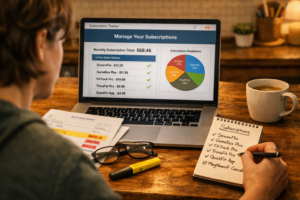
The first and surefire way of detecting unknown subscription fees is to do an item by item review of all your last three-month-old statements from the bank and credit cards. As per SubBuddy’s Guide to Subscriptions in 2026, you should look out for monthly recurring fees on the exact same dates for identical amounts – as little as $1.99, $4.99, or $9.99 – which people tend to overlook while going through their statements. List down all those merchants whose names are unfamiliar to you, and check up their details on Google or any other web search engine to find out what services they offer.
Check Your Apple and Google App Store Subscriptions Directly
Many fees paid via app-based subscription models are entirely handled via your phone’s operating system and do not actually show up via your subscription model within the app, but rather with an identifying tag for Google or Apple’s billing service. On an iPhone, go to Settings, then tap on your name followed by Subscriptions. To find this information on Android, simply go into the Google Play Store, tap on the profile icon, followed by Payments & Subscriptions. In a guide published by ShareUHack in April of 2026, this particular check is mentioned as being one of the first that should be done for any individual who has ever downloaded a free app with access to payments.
Use a Subscription Tracking App to Automate the Search
The process of subscription management is made easier by using specialized tracking systems, which eliminate the necessity to go through statements manually. According to the tutorial provided by ShareUHack, the most efficient tool to detect subscriptions automatically is Rocket Money, previously known as Truebill. This application detects any recurring charges on your account and displays a complete list of subscriptions that you have. In addition, the application features a service that allows you to cancel unnecessary subscriptions without having to contact anyone. In Europe, there are similar applications that can be used by people to track their finances. They detect subscriptions that users never knew they had.
Search Your Email for Subscription Confirmation Messages
Your email can serve as a trustworthy secondary source for identifying subscriptions. Look out for emails containing the following keywords – trial, subscription, renewal, billing, and receipt. Usually, there is an email sent by most of the subscription-based services once you have subscribed to them. Such emails, although overlooked initially, become important when searching for any services that have your personal banking information. The SubBuddy manual advises the practice of auditing emails, especially those that contain subscription services provided by third parties such as bundle promotions or apps.
How to Cancel, Get Refunds, and Protect Yourself Going Forward
Finding unexpected subscriptions is only half the task. Cancelling them effectively, recovering charges where possible, and building habits that prevent future unauthorized charges require a specific, practical approach.
Cancel Subscriptions Through the Same Channel You Subscribed
One can be sure about the validity of the process if one cancels the subscription by logging back into the original source via which he or she subscribed to the service. One must never cancel from the app if the subscription was obtained via an app store. Instead, for apps, one must use either iPhone Settings or Google Play to cancel the subscription. For websites, one needs to visit the site and login into the account created to access the subscription section. As mentioned in the SubBuddy guide, one should not count on emails to cancel subscriptions; one must have a confirmation in writing along with a screenshot.
Request a Refund — More Companies Comply Than You Expect
Most consumers consider the cost from unremembered subscriptions as unrecoverable expenses. Actually, as SubBuddy and ShareUHack show, it is more likely that asking for a refund directly, politely, and timely via the company’s customer support will yield better results than one would imagine. Make it clear that you had no idea about the authorization for this service and did not receive sufficient information about automatic renewals. If your attempt fails, you should proceed further and apply for a chargeback using your bank. For any Apple App Store subscriptions, use the official refund portal from Apple at reportaproblem.apple.com.
Use Virtual Cards for All Future Free Trials
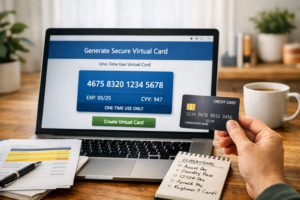
The most powerful preventative approach to avoid future subscription charges will be to use a virtual credit card number – a one-time only card number issued exclusively for a single transaction. According to the ShareUHack consumer guide in April 2026, the best recommendation in terms of privacy protection within the United States will be Privacy.com, which offers virtual card numbers that expire immediately after one-time use. With this solution, should the virtual credit card number be used for free trials, then it cannot incur further charges beyond those incurred on the first use.
Set Calendar Reminders for Every Trial You Start
In instances where a virtual card is unsuitable, a reminder scheduled two days prior to the end date of the trial is the best solution. According to the advice from SubBuddy.com, the reminder needs to be put up at the very point when one is signing up for their service since only at that point does one see clearly the end date of their subscription period. The reminder should be set to notify you two days prior to the billing date, not on the day itself, as it takes some time to work through the process of canceling the subscription.
Frequently Asked Questions About Unexpected Subscription Charges (FAQ)
Can I get a refund for subscription charges I didn’t knowingly authorize?
Indeed, there are two ways to go about it. The first way is by approaching the business and demanding a refund for insufficient auto-renewal notification. Alternatively, you can opt to do a charge-back via your bank or credit card provider if the business does not cooperate.
Does deleting an app cancel its subscription?
Not quite, and this can be very expensive in the realm of consumer technology. Uninstalling the application from your device will not terminate its subscription service. The subscription service must be cancelled separately via Settings on your iPhone, the Google Play store, or by contacting the application provider directly.
Is it legal for companies to charge after a free trial without a clear reminder?
As per the requirements laid down under ROSCA and the Section 5 of the FTC, the firms require the express consent of their clients before charging them. However, since the Click-to-Cancel rules have been set aside in July 2025, there is no strong implementation of this requirement at the federal level.
What is the fastest way to find all my active subscriptions?
Link your bank accounts with Rocket Money – formerly known as Truebill – that will automatically detect all subscription charges on your statements. Second, review the app subscriptions from the settings of both Apple and Google Play. Third, check your email for subscriptions with terms like “subscription,” “trial,” and “renewal.”
Conclusion
It’s not because you are careless if you get charged with subscriptions that you never subscribed to. This is how it was designed to be – by the system creators who have planned to take advantage of busy, inattentive, and trusting customers like you. It is known; the law changes; the methods are clear and the means to discover them and stop the process of losing your money are easily available. Look at your bank accounts, check your applications for any ongoing subscriptions now, and try using a virtual credit card when signing up for new free trials. Your money belongs to you; learn how to get it back.