
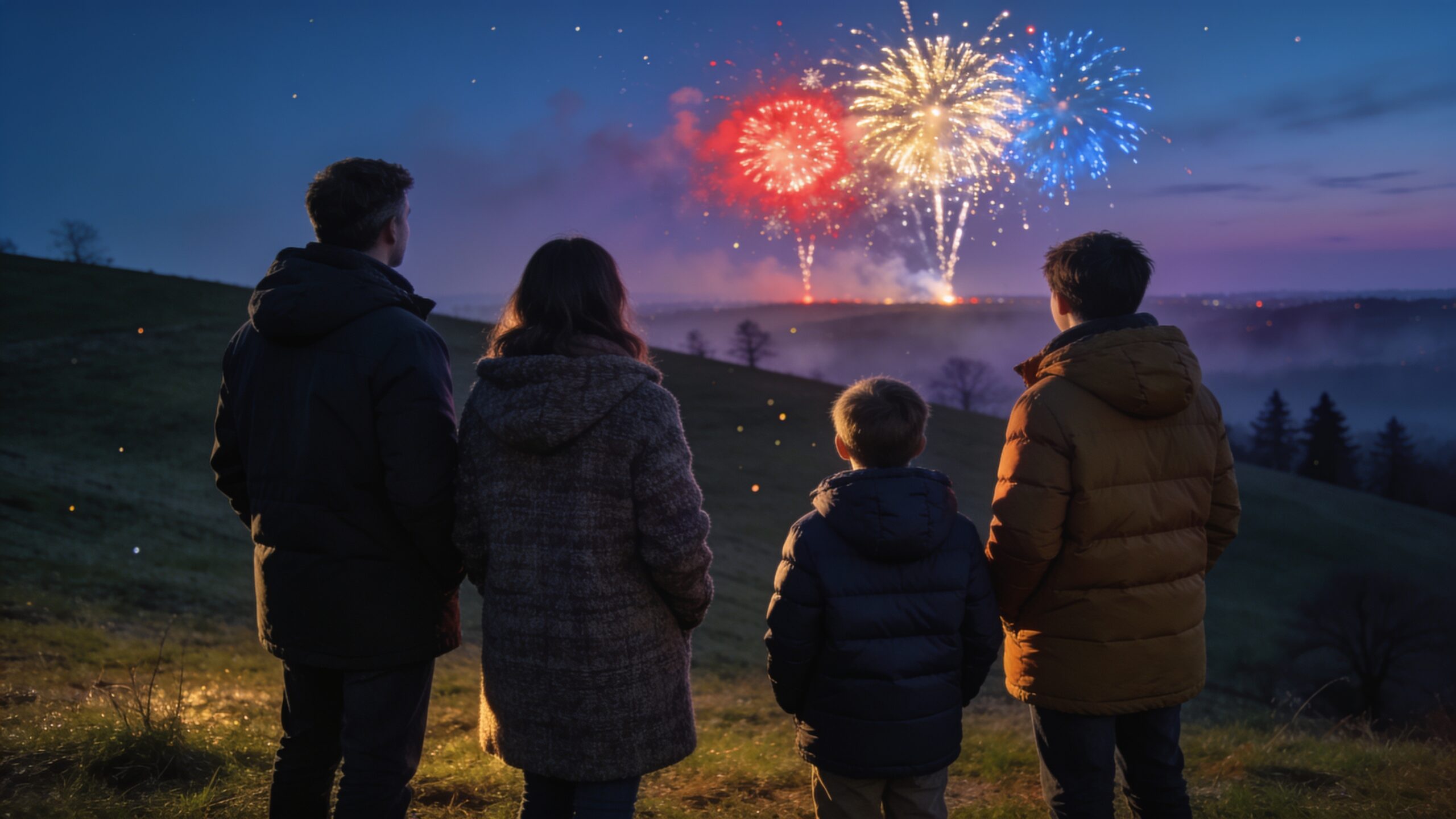
How to Stay Safe Around Fireworks: A Simple Guide for Bonfire Night, Diwali, and New Year
Fireworks light up some of the best nights of the year. Bonfire Night falls on November 5, Diwali celebrations start in early November, and New Year is only weeks away. They are also one of the few things we buy that are, in the words of one UK fire service, “explosives and should be treated as such.”
The good news is that most of the risk can be avoided with a few simple habits. This guide covers whether to hold your own display at all, how to buy fireworks sensibly, how to set up and light them, how to handle sparklers and bonfires with children around, and how to look after pets, neighbours, and the clean-up. It draws on UK fire and rescue services, a council, a US state fire marshal, and a US consumer safety release. Rules and advice differ by country, so treat this as general guidance, not legal or professional advice, and check your own local rules. I name no brands or products.
Firework Safety
Why Fireworks Safety Matters
The first piece of advice from fire services
Ask any fire and rescue service for their number one tip, and you will hear the same thing. North Yorkshire Fire and Rescue strongly encourages people to go to an organised display instead of holding one at home. South Yorkshire Fire and Rescue says organised displays are “safer and far more spectacular!” Northamptonshire Fire and Rescue says it would “always recommend going to an official display.” A council in Gloucestershire gives the same advice. It’s simple, and it removes most of the risk in one step.
What the numbers say, with a warning
Figures on fireworks injuries are scattered and often old. A US Consumer Product Safety Commission release from 2013 reported that about 8,700 people were treated in US hospital emergency departments for fireworks injuries in 2012, and that sixty percent of fireworks injuries occur in the 30 days around July 4. It also said about 1,000 injuries involved sparklers and bottle rockets, which people often wrongly think are safe for young children. A US state fire marshal’s page, citing a US analysis of 2016 data, says children under 15 accounted for 31 percent of the estimated 2016 injuries. These are dated figures from the US, so they show the kinds of harm that happen, not this year’s totals. I haven’t found current UK or European numbers I can verify.
Where the harm comes from
The 2013 release said follow-up investigations found most injuries came from malfunctioning fireworks or improper use, such as lighting fireworks too close to people, holding them while lit, or playing with lit or spent ones. In other words, most of it is preventable with good habits.
Know your local rules
Fireworks laws differ widely between countries and, in some places, between regions. In the UK, one fire service page summarises police reminders that fireworks mustn’t be set off between 11pm and 7am, with later cut-offs on Bonfire Night, New Year’s Eve, Diwali, and Chinese New Year. It also says penalties for illegal selling or use include an unlimited fine, up to six months in prison, and an on-the-spot fine of £90. That page was from 2024, so check the government’s current rules before you act on them. In the US, the 2013 release advised confirming that fireworks are legal in your area before buying or using them.
Choosing Your Display and Buying Fireworks
Why an organised display usually wins
A professional display has trained staff, fixed safe zones, and a plan for emergencies. A home display relies on you, the weather, and whatever you have in the garden. If you want fireworks without the responsibility, a local display is the simplest option. Many communities hold them, and some are free.
If you do hold your own
Think about the space first. The fire services say bonfires should be well away from houses, garages, sheds, fences, trees, and overhead cables. The same applies to fireworks, and a larger garden is safer. If you can’t clear a large area, it’s a sign to go to a display.
Buy from a reputable source
South Yorkshire Fire and Rescue advises buying only from reputable suppliers and checking that fireworks meet safety standards. North Yorkshire Fire and Rescue says to buy only fireworks that carry the CE mark. That is a UK and European marking, so look for the equivalent in your own country. North Yorkshire also notes that private purchases are limited to registered sellers during set periods and otherwise must come from licensed shops. Avoid anything sold without clear labelling or instructions.
Be careful with unlabelled products
The 2013 CPSC release advised being wary of fireworks packaged in brown paper, because it said this often indicates professional-display products meant for trained people. This is old advice from the US, but the principle holds: if something has no labels or instructions, don’t use it.
Store them safely
North Yorkshire Fire and Rescue says to keep fireworks in a closed box. South Yorkshire adds that you should take them out one at a time. My own suggestion: keep the box well away from the fireworks you’re lighting, so a stray spark can’t set off the rest.
Setting Up and Lighting a Home Display
Plan before you start
North Yorkshire Fire and Rescue advises planning the display to make it safe and enjoyable. Decide who is in charge, where the fireworks will go, and where spectators will stand. Northamptonshire advises having one designated person light everything, and that the person and any helpers wear suitable clothing. This is also a good moment to check the weather. My own suggestion, not from the sources: strong wind is a good reason to postpone.
Have water and a plan ready
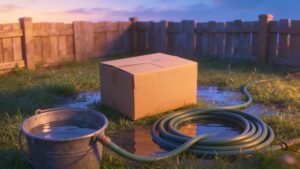
Northamptonshire Fire and Rescue advises keeping a bucket of water, a garden hose, or a fire extinguisher on standby. The 2013 CPSC release also recommends keeping water or a hose nearby. Know where your phone is, so you can call the emergency number quickly. In the UK, that is 999.
Read the instructions on each firework
The fire service pages all say the same thing: read and follow the instructions on each firework. A Gloucestershire council page suggests using a torch if it’s dark. Don’t guess, and don’t rely on what you remember from last year, since different fireworks need different handling.
Light one at a time, at arm’s length
North Yorkshire Fire and Rescue says: “Light the firework at arm’s length, with a taper and stand well back.” Light them one at a time. Never lean over a firework as you light it. The 2013 release says to move back quickly afterwards. Keep naked flames, including cigarettes, away from the box.
Never go back to a lit firework
Several sources repeat this one: never return to a firework once it has been lit. Even if it hasn’t gone off, it might. The 2013 release adds that you should never relight or handle a malfunctioning firework, and that you should soak it in water and discard it. I haven’t found a UK source that explains how to deal with a dud, so follow the instructions on the firework and, if in doubt, keep everyone back and wait.
Don’t carry or throw fireworks
Don’t keep fireworks in your pockets, and don’t throw them. South Yorkshire Fire and Rescue adds that you should never point them at people, buildings, or trees. North Yorkshire says to point rocket fireworks well away from spectators.
Don’t mix fireworks and alcohol
Northamptonshire Fire and Rescue advises never drinking alcohol while in charge of a bonfire or fireworks display. This is a sensible rule for any group, and the person lighting the fireworks should keep a clear head.

Sparklers, Children, and Bonfires
Sparklers are not toys
North Yorkshire Fire and Rescue says “Sparklers are not toys and should never be given to children under the age of 5.” Wear gloves when handling them. A US state fire marshal says sparklers can burn at around 2,000°F, which can cause severe burns, and the 2013 CPSC release says they burn at about 2,000 degrees, hot enough to melt some metals. One UK fire service page gives a much lower temperature of 100°C, which conflicts with the other two sources, so I haven’t used it. Either way, treat them as hot.
How to use them more safely
The sources agree on a few points. Adults should supervise children and make sure they wear non-flammable clothing. Hold a sparkler at arm’s length, and don’t wave it near other people. The US fire marshal adds that children shouldn’t run with them, throw them, or have sparkler “duels,” and that sparklers shouldn’t be bundled together. For small children, the same page says many medical and fire safety groups suggest glow sticks or bubble wands as a replacement.
Put used sparklers in water
A used sparkler stays hot. Northamptonshire Fire and Rescue says to put used sparklers into a bucket of sand or water, and the US fire marshal says the same, warning against dropping them on the ground. Keep that bucket next to the place where children are standing.
Building and lighting a bonfire
The fire services give consistent advice. Build it well away from houses, trees, sheds, fences, and overhead cables. Never use paraffin, petrol, or any other fuel or accelerant. Don’t burn plastic or chemicals, which produce thick, acrid smoke. Keep a water supply nearby. Have one person light it, and never leave a lit bonfire unattended, especially around children.
Check for wildlife
North Yorkshire Fire and Rescue asks people to “check for hedgehogs and other wildlife which may have taken shelter in your bonfire before lighting.” Northamptonshire adds that you should check no small children or animals are hiding in the structure. If you build the bonfire days ahead, it’s worth checking again just before you light it.
Put it out properly
Before leaving, North Yorkshire advises making sure the bonfire is out and the surrounding area is safe. Northamptonshire says to pour water on the embers.
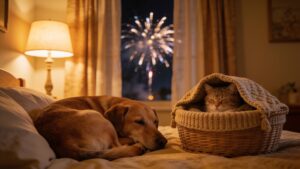
Pets, Neighbours, and Clearing Up
Keep pets indoors
A UK council’s pet advice page says to keep dogs inside, and to make a den where they feel secure. It says not to take a dog to a display, and not to leave one alone in the garden while fireworks are going off. For cats, it says to keep them indoors, close windows and doors, lock cat flaps, and draw the curtains. If your cat is used to a TV or radio, leaving it on may help. The page suggests identification tags on collars, and, for dogs, notes that they must be microchipped and registered. Rules on microchipping may differ in your country.
Small animals and your own behaviour
For rabbits and guinea pigs, the same page suggests bringing them inside or into a shed or garage if possible. If not, turn the hutch to face a wall or cover it with a thick blanket, keeping it ventilated, and give extra bedding to burrow in. It also says to stay calm yourself, since pets pick up on your body language, and not to pick up an anxious pet. For anything more detailed, such as a pet that is very frightened, it points owners to their own vet.
Be a good neighbour
Northamptonshire Fire and Rescue asks people to “be mindful of others and pets, as this time can be unsettling for some.” Tell your neighbours before you hold a display, finish at a sensible hour, and remember that noise can upset children, older people, and anyone with war or trauma memories. That last point is my own suggestion, not from the sources.
Clearing up afterwards
Northamptonshire Fire and Rescue says to collect fireworks “with care,” douse them with water, and put them in a metal container. The 2013 CPSC release also says to douse spent devices with water before throwing them away, to prevent trash fires. Waiting until everything is cold and wearing gloves are my own suggestions, not from the sources.
If something goes wrong
If a bonfire gets out of control, or a firework causes injury, call the emergency number straight away. The UK fire services I read say to call 999 for an out-of-control fire or for anti-social behaviour involving fire or fireworks. I haven’t found official first-aid steps for burns in these sources, so I’m not giving them here. Seek medical help for any injury.
A short checklist
Firework Safety
- Go to an organised display if you can.
- If you hold your own, plan it, and choose one person to be in charge.
- Buy from a reputable seller, and check for the safety mark used where you live.
- Keep fireworks in a closed box and take them out one at a time.
- Have a bucket of water, a hose, or an extinguisher ready.
- Read the instructions, light at arm’s length, and stand well back.
- Never go back to a lit firework.
- Keep children away from fireworks, and don’t give sparklers to under-fives.
- Put used sparklers into water or sand.
- Never use petrol or paraffin on a bonfire, and check for wildlife.
- Keep pets indoors, and tell your neighbours.
- Don’t drink while in charge, and call the emergency number if needed.
Fireworks are meant to be fun, and they can be. A little planning, a bucket of water, and a clear head are enough to make sure the night ends with good memories and nothing worse.