
Why Protein Is So Popular in 2026 (And Whether You Actually Need More)
Walk down almost any grocery aisle right now and count the products that proudly announce how much protein they contain. Yogurt, pasta, cereal, coffee drinks, even soda and popcorn. A nutrient that was once mostly a gym-bag concern has become the single most visible health claim in the food industry, and a majority of Americans now say they’re actively trying to get more of it, even though most of them are already eating more than the standard recommendation.

Here’s how big the protein boom actually is, what’s driving it, and, importantly, what nutrition researchers say about whether most people actually need what the marketing is selling.
How Big the Protein Boom Actually Is
The scale of this trend shows up in survey data, sales figures, and the sheer number of products carrying the label.
Seven in Ten Americans Say They’re Trying to Eat More
According to the International Food Information Council’s 2025 Food & Health Survey, 71% of Americans said they were trying to consume protein, up from 67% in 2023 and 59% in 2022. A separate July 2025 survey from the same group found that 35% of respondents had increased their protein intake over the previous year. Protein has also become the top nutrient consumers use when deciding whether a food counts as “healthy,” according to IFIC research cited in industry coverage, ahead of nutrients people have traditionally associated with healthy eating.
A $24 Billion Label That Keeps Growing
Packaged foods carrying a high-protein claim generated roughly $24 billion in U.S. retail sales in 2025, up 3.6% on the year and nearly 25% over four years, according to a recent market analysis. Ready-to-drink protein shakes show the same pattern: sales in the category climbed from $4.7 billion to $8.1 billion over four years, an increase of about 71%, according to Circana data cited by CoBank. In the protein powder aisle specifically, U.S. protein supplement sales reached an estimated $8.6 billion in 2025, with whey accounting for just over 43% of tracked powder sales.
Protein Has Moved From the Gym Aisle to Everywhere
What makes this trend different from earlier nutrition fads is how far outside fitness circles it has spread. Roughly 40% of U.S. yogurt now carries a high-protein label, high-protein pasta already makes up around 7% of the pasta aisle, and major coffee and fast-food chains (Starbucks, Dunkin’, and Subway among them) added protein-focused menu options at the start of 2026. One industry observer noted that protein is increasingly no longer a differentiator at all; it’s simply expected. Analysts also forecast that high-protein drinks specifically could grow by roughly 61% by 2029, and one global trend report ranked “powerhouse protein” as its number-one food and beverage trend for 2026, noting that nearly 60% of consumers worldwide pursue protein for overall health rather than just sports performance.
What’s Driving the Obsession
Several forces converged at once to take protein from niche to default.
GLP-1 Medications Changed Shopping Habits
One frequently cited driver is the rise of GLP-1 weight-loss medications, which an industry analysis estimated are now used in roughly 12% to 15% of U.S. households. People taking these medications tend to eat less overall, and food companies have responded with products built around high protein and high fiber to maximize fullness in smaller portions. Danone has reported double-digit growth in its high-protein offerings, which it linked in part to the adoption of these medications.
Healthy Aging Is Now a Mainstream Concern
Protein is also tied to a broader cultural shift toward longevity and “healthy aging.” In one consumer survey, 73% of respondents said healthy aging is extremely important to them, and interest in preventing age-related muscle loss has pushed protein into conversations that previously centered on older adults only. High-protein products are especially popular among consumers under 35, suggesting younger shoppers are thinking about this long before it becomes a pressing issue.
Brands Discovered a Premium Label
There’s a commercial incentive too. Food and beverages carrying a high-protein claim can command a price premium of up to 12%, according to CoBank analysis, and consumers who are cutting back elsewhere appear willing to keep spending on products with a perceived health benefit. Snacking is viewed as the next frontier, since only about 17% of consumers currently consider protein when choosing a snack, leaving what industry analysts describe as wide-open room for growth. For chains like Starbucks and Dunkin’, protein drinks offer a way to encourage customers to trade up to higher-priced items while tapping the “better for you” trend.
What the Experts Actually Say
Here the picture gets more nuanced than the marketing suggests.

Most Americans Already Get Enough
Multiple nutrition researchers point out that, on average, Americans already eat more protein than they need. Based on a national survey sample, men aged 20 to 59 consume an average of about 97 grams of protein a day and women about 70 grams, both above the standard baseline. A Tufts University nutrition publication cited a national survey finding that roughly 85% of Americans meet or exceed the recommended amount, and a Stanford Medicine dietitian described the situation by saying protein has been given a “health halo” similar to how low-fat foods were treated in the 1990s.
The RDA Is Not a Target
The Recommended Dietary Allowance for protein is 0.8 grams per kilogram of body weight per day for adults, a figure designed to meet the needs of roughly 97 to 98% of healthy people. Researchers repeatedly stress that it isn’t a minimum to beat. A Stanford nutrition scientist noted that the number already includes a built-in cushion, and that most people who eat enough calories and a reasonably varied diet get all the protein they need without tracking it. Updated federal dietary guidance released in 2026 raised the recommended amount compared with the previous figure, but Stanford researchers noted the debate may be largely moot, since typical American intake already sits in line with the higher recommendation. Nutrition scientists also stress there is no such thing as an “incomplete” protein for people eating a varied diet, so combining specific foods at each meal isn’t necessary.
Where Some People May Benefit From More
That doesn’t mean no one benefits from additional protein. Mayo Clinic Health System notes that people over roughly 40 to 50 may need somewhat more as age-related muscle loss begins, and that physically active people can require more than sedentary adults. Some researchers also point to adults over 65 and people losing weight rapidly, including on GLP-1 medications, as groups where higher intake may help preserve muscle. That said, the evidence is still debated: one review noted that in a number of studies, higher-protein interventions did not help maintain muscle in older adults who were already getting adequate protein to begin with. Some international expert groups suggest slightly higher intakes for adults over 65, roughly 1.0 to 1.2 grams per kilogram, but a Tufts analysis noted that many older Americans already eat close to that amount without changing anything.
What This Means Going Forward
Whatever happens to the trend itself, a few practical takeaways stand out.
The “Health Halo” Problem
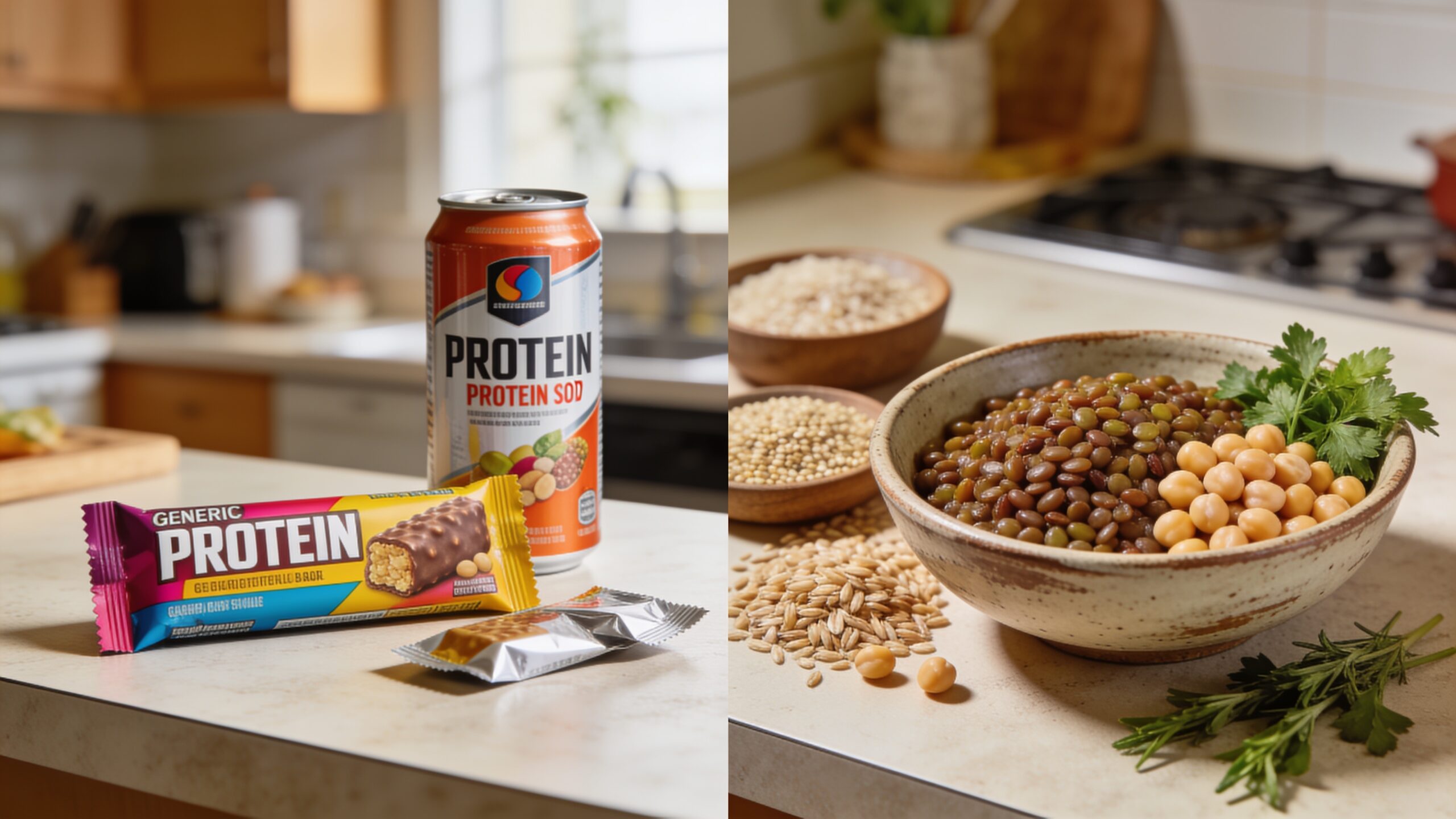
One of the more pointed critiques is that a protein label can make an ultra-processed product look healthier than it is. Industry analysts have observed that high-protein claims are growing faster than protein consumption itself, and nutrition commentators note that protein-fortified cereals, snack bars, and sodas can still be heavily processed. For most people, ordinary foods already provide enough protein without any specialty product. Consumers themselves seem partly aware of the tension: in one global survey, about 40% said natural or minimal processing was a pivotal factor when choosing protein-containing foods, even as the shelves fill with heavily engineered high-protein snacks and drinks.
Fiber Is the Quiet Gap
While protein gets the attention, Stanford researchers point out that only about 5% of Americans meet the recommended intake of fiber, which supports gut health and long-term disease prevention. Foods like beans, lentils, and whole grains offer both protein and fiber, but they’re typically not what shoppers reach for when trying to boost protein, which tends to push people toward powders, bars, and meat-heavy options instead.

How to Think About Protein Without the Hype
For most healthy adults, the evidence suggests there’s no need to obsess over an exact number or to rely on specialty products to reach it; a balanced diet with enough calories typically covers protein needs. People with particular circumstances (older adults, very active people, those on weight-loss medications, or anyone with kidney or other health conditions) are better served by a conversation with a doctor or registered dietitian than by a trending label. The protein boom is real, but the most useful takeaway from the research may be a simple one: eat a varied diet, include fiber alongside protein, and be skeptical of any product that treats a single nutrient as a shortcut to health. If the 1990s taught shoppers anything, it’s that a single-nutrient craze can reshape store shelves for years while telling us surprisingly little about what a genuinely healthy plate looks like.
This article is for general informational purposes only and isn’t medical or nutritional advice. Talk to a doctor or registered dietitian about your own needs, especially if you have a health condition.