
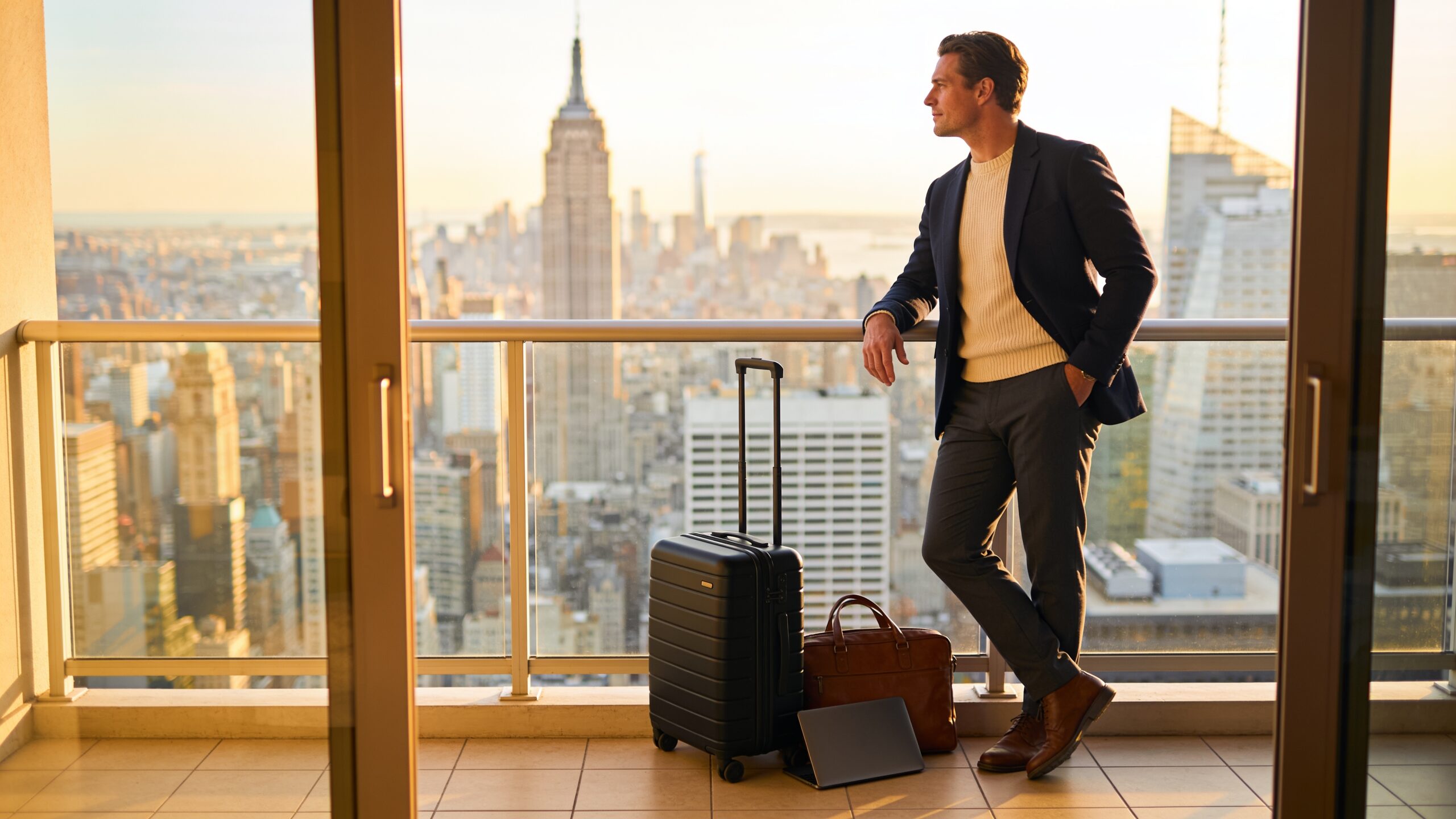
What Is “Bleisure” Travel? Why It’s Reshaping Business Trips Worldwide
For decades, a business trip followed a predictable script: fly in, attend meetings, fly home as soon as possible. That script is being rewritten on a genuinely global scale. Millions of professionals now treat the days on either side of a work trip as a built-in opportunity to explore, rest, or reconnect with family, rather than dead time to minimize.
The trend has an awkward but widely used name — “bleisure,” a blend of business and leisure — and it has quietly become one of the most significant shifts in how the world travels for work. Here’s what the term actually means, how big this trend has become, and why companies are increasingly encouraging it rather than trying to stop it — plus what it means for anyone hoping to try it on their own next work trip.
What Bleisure Travel Actually Means
Before getting into the numbers, it’s worth being precise about what does and doesn’t count as bleisure travel.
A Simple Concept With a Silly Name
Bleisure travel is exactly what it sounds like: extending a business trip to include personal leisure time, rather than flying home the moment work obligations end. A consultant who flies in for Monday and Tuesday meetings and stays through the weekend to see the city is taking a bleisure trip. The concept itself isn’t new — business travelers have quietly done this for years — but it only recently got a name, formal industry tracking, and active encouragement from employers. Despite how widespread the practice has become, awareness of the term itself still lags behind the behavior: one 2024 survey found that only around 30% of people recognized “bleisure” as a word, even though the large majority of business travelers had already taken a trip that fit the definition.
It’s Not the Same as a “Workcation“
Bleisure gets confused with “workcation” — working remotely from a vacation destination — but the two are structurally different. A workcation means working during what’s meant to be personal time off. Bleisure means adding genuine personal time onto what’s meant to be a work trip. Notably, when American business travelers were asked which they preferred, 60% chose bleisure over workcations, suggesting most people would rather clearly separate work days from leisure days than blend the two together simultaneously.
Most Bleisure Trips Stay Surprisingly Close to Home
Despite the “reshaping travel worldwide” framing this trend often gets, most bleisure trips aren’t exotic international getaways. In the United States, roughly 88% of bleisure trips are domestic, meaning the trend is mostly about turning a routine work trip to another city into a genuine mini-vacation, not necessarily booking an international adventure every time a work trip comes up.
How Big Is This Trend, Really?
The scale of this shift becomes clear once you look at the actual travel and market data behind it.
More Than Half of Managed Business Trips Now Include It
According to the Global Business Travel Association’s 2025 Workplace Mobility Survey, bleisure travel now appears in roughly 60% of U.S. managed business trips, up sharply from 43% in 2019. The average bleisure extension runs about 2.3 days, and 71% of travelers who extend their trips pay for that extra leisure portion out of their own pocket rather than expensing it to their employer. That growth has held up even as overall global business travel spending has recovered past pre-pandemic levels, surpassing the 2019 benchmark of $1.43 trillion in 2024 and projected to reach roughly $1.64 trillion in 2026 — meaning bleisure isn’t replacing traditional business travel, it’s layering on top of a business travel market that’s already larger than it was before 2020.
The Global Market Is Worth Hundreds of Billions
Market size estimates for global bleisure travel vary by research firm, but they consistently point in the same direction: one estimate puts the market at roughly $472 billion in 2025, projected to grow toward $732 billion by 2030, while a separate 2026 estimate puts current market size closer to $513 billion heading toward a similar 2030 figure, and yet another industry estimate values the broader market as high as $849 billion for 2026. The wide spread between these figures largely comes down to how narrowly or broadly each research firm defines “bleisure travel” for measurement purposes. Regardless of which specific number is most accurate, every major research firm tracking this space agrees the segment is growing at a sustained high-single-digit to low-double-digit annual rate — and for major carriers, the revenue impact is already substantial: bleisure-related bookings reportedly made up nearly half of American Airlines’ $13 billion in 2022 revenue alone.
Millennials and Gen Z Are Driving Most of the Growth
The Global Business Travel Association identifies millennials as the age group most likely to take bleisure trips overall, but Gen Z is quickly closing the gap and arguably driving the cultural shift: 79% of Gen Z business travelers say they specifically want to travel for work in order to explore new places, compared to 72% of millennials and 60% of Gen X. Roughly 41% of Gen Z workers say they specifically want their employer to allow them to extend business trips with leisure time, a meaningfully higher share than older generations report.
Why Companies Are Actually Encouraging This
None of this growth would be happening at this scale if employers were actively resisting it — and increasingly, they aren’t.

It’s a Retention Perk That Doesn’t Cost a Salary Increase
About 73% of employees view the ability to add leisure time onto a work trip as a genuine corporate perk, and 59% of Gen Z employees along with 65% of millennials say they specifically choose employers partly based on this kind of travel flexibility. For companies competing on retention without necessarily raising base pay, allowing bleisure travel is a comparatively low-cost benefit that meaningfully affects how employees feel about their job.
The Wellbeing Payoff Is Measurable
This isn’t just a perceived benefit — there’s research behind it. A global survey from IHG found that 85% of employees feel more positive and optimistic after work travel that includes personal time, and separate research from the International Society of Travel Medicine found that the mood improvement from adding leisure time to a trip can last up to five weeks afterward. Separately, 90% of business travelers now describe travel itself as an essential investment rather than a burden, up 8 percentage points from the prior year, suggesting attitudes toward business travel broadly are shifting in a more positive direction alongside the bleisure trend specifically. For employers, a measurably better mood translating into weeks of improved engagement is a meaningful return on a benefit that costs the company little to nothing extra.
It Can Genuinely Save Companies Money
Bleisure travel can even reduce costs in some cases. Travelers who stay through a weekend rather than flying home on a busy Sunday sometimes secure cheaper midweek return flights, and since most travelers pay for their own extended-stay expenses, companies frequently see little to no increase in overall trip cost despite employees getting meaningfully more value out of each trip. Standard federal per diem rates, which set a useful benchmark for lodging and meal costs, currently sit around $178 per day in the U.S. — a figure that only applies to the official business portion of a trip, reinforcing why clear expense boundaries matter once a personal extension gets added on.
What This Means Going Forward
None of the underlying drivers behind this shift look temporary, which makes it worth understanding where policy and practice are headed next.

Policy Is Struggling to Keep Up With the Trend
Formal company policy hasn’t fully caught up with how common this practice has become. Roughly 18% of business travelers who extend trips still end up expensing personal incidentals back to their employer in violation of official travel policy, according to industry tracking — a sign that a lot of bleisure travel is currently happening informally, without clear guidelines separating what the company covers versus what the employee pays for personally. Sustainability considerations are getting layered into corporate travel policy at the same time, with roughly 80% of Fortune 500 corporate travel buyers now requiring carbon reporting from their travel management companies, adding another dimension companies increasingly need to account for as trip patterns shift.
Expect More Formal Company Bleisure Policies
As the practice becomes mainstream rather than a rare perk for frequent flyers, more companies are expected to formalize clear bleisure travel policies — spelling out approval processes, expense boundaries, and duty-of-care responsibilities for the leisure portion of a trip, rather than leaving it as an unofficial arrangement between an employee and their manager.
What to Know If You Want to Try It
For anyone considering extending their next work trip, the practical first step is simply asking about company policy before booking anything, since the split between what’s covered and what isn’t varies significantly by employer. Being upfront with a manager about the personal-time portion, keeping business and leisure expenses cleanly separated on receipts, and checking whether a slightly later return flight is actually cheaper than the standard same-day option are the small details that tend to make the difference between a smooth bleisure trip and an awkward expense-report conversation afterward. It’s also worth confirming travel insurance and duty-of-care coverage specifically for the personal-time portion of the trip, since some employer travel policies only cover incidents that occur during the official business dates and not during a self-funded extension.