
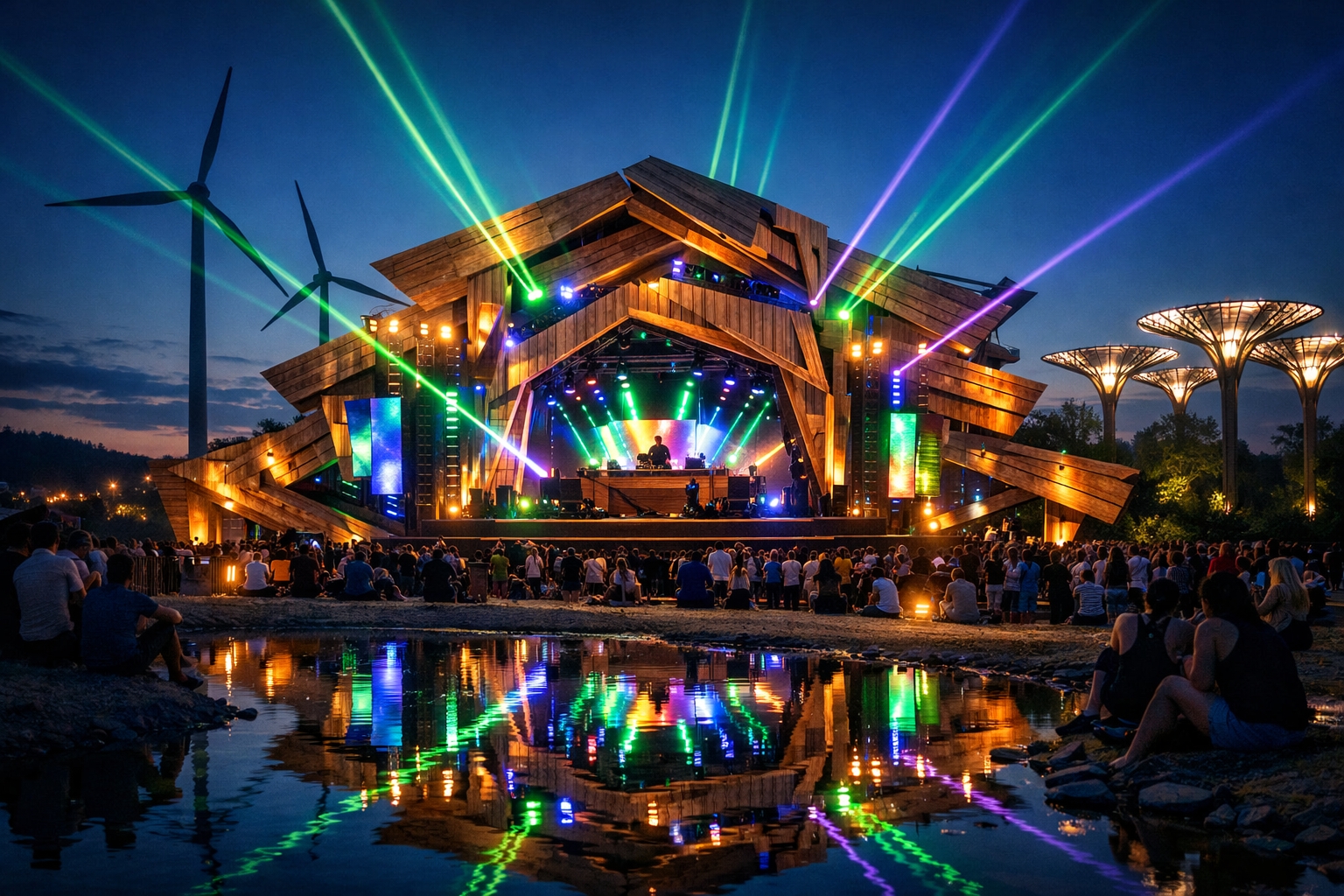
Sustainable Event Planning Guide: The 2026 Blueprint for Hosting Eco-Friendly Public Gatherings
The sustainable event planning guide has now become the most crucial tool for organizing in the modern world as the entire industry of live entertainment and conferences globally undergoes a green revolution. For many decades, all the massive public events, music festivals, and corporate events had been organized without any consideration of the environmental impacts, leaving huge amounts of plastic waste as well as tons of carbon emissions behind. But the attitude of people toward public events has now changed in the US and Europe, and now the modern-day audience expects the event brands to be socially responsible. Modern statistics proves that more than 70% of festival goers attend events which adopt zero waste strategy.

In order to remain competitive and achieve a top ranking in today’s platform-based systems, production firms will have to redesign their execution strategies based on holistic and sustainable management systems. Rather than viewing sustainability practices as costly or just a marketing strategy, production firms are integrating these principles at the stage of site selection, vendor agreements, and technology systems design. Such a change requires a total departure from single-use plastics in the form of signage, adoption of local supply chains and hybrid power generator systems to avoid fuel wastage. In digital media and news organizations providing practical information to Western operating markets, such a structure change serves as a complete guidebook for the future of public entertainment.
Tactical Logistics, Green Mobility, and Venue Selection Under the Sustainable Event Planning Guide
Selecting the appropriate venue and organizing the transportation of thousands of people from their starting point to the destination is the first and foremost stage in implementing an environmentally friendly model of operation. The following basic information highlights what should be done in order to minimize the carbon footprint at the start.

Certified Eco-Friendly Venue Assessment Options
Choosing a location with valid green certificates makes your process of managing the environment much easier. Today, people tend to focus on places with proven credentials such as LEED certification or compliance with the newly introduced ISO 20121 standards. Such special locations come equipped with efficient heating systems and sorting facilities and already have installed devices that save water.
Public Transit Integration and Shared Micro-Mobility
The provision of maximum access to the regional mass transit system is key in reducing the largest contributor to carbon emissions associated with events. Professional event planners work closely with the local city transport systems to offer free tickets or light rail trains for the guests. Provision of safe bike parking stations and collaborations with electric scooter providers will ensure that guests do not come with their private cars.
Low-Emission Freight Logistics and Production Scheduling
The coordination of the large trucks responsible for moving the stages, sound equipment, and vendor booths involves very rigid planning and operational efficiency. The production manager makes use of intelligent freight forwarding networks in order to make sure that the trucks are loaded to full capacity, thus avoiding any empty trips back over regional roads. The staggered load-in schedule will prevent idle diesel trucks lining up outside the dock.
Carbon Offset Integration and Attendee Mileage Tracking
There is a need for an effective system of compensating for the carbon dioxide emissions produced by the air transportation of the long-distance attendees at such events. The latest software used to register participants includes carbon footprint calculators that calculate the distance traveled by the participant and provide him/her with the opportunity of making a contribution during registration. This money goes towards environmental projects in the area.
Waste Mitigation and Circular Supply Chain Operations
For the transformation of the public event into a circular economy, there is need for a very rigorous and systematic way of doing things in relation to the materials and vendors involved. The following part outlines the necessary changes in operation.

Zero-Waste Catering Guidelines and Compostable Serviceware
To remove the traditional single-use petroleum-based plastics, there needs to be an absolute policy that will ensure that all food sellers adopt the alternative materials that can decompose. The food partners need to buy the marine degradable plates made from bamboo, the utensils from cornstarch, and unbleached paper towels to ensure that there is no chance of heavy plastic contamination of all food packaging.
Reusable Drinkware Systems and Hydration Infrastructure
Implementing such a system of required reusable cups prevents a massive pile of plastic waste from being produced during big music festivals. The platform works with dedicated cleaning services that provide robust, trackable aluminum cups for reuse by participants for a small amount of money. Large water filtration stations are placed around the site where users can fill their bottles up with filtered water.
Strategic Organic Material and Leftover Food Donation
Handling leftover meals involves creating partnerships with food banks in the locality and the surrounding community kitchens. Event planners coordinate timely collection of leftovers through food rescue organizations within moments after every day’s program ends. This guarantees that high-quality meals get served to needy people within the community instead of dumping them carelessly in business bins.
Front-of-House Sorting Stations and Staff Education
Putting out generic garbage bins is definitely a recipe for contaminated waste and failed batches of recycling. What is done instead is the use of clearly marked stations with separate bins in different colors for compost, recycling, and trash. Having educated green team volunteers at each station will ensure proper sorting by your guests, helping you achieve better landfill diversion results.
Renewable Power Infrastructures and Digital Tech Integration
Moving beyond traditional fossil fuels in generating energy calls for a profound knowledge of the existing grid infrastructure and paperless communication technologies. This section explains the technical processes involved in generating energy for the events in an eco-friendly manner.

Hybrid Battery Storage and Bio-Diesel Power Systems
Operating major audio visual stage production systems through traditional diesel generators produces huge amounts of carbon dioxide and makes continuous noise pollution. The modern generation of production systems uses high-capacity lithium ion batteries that can handle the power peak efficiently during live shows. These modern batteries are charged using the hydro treated vegetable oil bio-diesel, resulting in reduction of up to 90% carbon emission from the traditional setup.
Paperless Access Solutions and Mobile App Infrastructure
Getting rid of printed paper tickets, brochures, and physical credential badge cards not only cuts down on costs but also helps conserve nature’s precious resources. The use of digital event management tools ensures that registration codes, interactive floor plans, and scheduling changes are all put together within a convenient one-stop mobile application.
Energy-Efficient LED Lighting and Smart Grid Controls
Poor management can make it possible for convention centers and stages at festivals to burn up the municipal grid very fast. Technical directors insist on the use of high efficiency LEDs only in all the lightings within the theaters and public lighting too. Automated and smart grids are used to power down the lighting in vacant areas like backstage and closed vendor booths.
AI-Driven Supply Optimization and Attendance Forecasting
With the use of advanced artificial intelligence, events managers will be able to study previous crowd data and allocate resources in real time based on such information. The advanced algorithm studies weather trends in the past as well as the number of tickets sold to make a prediction of how much water and electricity would be required in specific sections of the venue.
Community Socioeconomic Legacy and Sustainable Event Procurement Guidelines

Local SME Sourcing and Regional Vendor Prioritization
Using production assets from international suppliers further abroad not only contributes to carbon emissions but also draws crucial capital away from the community. Proactive buyers work hard to find the best local small and medium sized businesses to provide carpentry, flower arranging, and security services. These efforts pay off by injecting tens of thousands of dollars into the local economy.
Ethical Supply Chains and Certified Sustainable Merchandising
The manufacture of event merchandise through use of low-quality, non-organic materials is likely to cause environmental pollution at foreign manufacturing facilities. The companies producing event merchandise ensure their reputation through sourcing of clothes that are only made from organic cotton or recycled ocean plastics. It ensures that the manufacturing plants comply with fair wage labor policies, making your merchandise align with your social values.
Accessible Venue Design and Universal Inclusivity Actions
Any true sustainable design must take into account the factor of social accessibility to ensure that everyone will be able to access the environment in question without any problems. The production facilities feature wide and durable access ramps, sensory decompression rooms, and easily readable signs in multiple languages in each zone. Assistive listening devices for important presentations will make your program completely accessible.
Post-Event Impact Reporting and Transparent Material Audits
Having credibility in the long run from corporations and regulatory authorities depends upon the transparency of your environmental results. The independent third-party auditing agency makes a full sustainability report for you after your event, which calculates the total amount of water, energy used by you, and diversion from landfills. Publishing this data on your website sets up your baseline of honesty.
Frequently Asked Questions (FAQ)
How does this sustainable event planning guide help cut total production costs?
Although using environmentally friendly material will mean an initial cost is incurred, in the long run, it saves on operating costs. This is because there is no need for printed signs, saving on fuel by making the generators more efficient through hybrid batteries, and no water bottles.
What are the main requirements for achieving a certified ISO 20121 status?
Getting the ISO 20121 certification will involve putting in place an entire management system that can trace the environmental, economical, and societal impacts of the events. The planning team needs to undertake materiality assessment, validate suppliers within the chain and do post-event data audit.
Can old, historic indoor venues be successfully integrated into a green event framework?
Indeed. Even though the historic buildings lack the LEED building system, you can make some good operational changes. It is possible to have low-emission transport connections, use stand-alone compost facilities temporarily, have LED lighting, and work with local eco-friendly caterers.
How can production teams prevent greenwashing accusations from modern consumers?
The ultimate way to counter allegations of green washing is by practicing full transparency backed by numbers. Stay away from misleading phrases such as “eco-friendly” or “green festival.” Instead, provide accurate figures on recycled material, carbon offset credits, and costs for sourcing locally from an unbiased third party.
Final Conclusion: The Lasting Value of Responsible Production
The decision to embrace a sustainable events planning manual is no longer just a trend; it has now become an operational necessity for existence in today’s public event scenario. Outdated events that involve using too many resources and generating much wastage are fast becoming a thing of the past due to strict global legislation and changing customer expectations. Companies that create events that incorporate transportation systems through efficient mass transit systems, effective hybrid power grids, and circular supply chains are capable of saving the environment and protecting themselves from increasing cost of fossil fuel and hefty fines. In light of the media houses in both the United States and Europe, which will focus on showcasing the most creative events in the world, success will be defined for the organizations that realize sustainability to be more than a mere tick-the-box exercise.

2 thoughts on “Sustainable Event Planning Guide:Green Festival Tips”