

Strategic Chokepoints Global Economy: Why They Matter More Than Ever
The concept of strategic chokepoints in the global economy has been given even greater priority in recent years, due to the fact that the global trade is still relying on a limited and critical number of routes. Wondered how one blocked canal or blocked sea path can cause global fuel prices and supply chains to be disrupted? It is these chokepoints.
It is not merely geographical feature but a life line of international trade. Failure in any of these areas can affect millions of individuals, raise costs and slow down the global economy in a manner that is not easily noticed by the majority.
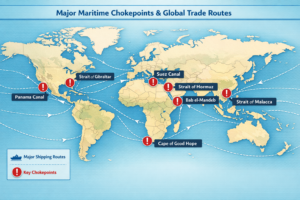
What Are Strategic Choke points?
The first step in strategic chokepoints global economy discussions is to comprehend what these places are. Choke points, in straightforward terms, are compressed lanes along sea routes, through which much of the world trade has to flow. They are fairly narrow and therefore can easily be a source of congestion or disruption.
These are important chokepoints since they process a huge proportion of world oil products and container traffic. When there is a hitch in any of these domains, it may slow down deliveries, escalate expenses and even lead to shortages in various regions across the globe.
The Importance of the Strait of Hormuz
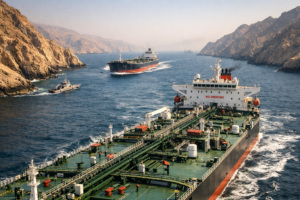
One of the most crucial chokepoints in the world is the Strait of Hormuz. It is a strategic area between the Persian Gulf and the Gulf of Oman and is a key route through which oil transport in the Middle East can be conducted to the world markets.
Why It Matters for Oil Supply
This narrow strait is through which a good part of the oil of the world flows daily. Any interference in this regard, be it political tension or conflict, may result into instant oil price increments. This has a direct impact on fuel prices, transport and even electricity prices in most countries.
Global Impact of Disruptions
During times of uncertainty in the Strait of Hormuz, there is a swift response in markets. Even the threat of disruption itself will cause panic and price volatility and economic instability. This reveals how vulnerable the global economy is to happenings within this one location.
The Role of the Suez Canal in Global Trade
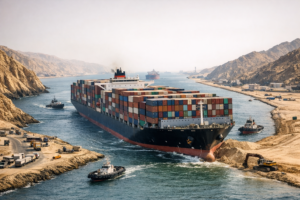
Another important chokepoint is the Suez Canal which links the Mediterranean Sea to the Red Sea. It enables ships to travel between Europe and Asia without going round Africa thus saving on time and fuel.
Why the Suez Canal Is Critical
This canal is a key route through which much of the world trade goes on annually. Container shipping is particularly important, which is why it is a key aspect of global supply chains. In its absence, shipping routes will be longer and costly.
Lessons from Past Blockages
The blockage of the Suez Canal in the past led to a significant delay and financial losses of the global world. Ships had to work around, becoming more expensive and making deliveries slower. The incident was a clear demonstration of how a single disruption can impact the whole global economy.
How Chotepoints Influence the Global Economy
The importance of strategic chokepoints in the global economy cannot be complete without knowledge on its broader effects. These paths have a direct impact on trade efficacy, petroleum prices, and supply chain steadiness in the whole world.
Impact on Fuel Prices
Prices of oil go up rapidly when there is delay in the oil shipments or when there is a threat. This not only impacts on the cost of fuel but on the cost of goods and services since transportation is becoming very expensive.
Supply Chain Disruptions
A lot of industries rely on the delivery of goods in time. Blocking or slowing down choke points has a ripple effect, as it results in shortages and higher costs to both businesses and consumers.
Why These Routes Are Hard to Replace
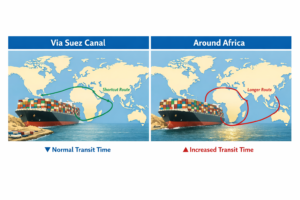
The fact that the routes cannot be substituted easily is one of the major reasons why strategic chokepoints global economy discussions are still current. Other routes are available, though in most cases, they are more time taking and costly.
To take an example, not using the Suez Canal means that ships are forced to sail around the southern end of the African continent, which is time and money consuming. This not only renders choke points relevant, but makes them almost inevitable in international trade.
The Future of Strategic Chokepoints
As international business increases, the significance of chokepoints will be heightened. The emphasis now is on enhancing security, finding alternative routes, and decreasing reliance on one route.
Yet, being independent of these choke points may not be possible. Their location gives them a crucial advantage, and they will remain a vital component of the international economic system.
Final Conclusion
Strategic choke points in global economy talks remind us of how interconnected we really are. The Strait of Hormuz and the Suez Canal are just two examples of places that might be far away from us but whose effects are felt all over the place.
Knowing about these strategic routes gives us an idea of the whole situation of international business and how something that seems insignificant can turn out to be very important.

I Am An Expert In Writing Articles And Designing. It Is My Endeavour Through This Site To Provide You With A Variety Of News Across The World.