
How to Stay Safe at Big Events and in Crowds: A Plan-Ahead Guide
Here’s the unglamorous truth about staying safe at a big event: it’s mostly about the five minutes you spend before you leave the house.

Most gatherings go fine. The World Health Organization (WHO) says most on-site medical care at mass gatherings is for minor injuries that can be treated at the scene. But crowds do raise a few risks, from dense spots and blocked exits to cold, heat and stomach bugs, and a short plan lowers all of them. This guide is built as a timeline: before you go, when you arrive, in the crowd, if something goes wrong, and afterwards. It’s for festivals, markets, matches, parades, concerts and New Year’s Eve, for readers in the US, the UK and Europe. It draws on an Indiana Department of Homeland Security page (published 1 July 2026), a CDC blog post, a WHO fact sheet from 2017 and a UK police page. I keep to what those sources say, flag what’s thin, and make clear which tips are my own. It’s general information, not security advice for any specific event.
Before You Go: The Five-Minute Plan
The Indiana page puts it plainly: “One of the best ways to stay safe at any event is to be prepared.”
Look up the venue
Check the venue’s exits, evacuation plans, contact details for security and first aid, and any prohibited items. Most venues post this on their website, and it saves arguments at the gate.
Check the weather, and dress for it
The Indiana page says to consider how weather could affect people at the venue and on the way there. The WHO fact sheet lists injuries, heat-related illness, intoxication and stomach illness as common complaints at mass gatherings, and hypothermia as less common. That’s a useful reminder that winter events still call for layers and a warm, dry outer coat, which is my own suggestion rather than something the sources say.
Name an outside contact
This one is easy to skip. The Indiana page says to pick a contact who isn’t attending, give them your group’s roster and phone numbers, and share your estimated times for leaving, being at the event and getting back. If something happens, they’re the person who can tell others where you should be.
Pack a small kit
The CDC post recommends a travel-size emergency kit with first-aid supplies, copies of important papers, any personal medications and items specific to your destination, the time of year and your planned activities. For a day out, my own version would be a charged phone, a battery pack, tissues, a small first-aid kit and any medication you take.
Think about illness, too
The CDC post notes that germs spread easily in crowds and on shared surfaces. Its basic advice is to wash your hands with soap and water, scrubbing for at least 20 seconds. It also recommends an annual flu vaccine for everyone six months and older. That’s the CDC’s guidance for the general population, and I’d ask a doctor or pharmacist about your own situation.
If you’re going with children
The Indiana page suggests explaining the safety rules calmly, without frightening them, and teaching them to stay close to the family. It also says to take a current photo of each child before you leave home, in case you get separated. The photo tip is worth doing even if you never need it.
When You Arrive: Learn the Room
The first few minutes inside are the best time to get your bearings.
Find the exits, then the second exits
The Indiana page says to scan the area, noting the emergency exits, restrooms and routes out. It adds that you should identify less crowded secondary exits, since the main one may be hard to reach in an emergency. It’s the same idea as noting the exit rows on a plane.
Choose a meeting place
The page says to establish a meeting location where group members will gather if separated. Pick somewhere fixed and obvious, such as a particular gate or landmark, not “by the stage,” which will be packed.
Think about everyone’s needs
The Indiana page notes that stairs, ramps and uneven ground can be hard for some people, and says to plan evacuation routes that suit everyone’s physical abilities. If you’re with someone who uses a wheelchair, has a pushchair or walks slowly, work out the route now.
Locate help
Find the medical tent or first-aid station and, if you can, a staff member or steward in a high-visibility jacket. That’s my own suggestion. The Indiana page just says to locate medical tents and first-aid stations.
Share numbers
Exchange mobile numbers with everyone in your group and your outside contact, as the Indiana page suggests. In a crowd, phone networks can get busy, so I’d also agree a “if we can’t reach each other, go to the meeting place” rule. That last point is my own, not the page’s.

In the Crowd: Reading the Room
This is where most of the common-sense advice lives.
What makes a crowd riskier
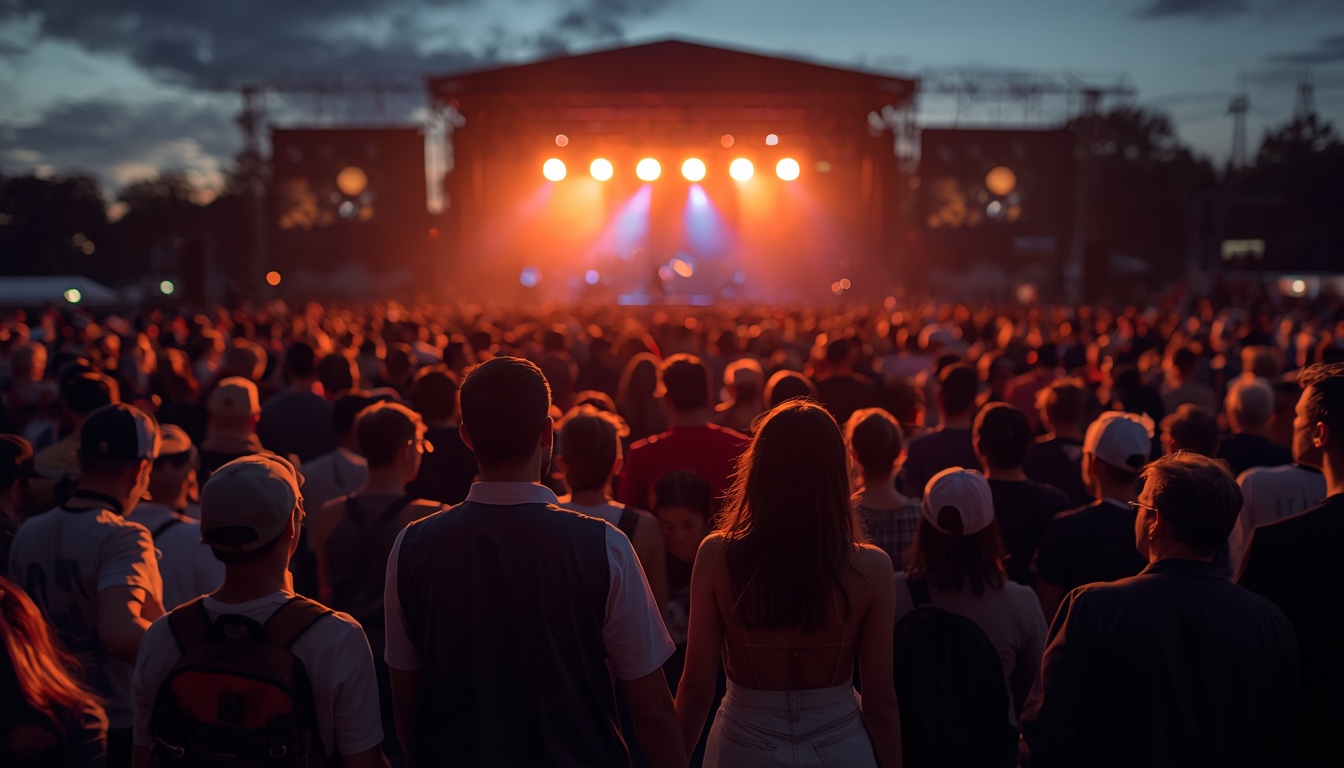
The WHO fact sheet names the risk factors: high crowd density, restricted points of access, limited crowd control and inadequate on-site medical care. You can’t change most of those, but you can notice them. A packed single entrance and no stewards is a different situation from a wide-open site with plenty of staff.
Warning signs the Indiana page lists
- A sudden surge of people.
- A lone person who seems out of place.
- Performers or audience members encouraging dangerous behaviour.
If you see any of these, the page suggests moving away and alerting security. It also says that if a crowd becomes uncomfortably dense, you should move before it gets worse. That’s the one I’d remember. It’s easier to step sideways early than to get out later.
Stay with someone
The page says staying with a companion lowers the risk of getting lost or being targeted. It also says to keep valuables secure, since crowds make pickpocketing easier. A zipped inside pocket and a cross-body bag worn in front are my own suggestions.
Food, drink and hygiene
The WHO notes that communicable disease risk rises with close contact and with unsafe food or water. I’d stick to hot, freshly cooked food from busy stalls and wash or sanitise your hands before eating. That’s my own habit-based suggestion, not a WHO instruction.
Alcohol
The WHO lists intoxication among the common complaints at mass gatherings. I’d say the sensible approach is to keep track of how much you drink and have a plan for getting home. That’s my own view.

If Something Goes Wrong: Stay Calm and Move
None of this is likely, and I’d rather give you a few lines you can remember than a long list.
The general rule
The Indiana page says: “If an emergency does happen, stay calm, head for the nearest exit and listen for official instructions.” Follow instructions from event staff and first responders.
In a dense crowd
If you’re caught up in a crowd that’s moving or pressing, the Indiana page’s advice is:
- Keep your feet planted and spread apart, and keep your arms close to your chest.
- Don’t fight the crowd’s movement.
- Don’t stop to pick up belongings.
- Try to avoid falling, and help keep the people near you upright.
I looked for a second official source for the crowd-crush steps and couldn’t open one, so this rests on one state’s guidance. Treat it as a general rule, and follow any instruction from stewards over anything you’ve read.
Reporting something that worries you
The CDC post follows the “If You See Something, Say Something” idea, and says to report suspicious activity to local law enforcement, or call 9-1-1 in an emergency. In the UK, the police page I read says to use the online tool or call the anti-terrorist hotline on 0800 789 321 for suspicious activity, in confidence, and names “Run, Hide, Tell” as the public advice that “can save lives.” The page text I could read doesn’t spell out those three steps, and it doesn’t say when to call the emergency number. In an emergency, my suggestion is to use your local emergency number. I’m not a security expert, and the police page is the place to read the detail.
If you’re the organiser
The WHO fact sheet is mainly written for planners. Its checklist includes a risk assessment before the event (covering event type, crowd size, timing, alcohol and drug availability and weather), clearly marked exits, one-way flow, unobstructed emergency routes, early warning systems and shelter for extreme weather. If you’re running an event, that’s a good starting list, and local rules will add to it.

After the Event, and a Quick Checklist
Afterwards
Check in with your outside contact so they know you’re home. If you’re unwell in the days after a big event, it’s worth telling a doctor you were in a crowd. That’s my own suggestion.
A quick checklist
These are my own suggestions, built from the sources.
- Before: look up the venue’s exits and rules, check the weather, name an outside contact, pack a small kit.
- On arrival: find two exits, pick a meeting place, locate first aid, swap numbers.
- In the crowd: stay with a companion, keep valuables secure, move early if it gets too dense.
- If something happens: stay calm, move toward the nearest exit, listen to staff, keep your arms close and your feet planted.
- Afterwards: let your contact know you’re home.
What I couldn’t confirm
The Indiana page is one US state’s advice, and I couldn’t find a second official source for the crowd-crush steps. The CDC post has no date. The WHO fact sheet is from 2017 and is mostly for planners. The UK police page is a beta and the detail of “Run, Hide, Tell” didn’t come through. I haven’t covered events outside the US and UK, heat advice (the sources I read cover it only lightly), accessibility needs in detail, or the specific rules of any venue, and I haven’t verified how often any of these problems happen.
A short wrap-up
Staying safe at a big event doesn’t mean being nervous. It means doing a few small things early: knowing where the exits are, having a meeting place, naming someone outside, and moving before a crowd gets too tight. Then you can relax and enjoy the evening.