
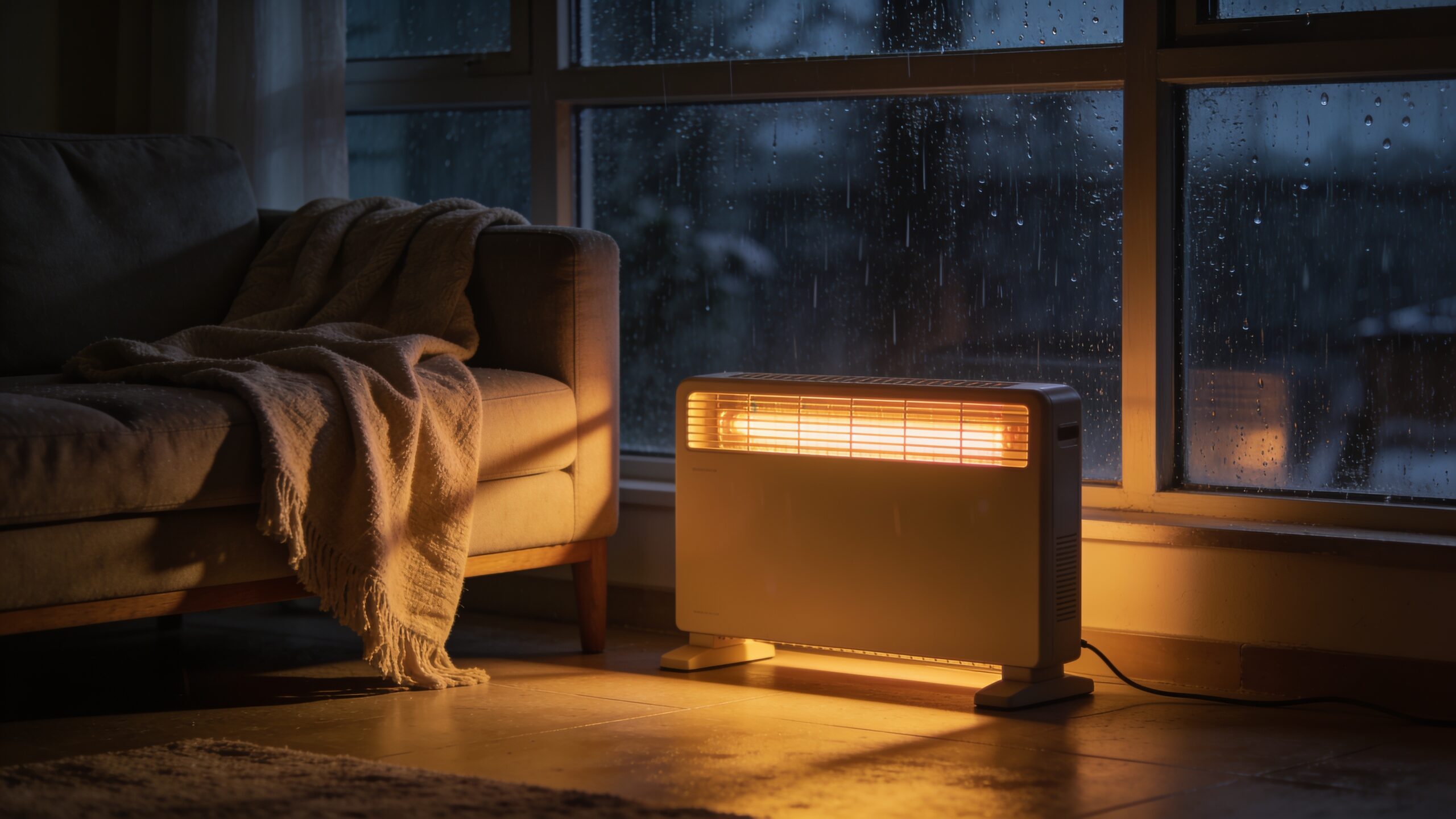
How to Buy a Safe Space Heater: A Simple Buying Guide for Winter
When the weather turns cold, a small heater can feel like the easiest fix: plug it in, point it at your feet, and the chill disappears. It is also one of the products where a careless purchase matters most. Heaters get very hot, they sit near furniture and curtains, and they are often left running at night.
The good news is that choosing a safe one is mostly a matter of knowing what to look for. This guide covers the safety marks to check, the features that matter, how to choose between electric and fuel-burning types, where to put a heater once you own it, and the mistakes to avoid. It draws on guidance from the US Consumer Product Safety Commission (CPSC), the London Fire Brigade, a UK fire and rescue service, and a US consumer group. I name no brands and make no model recommendations. It is general information, not professional safety advice, so always follow the instructions that come with your own heater.
Why the Choice Matters
Heaters and fire
Fire services have been warning about heaters for years. The London Fire Brigade reported 256 heating-related fires across London in 2021, with 3 deaths and 35 injuries, and said it had already attended 148 more by early October 2022. In the US, a consumer group’s 2022 article cites the CPSC as estimating about 1,700 fires, 80 deaths and 160 injuries a year from portable space heaters. I haven’t been able to check that figure against the CPSC’s own current page, so treat it as an estimate. An older CPSC release from 2002 gave much higher numbers for all space heaters, fixed and portable, which shows how much the figures depend on what is counted and when.
What the numbers don’t tell us
None of these figures tell you how likely it is that your heater will cause a fire. Most people use heaters without any problem. What the numbers do show is that the risk is real, and that it is largely about how a heater is chosen, placed, and used.
Buying is only half the job
A safe heater can still be used unsafely. This guide therefore ends with placement and habits. A well-chosen heater in the wrong spot is still a risk.
What to Look For When You Buy
A recognized safety mark
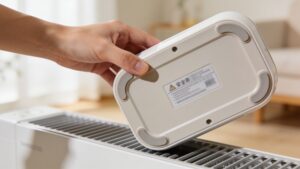
The first thing to check is the label. The CPSC advises choosing a heater that is “tested and certified by a nationally recognized testing laboratory.” The US consumer group suggests looking for a certification mark from a recognized lab, and shopping for a heater tested to the latest safety standards. In the UK, a fire and rescue service advises buying only a heater with “a British or European safety mark.” The exact marks differ by country, so look for one that is valid where you live and check the maker’s instructions.
A tip-over shutoff
A heater that falls over can start a fire in seconds. The CPSC notes that an automatic cut-off turns electric or kerosene heaters off if they tip over. The consumer group also recommends shutoff features that engage if the heater overheats or tips over. If you have children, pets, or a busy room, this feature matters even more.
Overheat protection
Overheat protection is recommended in the consumer group’s tips. The older CPSC page I read doesn’t mention it, but it is a reasonable thing to look for on the box or the specifications.
A guard around the heating part
The CPSC advises choosing a heater with a guard around the flame or the heating element, so that nothing can touch the hot part by accident. A fireguard can also help keep children and pets away, according to the UK fire service.
A cord that is long enough
The consumer group suggests a cord at least six feet long. A longer cord means you can plug the heater straight into a wall socket without needing an extension lead, which several sources warn against. I explain why in the section on placement.
A model made for your home
If you live in a mobile home, the consumer group says to buy a heater made specifically for mobile homes. The CPSC adds that mobile homes should use only electric or vented fuel-fired heaters. If you rent, ask your landlord whether there are rules about heaters.
Check recalls before you buy
The London Fire Brigade noted that many fires in the previous year involved recalled heaters, and advises checking whether a heater is on a recall list. This is especially useful when buying second-hand. I haven’t found one single recall list that works across all countries, so search your country’s product-safety authority.
Be careful with older models
The CPSC points out that older heaters may not meet newer safety standards. A heater from a relative’s loft may be cheap, but it may lack features that are standard now.
Choosing a Type: Electric or Fuel-Burning?
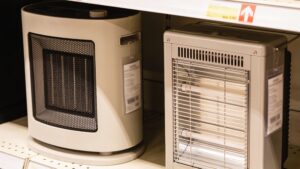
Electric heaters
Electric heaters are the simplest choice for most homes because they don’t burn fuel inside the room. That means they don’t produce carbon monoxide. They still need all the safety features above, and they still use a lot of electricity, so a heater is best for a small space for a short time, not as a whole-house solution. I haven’t compared running costs here, since they depend on your tariff.
Fuel-burning heaters
Heaters that burn gas or kerosene bring extra risks. The CPSC says fuel-burning heaters can cause carbon monoxide poisoning and indoor air pollution if they are not properly vented or if combustion is incomplete. It advises keeping doors open to the rest of the house with an unvented fuel-burning heater, following the maker’s instructions for air, and having gas and kerosene heaters inspected every year. The UK fire service says to use gas heaters only in well-ventilated areas, and to store portable gas cylinders outside and away from sunlight and frost.
A note on oxygen sensors
According to the CPSC, unvented gas heaters are meant to have a sensor that shuts the heater off if the oxygen in the room gets too low. If you are considering one, check this feature on the specification.
Carbon monoxide alarms matter either way
Both the CPSC and the consumer group recommend a carbon monoxide alarm outside the sleeping area, and working smoke alarms on each level. The consumer group also suggests testing alarm batteries monthly and replacing them each year. If you use any fuel-burning heater, an alarm isn’t optional in my view, but that is my own opinion, not a rule from the sources.
Which is right for you?
For a typical bedroom or home office, a well-made electric heater with a tip-over shutoff and a safety mark is the common choice. If you are thinking about a fuel-burning model, read the maker’s instructions carefully first, and consider whether you can ventilate it properly.
Where and How to Use It
Keep it clear of anything that burns
The CPSC and the consumer group both say to keep a heater at least three feet from bedding, curtains, furniture, rugs, paper, and clothing. UK sources use a metre, which is slightly more than three feet. Whichever unit you use, the principle is the same: leave a wide gap.
Put it on a flat, hard surface
Place the heater on a level, hard, nonflammable surface. The CPSC and the consumer group advise against putting it on rugs or carpet. The UK fire service also suggests securing a portable heater against a wall so it can’t be knocked over.
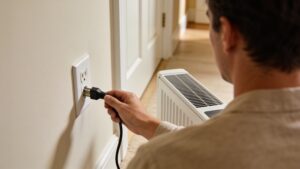
Plug it straight into the wall
This one is repeated clearly. The consumer group says: “Never operate space heaters with an extension cord or power strip.” Plug the heater directly into a wall socket, and never run the cord under a rug or carpet. The reason is that a heater draws a lot of power, which can overheat a cord not made for it. I haven’t found a technical explanation in the sources, so check your heater’s manual if you want the details.
Never leave it running unattended
All of the sources agree on this. The consumer group says: “Never leave a space heater on when you leave the room or go to sleep.” The UK fire service says to switch off and unplug heaters before going out or going to bed. And the CPSC says never to place a heater close to a sleeping person. Some heaters have timers, but I wouldn’t rely on one in place of switching off.
Don’t dry clothes on it
The London Fire Brigade and the UK fire service both warn against drying washing on heaters or blocking the air grilles. It is tempting on a wet day, but it is a common cause of fires.
Sit at a safe distance
The London Fire Brigade advises sitting at least a metre from a heater, because it could set light to your clothes or chair. The UK fire service says that sitting too close is the cause of most heater fires, but I haven’t seen the data behind that statement, so I’d treat it as the service’s view.
Move it only when it’s off and cool
Don’t move a portable heater while it is switched on, the UK fire service says. The London Fire Brigade adds that you should let it cool first.
Care, Warning Signs, and Common Mistakes
Check it before each winter
Before you use a heater again after the summer, the consumer group suggests inspecting the heater, cord, and plug, and cleaning out lint and debris. Look for fraying, cracks, or marks from heat. If the cord gets hot, stop using it. The consumer group says that, and the UK fire service adds that if you think the wiring is damaged, you shouldn’t use the heater.
Get it tested or serviced
The UK fire service suggests having an electric heater tested yearly by a qualified electrician, and gas heaters serviced at least once a year. The London Fire Brigade adds that you should never install, repair, or service heaters yourself. Your own country may have different rules, so check what applies to you.
Keep water away
The consumer group says to keep heaters away from water and not to touch one while wet. That rules out bathrooms unless a heater is made for them, and I haven’t researched which are, so follow the instructions.
If something goes wrong
If a heater starts a fire, the UK fire service says to leave, close the doors behind you, stay out, and call the fire service. In the UK that is 999, and in the US it is 911. Don’t try to fight a fire in a way that puts you at risk.
The most common mistakes
- Using an extension lead or power strip
- Leaving the heater on overnight
- Putting it too close to bedding or curtains
- Drying clothes on it
- Buying an old, unmarked, or recalled model
- Using a fuel-burning heater in a closed room
A short buying checklist
- Look for a valid safety mark for your country.
- Choose a tip-over shutoff and overheat protection.
- Pick a model with a guard and a long enough cord.
- Check recall lists, especially for second-hand heaters.
- Choose electric if you can’t ventilate a fuel-burning one.
- Fit working smoke and carbon monoxide alarms.
- Keep it a metre (three feet) from anything that burns.
- Plug it into the wall, and never use an extension lead.
- Switch it off when you leave the room or go to sleep.
A heater doesn’t need to be expensive to be safe. It needs a recognized safety mark, the right features, and sensible use. Spend a few minutes on the label before you buy, and you can enjoy a warm room without worrying about it.