

Injury Proof Golf Swing Mechanics: The Longevity Swing Guide to Protecting Your Body and Extending Your Playing Career
Embracing injury proof golf swing mechanics has become the absolute gold standard for dedicated amateur players and seasoned professionals alike, shifting the focus of modern golf instruction from violent power generation toward highly sustainable, pain-free athletic movement. For generations, golf was mistakenly categorized as a gentle leisure activity, leading millions of players across the world to step onto the first tee without properly preparing their bodies for the massive rotational forces the sport actually requires. This traditional, unscientific approach to the game resulted in a silent epidemic of severe lower back injuries, torn rotator cuffs, and chronic knee pain, forcing countless passionate players into premature retirement. Today, this outdated method faces intense resistance from sports medicine professionals across the United States and European nations, who recognize that enjoying golf well into your senior years requires a fundamental redesign of how the human body interacts with a golf club.
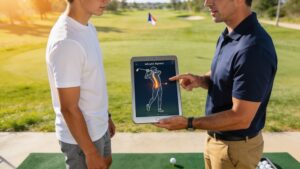
To construct a highly engaging, long-term perspective that truly benefits active sports enthusiasts, country club members, and weekend warriors, we must completely deconstruct the traditional golf swing from the ground up. This means looking far past generic swing tips and thoroughly analyzing the exact biomechanical triggers that cause physical breakdowns, replacing dangerous hip slides and violent wrist snaps with smooth, centralized rotation and balanced weight transfers. For dedicated players seeking a practical, deeply detailed analysis of modern sports longevity without getting lost in overly dense anatomical jargon, studying these protective movement pillars reveals the exciting secret to playing pain-free golf for the rest of your life.
Core Posture and Setup in Injury Proof Golf Swing Mechanics
Mastering fundamental alignment is the absolute cornerstone of applying injury proof golf swing mechanics effectively. Building a consistently safe athletic posture directly reduces unnecessary physical stress, protecting your spine and vulnerable joints during fast rotational movements.

Perfecting Spinal Alignment
Achieving proper spinal alignment prevents severe lower back pain during your round. You must maintain a straight, neutral spine from your tailbone to your neck while standing over the ball. Avoid rounding your shoulders or creating excessive curvature in your lower back. This neutral position allows your torso to rotate freely and safely, drastically reducing the dangerous compression forces that frequently cause painful disc injuries over time.
Establishing a Solid Base
Establishing a highly stable lower body base prevents dangerous slipping during your swing. Position your feet exactly shoulder-width apart, ensuring your weight rests perfectly across the middle of your feet. Bending your knees slightly engages your strong thigh muscles, creating a solid foundation. This firm stance guarantees that your lower body can properly absorb and transfer kinetic energy without transferring harmful twisting forces directly into your fragile ankles.
Grip Pressure Optimization
Optimizing your grip pressure is essential for preventing chronic elbow and wrist pain. Squeezing the golf club handle too tightly immediately creates severe muscular tension running straight up your forearms. You should hold the grip securely but gently, similar to holding an open tube of toothpaste without squeezing anything out. This relaxed grip allows your wrists to hinge naturally, preventing the micro-tears that lead directly to golfer’s elbow.
Dynamic Balance Distribution
Managing dynamic balance distribution ensures your body remains perfectly centered during the swing setup. Distribute your body weight evenly between your left and right feet at address. Leaning too far forward onto your toes or backward onto your heels disrupts your natural rotational axis completely. Maintaining this balanced center of gravity ensures your muscles fire in the correct sequence, minimizing sudden jerking motions that cause painful muscle strains.
Backswing Transitions and Injury Proof Golf Swing Mechanics
Executing a smooth backswing transition is highly critical for maintaining injury proof golf swing mechanics on the course. Controlling your rotational speed preserves essential joint integrity, keeping your fragile shoulders and lower back completely safe from harm.

Controlled Shoulder Rotation
Initiating a highly controlled shoulder rotation protects your upper back from severe muscular tearing. You must turn your shoulders away from the target smoothly, letting your chest dictate the overall movement pace. Avoid snatching the club back quickly with just your hands and arms. This unified upper body rotation ensures that large, powerful back muscles absorb the physical work, completely protecting your smaller rotator cuff tendons from sudden snapping.
Minimizing Hip Sway
Minimizing lateral hip sway during your backswing is absolutely vital for protecting your lower back. Your hips should simply rotate within an imaginary barrel, turning deeply rather than sliding sideways away from the target. Sliding laterally places massive, unnatural shearing forces directly onto your lumbar spine. Maintaining a centered hip rotation keeps your spinal column beautifully stacked, preventing the painful pinched nerves that ruin countless weekend golf rounds.
Wrist Hinge Safety
Implementing safe wrist hinge mechanics prevents crippling joint pain during your backswing. Your wrists must hinge naturally upward rather than bending sharply sideways. Forcing an unnatural wrist angle under heavy club weight strains delicate ligaments very quickly. Allowing the natural momentum of the clubhead to dictate your wrist set keeps your tendons relaxed, ensuring you maintain a pain-free grip throughout the entire duration of your long golf season.
Managing Arm Extension
Managing proper lead arm extension prevents dangerous hyperextension injuries in your elbow joint. While keeping your lead arm relatively straight is important for swing width, locking the elbow joint rigidly creates massive structural tension. You should maintain a very slight, relaxed bend in your lead elbow. This soft arm position absorbs the heavy rotational forces smoothly, keeping your delicate elbow ligaments completely safe from traumatic tearing during fast swings.
The Downswing Power Move in Injury Proof Golf Swing Mechanics
Starting the downswing correctly is the most vital element of proper injury proof golf swing mechanics today. Shifting your weight intelligently prevents massive lower body trauma, ensuring your knees and hips survive years of aggressive, continuous play.

Initiating Lower Body Shift
Initiating the downswing with a subtle lower body weight shift protects your upper body from serious harm. You must transfer your weight toward the target by pressing your lead foot into the ground. Never start the downswing by throwing your shoulders aggressively over the top. This ground-up movement sequence ensures your strong leg muscles generate the necessary power, saving your fragile lower back from absorbing dangerous twisting energy.
Protecting the Lead Knee
Protecting your lead knee during the downswing transition prevents catastrophic ligament tears. As you shift your weight forward, your lead knee must clear smoothly toward the target rather than locking abruptly into a rigid, straight line. Snapping the knee joint backward forcefully under heavy body weight destroys your meniscus quickly. Maintaining a subtle flex throughout the forward weight transfer absorbs the kinetic shock naturally, keeping your joints perfectly healthy.
Lag Creation Without Strain
Creating clubhead lag without physical strain protects your wrists from dangerous repetitive use injuries. Lag happens naturally when your lower body leads the downswing, pulling your relaxed arms gently behind you. Actively forcing your wrists to hold a sharp angle creates severe tendonitis. Allowing the club to simply follow your body rotation keeps your forearms completely tension-free, delivering massive power to the ball without causing any physical damage.
Shallowing the Club Safely
Shallowing the golf club safely during the downswing transition protects your trailing shoulder from painful impingements. The club shaft should drop naturally onto a flatter plane as your hips rotate forward. Forcing the club down violently using only your right arm pinches the delicate rotator cuff severely. Letting gravity and natural body rotation shallow the club path ensures your shoulder joint glides smoothly, avoiding chronic inflammation and pain entirely.
Impact and Follow-Through in Injury Proof Golf Swing Mechanics
Reaching a balanced follow-through is the ultimate goal of mastering injury proof golf swing mechanics properly. Controlling your final impact position absorbs residual kinetic energy safely, protecting your spine and hips from dangerous, sudden deceleration forces.

Compressing the Golf Ball
Compressing the golf ball safely requires a stable, supportive body posture at the moment of impact. Your hips must be open toward the target while your chest remains slightly tilted downward. Standing up sharply right before impact, a common amateur mistake, compresses your lumbar spine aggressively. Maintaining your spinal tilt through the strike ensures the heavy impact vibrations travel safely down into your legs rather than shocking your back.
Safe Weight Transfer
Executing a completely safe weight transfer through the hitting zone protects your trailing foot from severe damage. By the time you strike the ball, nearly all your body weight should rest securely on your lead leg. Leaving heavy weight trapped on your back foot causes dangerous reverse pivoting, which tears lower back muscles instantly. Pushing fully onto your front leg eliminates this massive physical stress entirely during the swing.
Releasing the Clubhead
Releasing the clubhead smoothly after impact protects your elbow tendons from painful hyperextension. You must allow your forearms to cross over naturally as the club swings past your body. Attempting to steer the ball by holding the clubface completely square restricts natural joint rotation. Letting the club release freely diffuses the massive centrifugal forces safely, ensuring your delicate arm joints survive thousands of aggressive golf swings without injury.
The Balanced Finish Position
Arriving at a perfectly balanced finish position guarantees that you have swung the golf club safely. Your chest must face the target completely, with your back heel raised high off the ground. If you fall backward or stumble sideways, you have disrupted your natural balance and strained your muscles. Holding this relaxed, tall finish until the ball lands ensures your spine remains beautifully aligned and completely free from pain.
Frequently Asked Questions (FAQ)
What is the primary cause of lower back pain among amateur golfers?
The vast majority of lower back pain in golf is caused by a mechanical flaw known as “reverse spine angle,” combined with poor hip mobility. When an amateur player fails to rotate their hips correctly, they tend to arch their back aggressively and tilt backward toward the target during the backswing. During the downswing, this awkward position forces the lower spine to absorb massive shearing and compression forces simultaneously, leading directly to herniated discs and severe muscle spasms.
Can adopting these mechanics help me regain lost driving distance as I get older?
Absolutely. One of the greatest misconceptions in golf is that swinging harder generates more distance. In reality, maximum clubhead speed is created through efficient, sequential energy transfer—frequently referred to as the kinematic sequence. By removing harmful tension from your arms and allowing your larger core and leg muscles to dictate the swing rhythm safely, you actually increase your clubhead speed while applying significantly less physical effort.
Is “Golfer’s Elbow” preventable, or is it just an inevitable part of playing the game frequently?
Golfer’s elbow (medial epicondylitis) is entirely preventable and is almost never an inevitable condition. It is fundamentally an overuse injury caused directly by squeezing the golf club handle far too tightly and forcing the wrists to manipulate the clubface violently through the impact zone. By softening your grip pressure and allowing the natural weight of the clubhead to release smoothly, you completely eliminate the dangerous friction that tears the tendons in your forearms.
How often should I practice these new biomechanical movements to see permanent changes?
When re-engineering your swing for long-term health, frequency is far more important than sheer volume. Hitting a hundred golf balls rapidly at the driving range will only reinforce your old, dangerous habits. Instead, spend fifteen minutes every single day practicing these specific postures and transitions in front of a mirror without hitting a golf ball. This slow, deliberate repetition rewires your central nervous system, making these safe, protective movements completely automatic when you finally step onto the course.
Final Conclusion: Securing Your Athletic Future on the Fairway
Integrating injury proof golf swing mechanics into your daily practice routine provides an exceptionally reliable pathway to ensure your favorite sport remains a lifelong passion rather than a source of chronic pain. The outdated era of viewing physical discomfort as a normal, unavoidable consequence of playing eighteen holes has officially ended. It is rapidly being replaced by a highly sophisticated, biomechanically sound approach to the game built around perfect spinal alignment, stress-free wrist hinges, centered hip rotation, and fluid weight transfers that prioritize your joint health above all else.
By centering your focus on these protective movement patterns, you effortlessly shield your body from the sudden, catastrophic injuries that plague traditional amateur swings while simultaneously building a more consistent, reliable ball flight. As golf course architectures across the United States and European nations continue to expand and demand greater athletic endurance from players, the golfers who enjoy the highest level of long-term satisfaction will undeniably be those who construct their golf swings on top of stable, fluid, and medically sound physical foundations.